

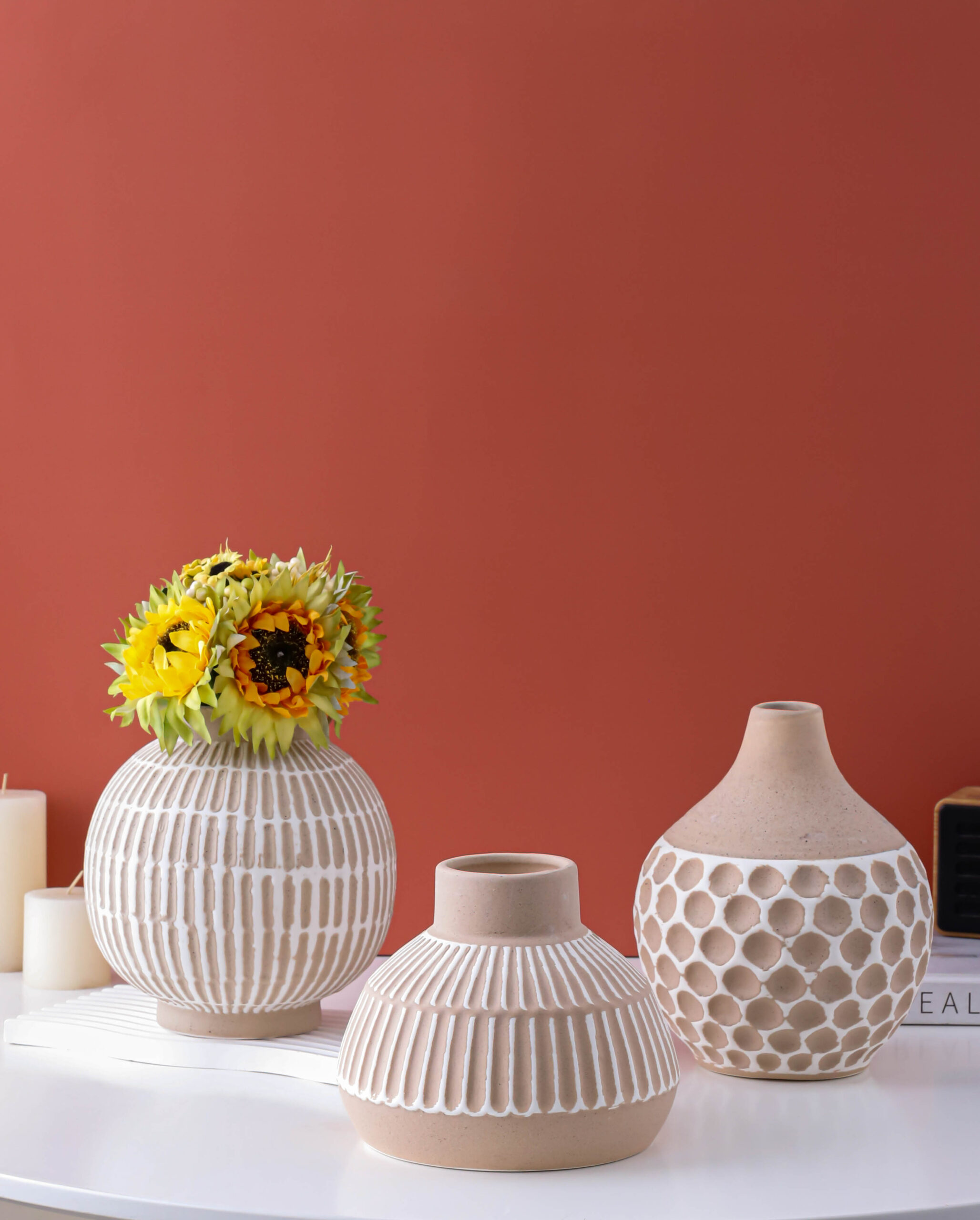
Packaging Stability Home Decor Buyers Should Discuss Early
As an American home decor designer, I love a beautiful ceramic vase as much as anyone. A bold glaze, a soft curve, a handmade surface, a sculptural rim—yes, please.
But a buyer has to ask a less romantic question:
Will this product survive the trip?
That is why packaging stability home decor decisions matter. Packaging is not just a shipping detail. It affects damage rate, margin, warehouse handling, retail presentation, reorder confidence, and even whether the product should be approved in the first place.
A vase that looks perfect in a sample room but arrives chipped is not a product win.
It is a sourcing problem.
Why Packaging Stability Changes the Real Cost
For B2B buyers, the unit price is only the beginning.
The real cost includes packaging, freight, breakage risk, replacement, claims, delays, and the time spent explaining problems after delivery.
This is where home décor MOQ and lead time become connected to packaging. A low MOQ may sound attractive, but if packaging is weak, the buyer may lose money on damages. A short lead time may sound good, but if packaging was rushed, the shipment may create more problems than it solves.
Good packaging stability protects more than the product.
It protects the order.
Why Material Judgment Starts on the Ground
This is why working with a serious pottery manufacturer matters.
A catalog can show the final product. A workshop can explain the risk.
Will the rim chip during handling?
Will the base sit safely inside the carton?
Will the glaze rub against the inner packaging?
Will the clay body support the shape?
Will the carton need more structure because the product is tall, wide, or uneven?
ISTA explains that many packaging test procedures begin by defining product damage tolerance and package degradation allowance before testing begins. For home decor buyers, that means packaging should be planned around what damage is unacceptable, not guessed after production.
What a Home Decor Product Sample Review Should Ask
A home decor product sample review should not stop at color, shape, and finish.
It should ask:
Can this product be packed safely?
Does the surface need separation?
Does the rim need extra protection?
Does the inner carton hold the product firmly?
Does the packaging cost still fit the retail price?
Can this same packaging method work in the second order?
Stanford d.school treats prototype and test as core parts of design thinking. That same logic applies to sourcing: a sample should help the buyer learn before production becomes expensive.
A sample is not only a product preview.
It is a packaging rehearsal.
How Buyers Read Collection Price Structure
This is how buyers read collection price structure.
They are not only asking whether one product looks good. They are asking whether the whole group can support margin.
A collection may include:
A hero ceramic vase.
A smaller add-on vase.
A tray.
A candle holder.
A wall accent.
A decorative bowl.
But if the hero item needs expensive packaging, the smaller products may need to protect the price ladder. If every item is large and fragile, the collection may look beautiful but become hard to ship profitably.
This is why building a small but profitable assortment is often smarter than adding too many risky SKUs.
A good assortment is not the biggest one.
It is the one that can sell, ship, and reorder without eating the margin.
Why Heritage Craft Home Decor Sourcing Needs Packaging Discipline
Heritage craft home decor sourcing gives buyers something valuable: surface character, hand-finished details, material depth, and products that do not feel like flat factory copies.
But craft value needs protection.
A textured ceramic vase loses value if the surface rubs in transit. A hand-finished piece loses trust if the second order looks unstable. A decorative object with a beautiful rim becomes a problem if that rim chips before reaching the shelf.
Recent U.S. home design coverage from Spring 2026 High Point Market pointed to draped forms, artisanal textures, oversized scale, and richer interior detail. These trends are good for craft-led home decor, but they also make packaging harder because more product value lives in shape, surface, and finish.
The more design value a product carries, the more packaging stability matters.
TikTok Can Create Interest. Packaging Decides Whether It Becomes Business.
TikTok now moves home decor taste quickly. ELLE Decor reported that TikTok is accelerating interior design cycles and highlighted 2026 trends such as skirted furniture, broken floor plans, friction-maxxing, and cabbagecore.
But TikTok does not answer buyer questions.
Can the product ship safely?
Can the finish be repeated?
Can the carton protect the rim?
Can the product fit the target price after packaging?
Can the supplier repeat the same result next season?
That is where packaging stability turns trend interest into a real sourcing decision.
What Buyers Should Expect From a Pottery Manufacturer
A good pottery manufacturer should not only say, “We can make this.”
A better supplier says:
“This rim needs stronger protection.”
“This glaze may show rubbing if packed too tightly.”
“This shape should be adjusted before bulk production.”
“This carton structure may affect landed cost.”
“This assortment should keep one or two safer items to protect margin.”
That kind of answer helps buyers build confidence before placing larger orders.
For Teruierdecor, packaging is not separate from product development. It is part of the same decision chain: design, sample, material, finish, packaging, price, MOQ, lead time, and reorder.
FAQ: Packaging Stability Home Decor
What does packaging stability home decor mean?
Packaging stability home decor means designing and reviewing packaging so decorative products can survive shipping, handling, warehouse movement, and retail display without damage to the body, finish, edges, or presentation.
Why does packaging stability matter for ceramic home decor?
Ceramic home decor often includes fragile rims, textured surfaces, matte or glossy finishes, heavy bodies, and sculptural shapes. Packaging must protect both the object and the visible finish.
How does packaging affect home décor MOQ and lead time?
Packaging can affect carton size, material cost, production preparation, shipment planning, and damage risk. A low MOQ or fast lead time is less useful if the packaging creates claims later.
Why should buyers review packaging during sample development?
Because sample review is the best time to catch rim weakness, rubbing risk, carton fit, surface damage, and packaging cost before full production begins.
Final Thought: The Carton Is Part of the Product
A product photo creates interest.
A sample starts the conversation.
But packaging proves whether the product is ready for business.
That is why packaging stability home decor should enter the buying conversation early. It helps buyers protect ceramic products, control MOQ and lead time risk, build small but profitable assortments, and turn craft value into reorder confidence.
Leave a Reply