

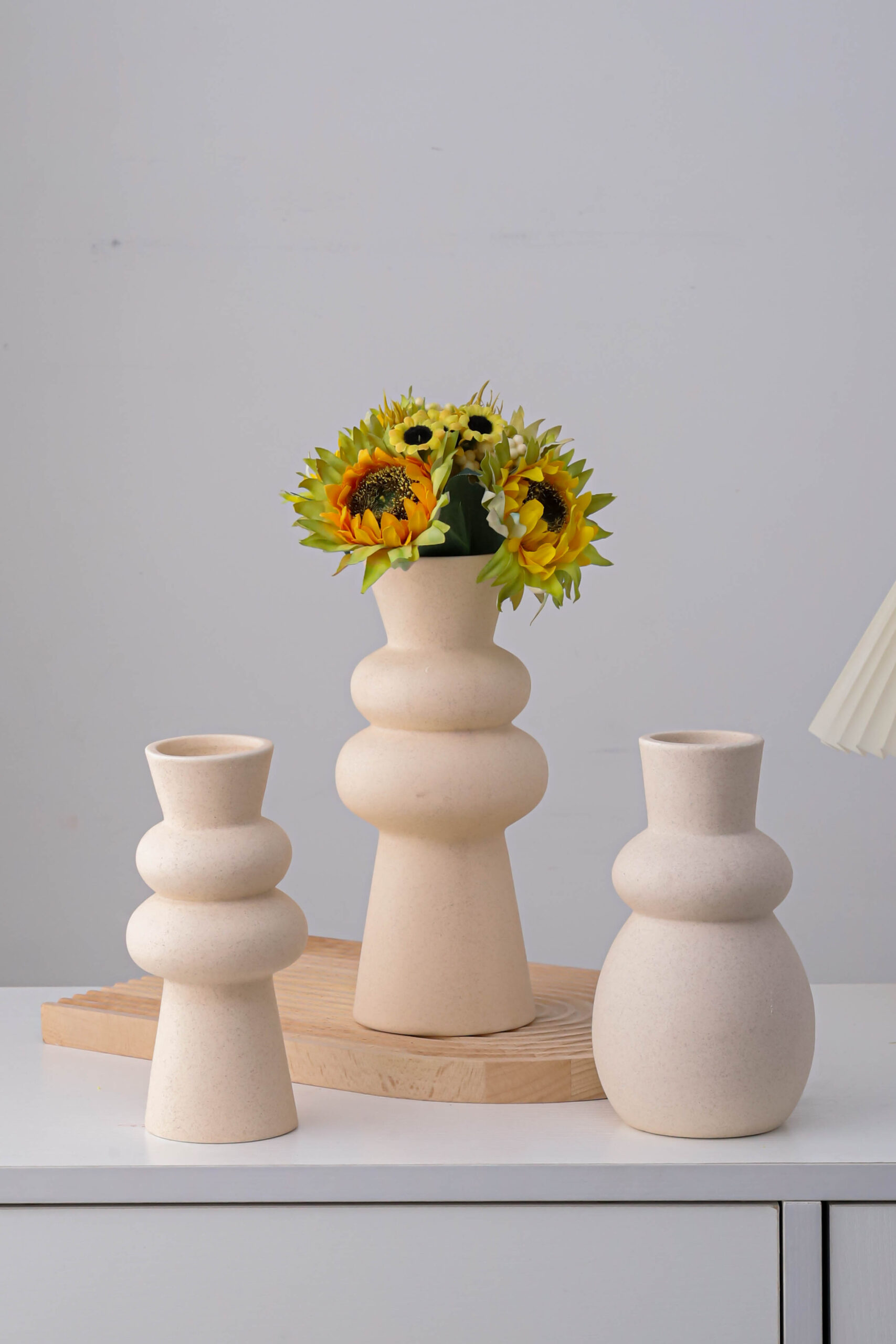
Packaging Stability Home Decor Buyers Cannot Ignore
As an American home decor designer, I love a product with presence: a Bold ceramic vase, a sculptural tray, a textured wall accent, or a tabletop object that makes a shelf feel alive.
But buyers have to ask the less glamorous question:
Will it arrive safely?
That is why packaging stability home decor decisions matter. Packaging is not just a shipping detail. For B2B buyers, packaging protects the product, the finish, the retail presentation, the margin, and the chance of a second order.
A product that looks beautiful but arrives chipped, rubbed, cracked, or unstable is not retail-ready.
Why Material Judgment Starts on the Ground
This is why material judgment starts on the ground.
A catalog can show the final product. A workshop can explain where the product may fail.
Will the ceramic rim chip?
Will the base sit flat?
Will the glaze rub against inner packing?
Will the wall décor frame need stronger corner protection?
Will the carton survive stacking and handling?
MIT professor Eric von Hippel’s research on “sticky local information” explains why useful product knowledge often stays close to the place where the problem is being solved. In home decor, that knowledge usually lives near the workshop: material behavior, finish control, shaping limits, packing pressure, and repeat production.
That is why packaging stability should be discussed during sample development, not after the buyer has already approved the order.
What a Home Decor Product Sample Review Should Ask
A serious home decor product sample review should not stop at color and shape.
It should ask:
Does the product need rim protection?
Does the finish need surface separation?
Does the base need better balance?
Does the carton structure match the product shape?
Does the product still fit the target price after packaging is added?
A sample is not just a beauty check. It is a packaging rehearsal.
For a Bold ceramic vase, the question is not only whether the silhouette feels current. The buyer also needs to know whether the vase can survive real shipping, warehouse movement, and retail handling.
What a Sample Revision Reveals About a Supplier
This is what a sample revision reveals about a supplier.
A weak supplier only says, “We can change the size.”
A stronger supplier says:
“This rim should be thicker for bulk shipment.”
“This glaze may show rubbing if packed too tightly.”
“This base should be adjusted before we design the inner carton.”
“This shape is attractive, but the packaging cost may rise.”
“This wall piece needs better corner protection before production.”
That kind of feedback tells the buyer the supplier understands the product as a business object, not just a sample.
Stanford d.school identifies prototype and test as key design-thinking modes, which fits home decor sourcing well: samples help buyers learn before production becomes expensive.
A Short Tabletop Décor Buying Guide for Packaging Stability
A practical tabletop décor buying guide should include packaging questions early.
For tabletop décor, buyers should check:
Is the surface easy to scratch?
Can the item sit stable in the carton?
Does the shape need custom inner support?
Can multiple pieces be packed without rubbing?
Will the final carton size still protect margin?
Tabletop products often look small and simple, but small products can still create big problems if they have fragile rims, delicate finishes, unstable bases, or awkward shapes.
A Short Wall Décor Buying Guide for Packaging Stability
A useful wall décor buying guide should not only ask whether the piece looks good on a wall.
It should ask:
Are the corners protected?
Can the frame resist pressure?
Is the surface protected from rubbing?
Does the hanging hardware need separation?
Can the carton handle stacking?
Wall décor often fails at the edges first. A small corner dent can make the whole product feel damaged, even if the central design is perfect.
That is why packaging stability is part of product value.
Why Recent U.S. Trends Make Packaging More Important
Recent U.S. design coverage from Spring 2026 High Point Market pointed to draped forms, artisanal textures, Southwest influence, menswear patterns, oversized scale, and more detailed interiors. Those signals create opportunity for textured ceramics, sculptural objects, bold vases, and statement wall décor—but they also make packaging harder.
A larger ceramic piece needs stronger inner support.
A textured surface needs anti-rub protection.
A sculptural shape may need a custom carton.
A bold finish must arrive looking intentional, not damaged.
TikTok is also speeding up home decor taste cycles. ELLE Decor reported that TikTok is accelerating the interior design cycle and highlighted 2026 trends such as skirted furniture, broken floor plans, friction-maxxing, and cabbagecore.
But TikTok does not answer the buyer’s packaging questions. The carton does.
Packaging Stability Helps Build a Profitable Home Decor Assortment
A profitable home decor assortment is not only about attractive products.
It is about products that can be displayed, shipped, handled, reordered, and replaced without constant problems.
ISTA notes that many package testing protocols begin by defining product damage tolerance and package degradation allowance before testing. That matters because buyers need to know what kind of damage is unacceptable before products move through real distribution.
Intertek also notes that packaging testing can happen before a new product launch, during packaging redesign, when product damage is an issue, or when clients require testing—and that including testing early in packaging design is the best preparation.
For B2B home decor buyers, that is the point: packaging stability protects margin before the damage claim appears.
FAQ: Packaging Stability Home Decor
What does packaging stability home decor mean?
Packaging stability home decor means designing and reviewing packaging so decorative products can survive shipping, handling, warehouse movement, and retail display without damage to the body, finish, edges, or presentation.
Why does packaging stability matter for a Bold ceramic vase?
A Bold ceramic vase may have a fragile rim, heavy body, narrow base, textured finish, or sculptural shape. Packaging must protect both the ceramic structure and the visible surface.
What should buyers check during a home decor product sample review?
Buyers should check finish protection, rim strength, base stability, carton structure, inner packing, rubbing risk, and whether the packaging cost still supports the product’s retail role.
How does packaging stability support a profitable home decor assortment?
It reduces breakage, protects finishes, lowers damage claims, improves warehouse handling, preserves retail presentation, and gives buyers more confidence before reorder.
Final Thought: The Carton Is Part of the Product
A product photo creates interest.
A sample starts the conversation.
But packaging decides whether the product can survive the real journey.
That is why packaging stability home decor should enter the buying conversation early. It helps buyers protect bold ceramic vases, tabletop décor, wall décor, finishes, margins, and the chance of a second order.
Leave a Reply