

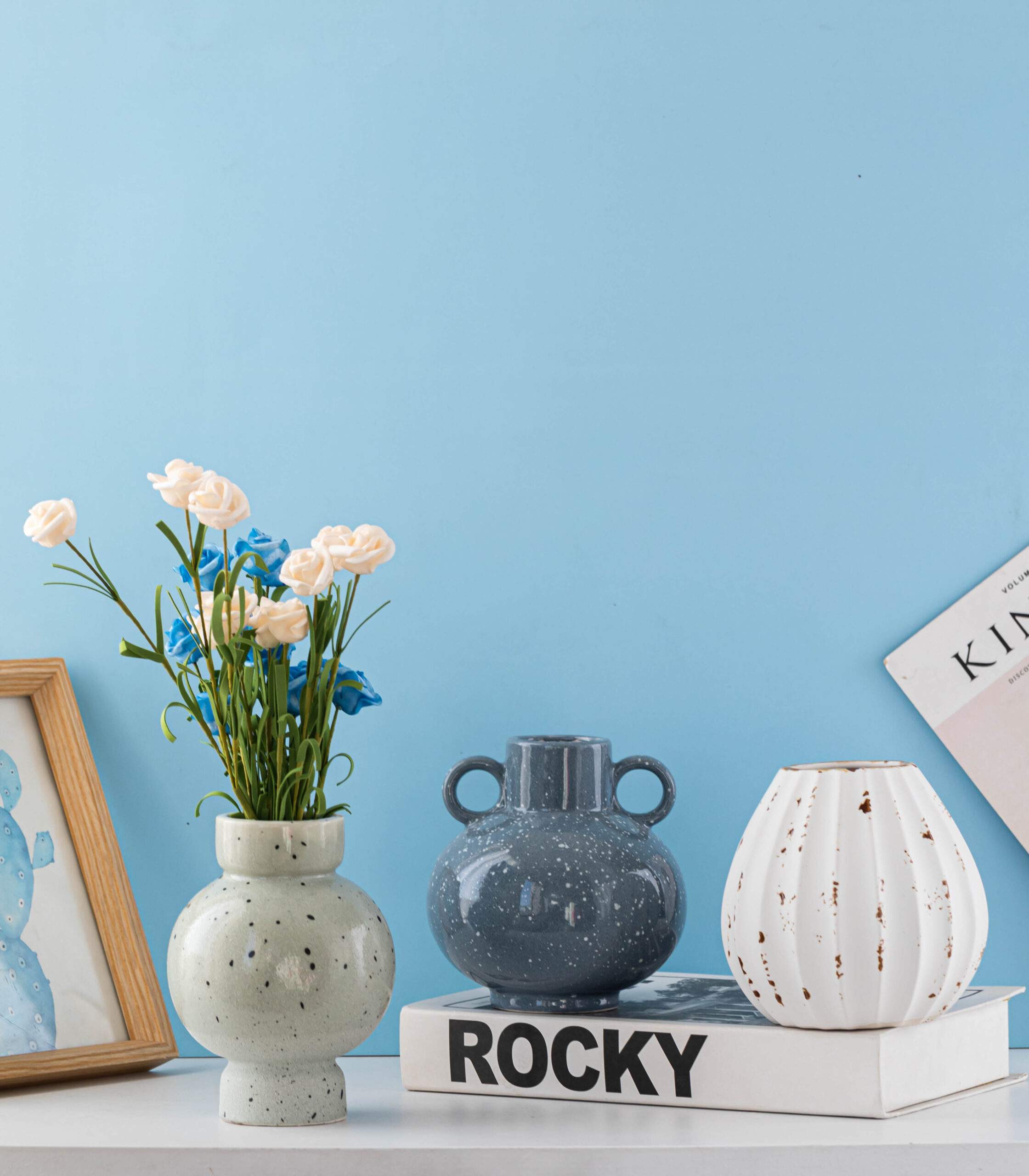
A Home Decor Collections Supplier Should Edit the Trend
As an American home decor designer, I love a strong trend. But when I look at it through a buyer’s eyes, I get more cautious.
A trend may look beautiful at High Point Market, on TikTok, or in a designer’s home. But a buyer has to ask: can this idea become a collection, sit on a shelf, pack safely, and reorder without problems?
That is why the right home decor collections supplier matters.
A good supplier does not just follow trends. A good supplier edits them into products buyers can actually sell.
Why Buyers Want the Trend Signal, Not the Full Trend Weight
This is why buyers want the trend signal not the full trend weight.
A buyer may like the direction of sculptural curves, earthy color, artisanal texture, oversized forms, or nostalgic details. But that does not mean every product should carry the full trend at maximum volume.
Architectural Digest’s Spring 2026 High Point Market recap pointed to menswear patterns, draped shapes, indoor-outdoor furniture, oversized scale, and more detailed interiors. Aspire Design and Home also described Spring 2026 High Point as shaped by craftsmanship, warm earthy colors, curvy organic silhouettes, and bolder expression.
For a ceramic collection, the smart move may be smaller:
A softer curve on a vase.
A warmer glaze on a candle holder.
A slightly irregular rim.
A matte surface with one glossy accent.
A carved detail that suggests craft without making production unstable.
That is how a trend becomes buyable.
What Makes a Finish Feel Commercially Believable
A finish does not have to be boring to be commercial.
But it does have to feel controlled.
That is what makes a finish feel commercially believable. A matte ceramic decor finish should look intentional, not chalky or unfinished. A glossy finish should look rich, not cheap or overly reflective. A reactive glaze should feel handcrafted, not random.
Recent market coverage shows that texture and material expression are becoming more important. Houzz noted that Spring 2026 High Point Market showed a move toward more substantial, tactile expressions of natural materials.
That is good news for ceramic decor. It also raises the buyer’s standards.
If the finish is the selling point, the supplier must prove it can be repeated.
Why Some Trends Break Down on Shelf
Some trends look strong in one photo and weak on a real shelf.
That is why some trends break down on shelf.
The color may be too heavy across five SKUs.
The glossy finish may fight with the matte ceramic decor beside it.
The sculptural shape may be beautiful alone but awkward in a collection.
The hero item may have no easy add-on.
The surface may look artistic but feel risky for packaging.
A buyer does not only ask, “Is this product attractive?”
A buyer asks, “Can this collection make sense together?”
That is where a home decor collections supplier earns trust.
Packaging Standards Are Part of the Product Decision
For B2B home decor, packaging is not the last step.
It is part of the product.
Good home decor packaging standards matter because ceramic decor, mirrors, glass, textured surfaces, and sculptural forms can lose value quickly if they chip, scratch, crack, or arrive with poor presentation. ISTA explains that package testing can begin with damage tolerance and package degradation decisions before testing, and its procedures help evaluate packaging against distribution hazards.
A glossy finish may need scratch protection.
A matte ceramic piece may need surface separation.
A sculptural vase may need better internal support.
A delicate rim may need revision before it needs more foam.
A product that looks good but ships badly is not retail-ready.
TikTok Can Start the Look. Buyers Still Need the Filter.
TikTok now moves home decor taste faster than traditional retail cycles. ELLE Decor’s 2026 TikTok interior trend coverage highlighted nostalgic and personality-driven directions such as skirted furniture, broken floor plans, friction-maxxing, and cabbagecore.
But TikTok does not answer the buyer’s sourcing questions.
Can the finish be repeated?
Can the collection fit a price ladder?
Can the product pack safely?
Can the trend last beyond one viral moment?
Can the supplier turn the look into a complete assortment?
That is why trend filtering matters.
What a Strong Home Decor Collections Supplier Should Do
A good supplier helps buyers build a collection, not a pile of products.
That usually means:
One hero item that catches attention.
One or two supporting pieces that carry the style.
One smaller add-on that feels easy to buy.
One finish or texture anchor.
One practical item that makes the shelf easier to understand.
The best supplier does not push every trend detail into every SKU. It knows when to use matte ceramic decor, when to add a glossy finish, when to simplify a shape, and when to remove a risky product from the collection.
MIT professor Eric von Hippel’s research on “sticky local information” explains why some useful product knowledge is hard to transfer away from the place where the work is actually being solved. In home decor, that kind of knowledge often lives near the workshop: material behavior, finish control, shaping limits, packing risk, and repeat production.
That is why supplier judgment matters as much as supplier capacity.
FAQ: Home Decor Collections Supplier
What is a home decor collections supplier?
A home decor collections supplier helps buyers source coordinated product groups, not just single items. The goal is to build assortments with style, shelf rhythm, packaging logic, and reorder potential.
Why do buyers want the trend signal, not the full trend weight?
Because the full trend can be too bold, fragile, expensive, seasonal, or hard to display. Buyers usually need a controlled version that can sell inside a real assortment.
What makes a finish feel commercially believable?
A finish feels commercially believable when it looks intentional, repeatable, easy to style, and suitable for retail lighting, packaging, and reorder production.
Why do some trends break down on shelf?
Some trends break down because the color, scale, finish, or shape becomes too heavy when repeated across multiple products. A trend needs shelf logic before it becomes commercial.
Final Thought: The Best Supplier Knows What to Leave Out
A buyer does not need every trend at full volume.
A buyer needs the part of the trend that can become a shelf-ready collection.
That is why the right home decor collections supplier is not just a product source. It is a trend editor, finish judge, packaging thinker, and assortment partner.
The best supplier helps buyers turn matte ceramic decor, glossy finishes, sculptural shapes, and market signals into collections that look current, ship safely, and have a real chance to reorder.
Leave a Reply