

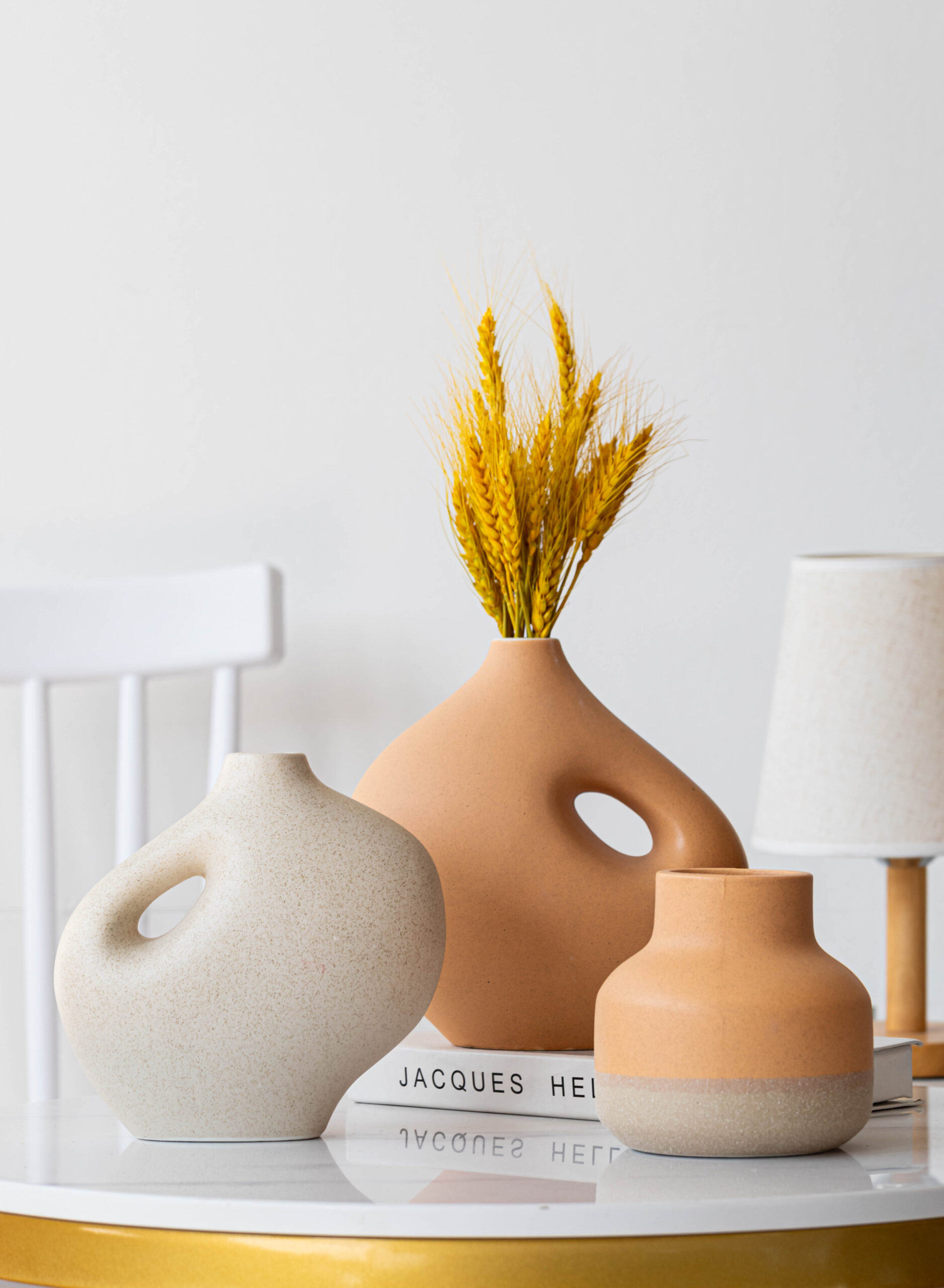
A Home Decor Collections Supplier Should Think Like a Buyer
As an American home decor designer, I see plenty of attractive products: ceramic vases, trays, candle holders, mirrors, bowls, and sculptural accents.
But a buyer does not need one more pretty object.
A buyer needs a collection that can sit on a shelf, tell one clear story, fit a price ladder, ship safely, and have a reason to reorder.
That is why choosing the right home decor collections supplier matters. A strong supplier does not only provide products. It helps build a home decor assortment strategy.
The question is not just: “Can you make this?”
The better question is: “Can you help us build a collection that works commercially?”
Why Some Trends Break Down on Shelf
A trend can look beautiful in a showroom and still fail at retail.
That is why some trends break down on shelf.
The color may be too strong when repeated across multiple SKUs.
The texture may feel interesting in one piece but messy across a full collection.
The sculptural form may look great alone but hard to pack, price, or explain.
The hero item may be strong, but the supporting pieces may not exist.
Recent U.S. design coverage from Spring 2026 High Point Market pointed to draped forms, artisanal textures, Southwest influence, menswear patterns, oversized scale, and more detailed interiors. These are useful trend signals, but they still need to be translated into shelf-ready products.
A good supplier helps buyers use the trend signal without carrying the full trend weight.
Why Material Judgment Starts on the Ground
This is why material judgment starts on the ground.
A catalog can show the product.
A workshop can explain what may go wrong.
Will the glaze repeat?
Will the rim chip?
Will the surface scratch?
Will the shape lean?
Will the texture slow production?
Will the carton protect the item without killing margin?
MIT professor Eric von Hippel’s research on “sticky local information” explains that some problem-solving knowledge is hard to transfer away from the place where the work is actually done. In home decor, that means material behavior, finish control, forming limits, and packing risk often live closest to the workshop floor.
That is where a factory direct home decor supplier can become more valuable than a simple catalog vendor.
What a Retail-Ready Collection Usually Needs
A strong home decor collection usually needs:
One hero item that catches attention.
One or two supporting pieces that carry the style.
One smaller add-on that feels easy to buy.
One texture or color anchor.
One practical piece that helps the display feel complete.
If every item is bold, the shelf feels noisy.
If every item is safe, the shelf feels flat.
If the price ladder is unclear, the buyer has to do too much work.
A good home decor collections supplier helps the buyer decide what should lead, what should support, what should be simplified, and what should not move forward.
Why Packaging Standards Belong in the First Conversation
For B2B home decor, packaging is not the final step.
It is part of the product decision.
This is why home decor packaging standards matter early. ISTA notes that package testing often starts with defining product damage tolerance and package degradation allowance before testing begins, which matters for fragile, sculptural, ceramic, glass, and mirror products.
A vase that looks good but breaks easily is not retail-ready.
A tray that scratches in transit is not retail-ready.
A mirror that needs excessive carton space may not fit the channel.
A sculptural object that cannot sit safely in packaging may need revision before production.
The best suppliers bring packaging into the conversation before the purchase order becomes expensive.
TikTok Starts the Trend. Buyers Still Need the Filter.
TikTok is now part of the home decor trend cycle. ELLE Decor reported that 2026 TikTok interior trends include skirted furniture, broken floor plans, friction-maxxing, and cabbagecore, pointing toward more nostalgic, tactile, personality-driven interiors.
But TikTok does not answer buyer questions.
Can this trend become a product family?
Can the finish be repeated?
Can the item ship safely?
Can the collection fit a retail price ladder?
Can it survive beyond one viral moment?
That is where supplier judgment matters.
FAQ: Home Decor Collections Supplier
What is a home decor collections supplier?
A home decor collections supplier helps buyers source coordinated product groups, not just single SKUs. The goal is to build assortments with style, price structure, packaging logic, and reorder potential.
Why do some home decor trends fail on the shelf?
Some trends fail because they are too bold, too fragile, too expensive, too difficult to explain, or too hard to repeat across a full collection.
Why does material judgment matter in home decor sourcing?
Material judgment helps buyers understand finish stability, production risk, breakage risk, packaging needs, and whether a product can be repeated in bulk.
What should buyers expect from a factory direct home decor supplier?
Buyers should expect more than pricing. A strong supplier should help with sample feedback, finish control, collection planning, packaging standards, and production-ready decisions.
Final Thought: A Good Supplier Edits the Collection Before the Buyer Has To
A buyer does not only see one product.
They see the shelf.
They see the carton.
They see the price ladder.
They see the reorder risk.
That is why the right home decor collections supplier is not just a source of products. It is a product decision partner.
The best supplier helps buyers turn trends into collections that look good, pack safely, make commercial sense, and have a real chance to sell again.
Leave a Reply