

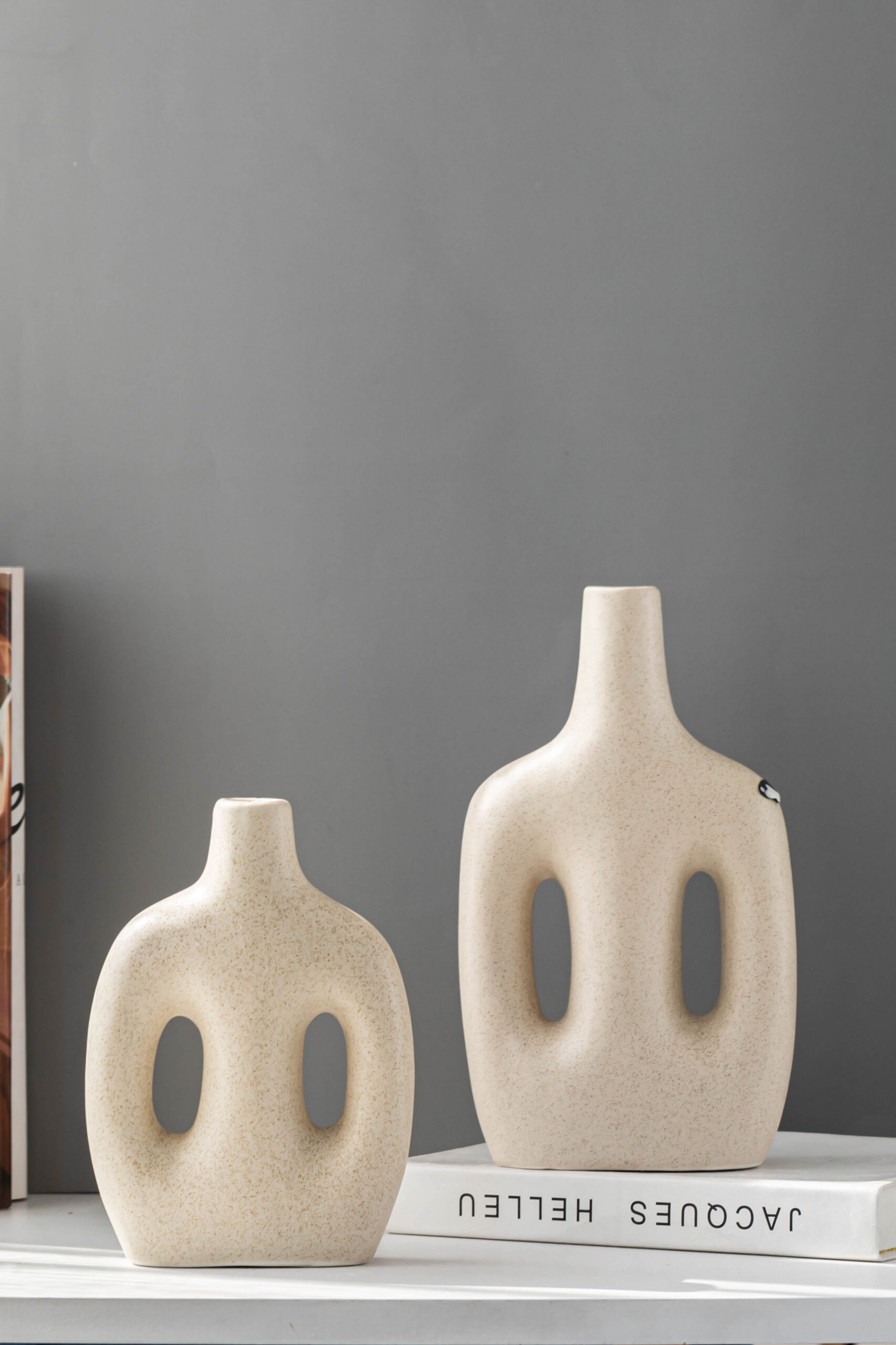
Home Decor Sample Development Is Where the Real Buying Decision Starts
As an American home decor designer, I have seen plenty of beautiful product photos.
Photos are useful. But they do not answer the buyer’s real questions.
Can this ceramic vase sit with the rest of the collection?
Does the finish look stable in real light?
Does the size feel right on a shelf?
Can the product hit the target price?
Can it ship safely?
Can it be reordered without surprises?
That is why home decor sample development matters.
A sample is not just a preview. It is the first real test of whether an idea can become a product buyers trust.
What Buyers Really Look for in a Sample
A buyer is not only asking, “Is this pretty?”
They are reading the sample like evidence.
They look at proportion, surface, weight, base stability, finish consistency, packaging risk, and whether the item belongs in a larger collection.
For categories like ceramic sculpture wholesale, this matters even more. A sculptural piece may look impressive in one photo, but the buyer still needs to know if the shape can be repeated, if the finish will stay controlled, and if the product can survive shipping.
This is also how buyers build confidence before reorder. They do not build confidence from one perfect studio image. They build it from seeing how the sample behaves, how the supplier responds, and whether the product still makes sense after revision.
What a Sample Revision Reveals About a Supplier
The first sample shows capability.
The revision shows judgment.
That is what a sample revision reveals about a supplier.
A weak supplier only says, “Yes, we can change it.”
A better supplier says:
“The glaze can be softened, but this color range will be more stable.”
“This shape looks good, but the rim is too fragile for bulk shipping.”
“This item should be smaller if it needs to support the home decor price ladder.”
“This piece works better as a hero item, not as a low-price add-on.”
“This collection needs one quieter SKU to feel complete.”
A strong revision process does not just fix details. It improves the buyer’s decision.
Stanford d.school’s design thinking framework includes prototype and test as core modes, which is useful for sourcing because samples should help teams learn before they commit to full production.
What Makes a Collection Commercially Complete
A single item can look good.
A collection has to work harder.
That is what makes a collection commercially complete: it needs a clear style story, a hero product, supporting items, different heights, useful functions, controlled finishes, packaging logic, and a believable home decor price ladder.
A good collection usually needs:
A hero piece that attracts attention.
A mid-price item that carries the style.
A small add-on that feels easy to buy.
A texture or finish anchor.
A product that helps the whole shelf feel complete.
If every item is bold, the shelf becomes noisy. If every item is safe, the shelf becomes forgettable. Sample development helps buyers find the right balance before production begins.
Why Recent U.S. Home Trends Make Sampling More Important
Recent U.S. home design coverage points toward warmer earthy colors, richer craftsmanship, curvy organic silhouettes, natural materials, and more expressive forms. Aspire Design and Home described Spring 2026 High Point Market as shaped by contrast, craftsmanship, warm colors such as terracotta and moody greens, and sculptural narrative-driven forms.
That is good news for home decor.
It also makes sample development more important.
When a product depends on glaze, texture, curve, and hand-finished detail, a buyer cannot approve it from a rendering alone. The sample must prove that the trend can become a repeatable product.
TikTok is also speeding up the inspiration cycle. ELLE Decor reported 2026 TikTok-driven interiors such as skirted furniture, broken floor plans, friction-maxxing, and cabbagecore, all pointing toward more nostalgic, tactile, personality-driven spaces.
But TikTok does not tell a buyer whether a finish can be repeated, whether a sculptural shape can ship safely, or whether the item can fit a real price ladder.
The sample answers those questions.
What Craft Regions Know That Catalogs Never Show
A catalog shows what the product looks like.
A craft region shows what can go wrong before the buyer pays for it.
That is what craft regions know that catalogs never show: which glaze is difficult to repeat, which shape may lean, which rim is too thin, which surface may scratch, which detail slows production, and which small change can make a product safer for bulk orders.
MIT professor Eric von Hippel’s research on sticky local information explains why useful product knowledge often stays close to the place where the work is being solved, because transferring that knowledge can be costly or inefficient.
For Teruierdecor, this is why sample development is not only a production step. It is a value translation process.
The buyer brings the market direction.
The workshop brings making knowledge.
The sample becomes the place where both sides meet.
A Better Home Decor Sample Development Process
A smart sample process should help buyers move from idea to confidence.
It usually includes:
First sample review: shape, finish, size, surface, weight, and first impression.
Buyer feedback: what must change, what must stay, and what role the item plays in the collection.
Workshop review: what is stable, risky, costly, or difficult to repeat.
Revision sample: improved finish, proportion, packaging direction, and shelf role.
Collection check: whether the item fits the price ladder and visual story.
Pre-production confirmation: whether the approved version can be repeated.
This is how sample development protects the buyer before the purchase order becomes expensive.
FAQ: Home Decor Sample Development
What is home decor sample development?
Home decor sample development is the process of turning a design idea into a physical sample, then testing and revising it for finish, size, price, packaging, collection fit, and production readiness.
Why do buyers need samples before ordering?
Buyers need samples to check real color, texture, weight, proportion, packaging risk, and whether the product works inside a collection.
What does a sample revision reveal about a supplier?
It reveals whether the supplier can think beyond “making the product” and help improve finish stability, price structure, packaging, and commercial shelf appeal.
Why does a home decor price ladder matter?
A price ladder helps a collection include hero pieces, mid-price items, and easy add-ons, giving retailers more ways to sell the same design story.
Final Thought: The Sample Is Where Trust Begins
A buyer does not reorder because the first photo looked good.
A buyer reorders because the product made sense after testing.
That is why home decor sample development is so important. It helps buyers see the real product, test the collection, read the price ladder, judge the supplier, and build confidence before the next order.
Leave a Reply