

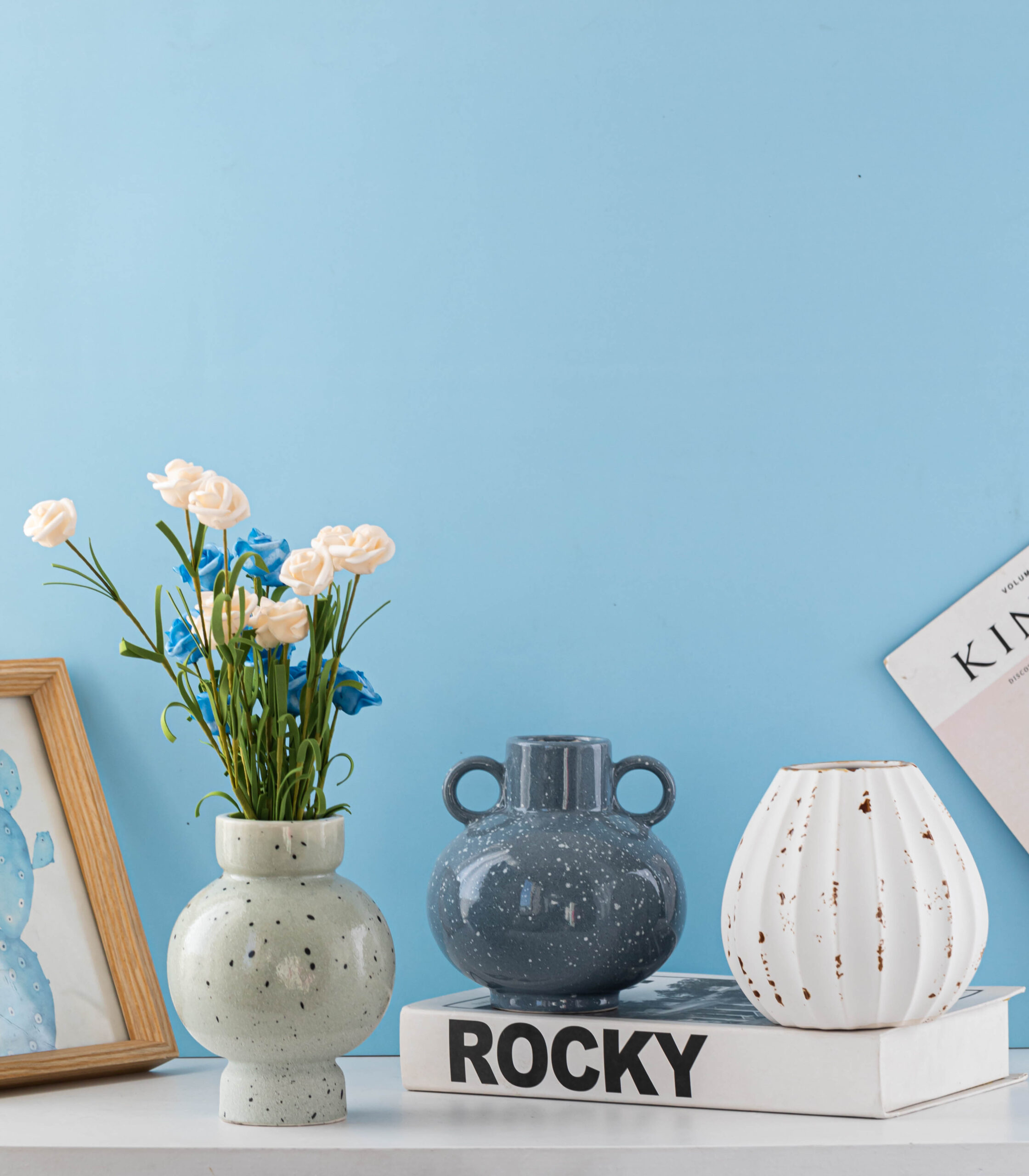
Testing a Collection by Shelf Logic Is the Buyer’s Reality Check
As an American home decor designer, I can fall for one beautiful vase very quickly.
A buyer cannot.
A buyer has to ask a harder question: will this vase, tray, candle holder, bowl, mirror, or small accent work as part of a real shelf story?
That is why testing a collection by shelf logic matters. It helps buyers move beyond “this product looks good” and ask whether the whole collection has rhythm, price structure, visual balance, packaging sense, and second-order potential.
A single product can look attractive in a sample room.
A collection has to earn retail space.
What Makes a Collection Commercially Complete
A commercially complete home decor collection usually needs more than one hero piece.
It needs a clear style direction, a strong anchor item, smaller supporting SKUs, different heights, different functions, and a believable home decor price ladder.
That is what makes a collection commercially complete:
One item catches the eye.
One item carries the color story.
One item gives the customer an easy add-on.
One item adds texture.
One item makes the display feel finished.
If every piece is bold, the shelf feels noisy. If every piece is safe, the shelf feels boring. If the lower-price item looks unrelated, the buyer starts to lose confidence.
Shelf logic helps buyers see whether the group can actually sell together.
How Buyers Read Collection Price Structure
Buyers do not only read shape and color.
They read price.
That is how buyers read collection price structure. They look for a collection that gives the retailer room to sell at different commitment levels.
A ceramic vase may be the hero item. A candle holder may be the easy add-on. A tray may connect the story. A small decorative object may help the customer buy into the look without overthinking.
This is not just merchandising language. Retail assortment planning is built around offering the right mix of styles, colors, sizes, and product attributes for the right channels and customers. Oracle describes assortment planning as matching product mix to demand across channels, styles, sizes, and colors.
For home decor, that theory becomes visible on the shelf.
Where Finish Problems Get Seen Early
A finish problem rarely looks serious in a single studio photo.
It becomes obvious when the collection sits together.
This is where finish problems get seen early. One ivory glaze may look too yellow next to a warmer beige. One matte surface may feel flat beside a more tactile piece. One reactive glaze may look beautiful alone but too inconsistent across a group.
Recent U.S. home design coverage has pointed toward richer texture, sculptural forms, warm materials, and more personality in interiors. Better Homes & Gardens recently described “midimalism” as a balance between minimalism and maximalism, using bold color, rich texture, organic materials, and sculptural elements without creating visual chaos.
That direction is good for home decor.
It also makes finish control more important.
When texture, glaze, curve, and material feel become the selling points, buyers need shelf testing before production, not after.
Home Decor Sample Development Should Test the Shelf, Not Just the Product
Good home decor sample development should not stop at asking, “Does this sample look right?”
The better question is, “Does this sample make the collection stronger?”
Maybe the hero vase is good, but the supporting candle holder needs a softer finish.
Maybe the tray is attractive, but too expensive for its role.
Maybe the small accent item should be simplified so the price ladder works.
Maybe the whole group needs one quieter SKU to balance the shelf.
Stanford d.school’s design thinking framework treats prototyping and testing as ways to learn before making bigger commitments. For home decor buyers, a shelf-tested sample group works the same way: it reveals problems while there is still time to revise.
That is the real value of sample development. It helps buyers make decisions before the purchase order becomes expensive.
Cross-Border Design Manufacturing Needs Shelf Translation
In cross-border design manufacturing, the buyer and factory may not see the same shelf in their heads.
The buyer may be thinking about U.S. retail lighting, showroom styling, price architecture, customer behavior, and seasonal refresh.
The factory may be thinking about mold, finish, kiln behavior, packing, material loss, carton size, and repeatability.
A good supplier connects both sides.
For Teruierdecor, shelf logic is part of that translation. The goal is not only to make a product from a design idea. The goal is to help that idea become a shelf-ready assortment with the right finish, right scale, right price ladder, and right packaging plan.
Why Recent Trade Fair Trends Still Need Shelf Testing
Spring 2026 High Point Market coverage pointed toward expressive interiors, sculptural forms, richer material stories, and stronger personality in home furnishings. House Beautiful described High Point as America’s largest design show and highlighted furniture, lighting, and textile directions shaping interiors in 2026.
These trends create product opportunity.
They also create buying risk.
A sculptural ceramic item may look fresh. A warm neutral glaze may feel current. A curved mirror may match the market mood. But until those pieces sit together as a collection, the buyer cannot fully judge whether the story is commercially clear.
A trend starts the conversation.
Shelf logic decides whether it becomes an order.
TikTok Can Push the Look. The Shelf Still Has to Approve It.
TikTok is now part of the home decor trend cycle. ELLE Decor’s 2026 TikTok interior trend coverage pointed to skirted furniture, broken floor plans, friction-maxxing, and cabbagecore as examples of nostalgic, tactile, personality-driven interiors entering wider design conversation.
But TikTok does not answer the buyer’s hardest questions.
Can this look become a product family?
Can the finish be repeated?
Can the collection fit a home decor price ladder?
Can it ship safely?
Can it still feel relevant after the viral moment fades?
That is why shelf logic matters. It filters inspiration through retail reality.
A Simple Shelf Logic Test for Buyers
Before approving a home decor collection, buyers can ask:
Does the collection tell one clear visual story?
Is there a hero item?
Are there enough supporting SKUs?
Does the home decor price ladder make sense?
Do the finishes work together under real light?
Do the shapes create height and rhythm?
Can weak samples be revised before production?
Does the packaging plan protect both product and margin?
Is there a believable reason for a second order?
MIT professor Eric von Hippel’s research on “sticky local information” helps explain why making-side knowledge matters here: some useful product knowledge stays close to the place where the problem is being solved. In home decor, that includes finish behavior, material limits, packing risks, and repeatability.
FAQ: Testing a Collection by Shelf Logic
What does testing a collection by shelf logic mean?
It means reviewing home decor products as a working shelf assortment, not as isolated samples. Buyers check height, finish, function, price structure, packaging, and collection rhythm.
Why is shelf logic important for B2B home decor buyers?
Because buyers need collections that can be displayed, explained, shipped, sold, and reordered. One attractive sample is not enough.
How does shelf logic help home decor sample development?
It shows which product should become the hero, which item needs revision, which piece should be simplified, and whether the full collection is ready for production.
What makes a collection commercially complete?
A complete collection has a clear visual story, a hero product, supporting items, a workable price ladder, controlled finishes, packaging logic, and second-order potential.
Final Thought: The Shelf Decides
A product photo creates interest.
A sample starts the conversation.
But the shelf decides whether the collection is ready.
That is why testing a collection by shelf logic is one of the smartest steps in B2B home decor sourcing. It helps buyers see finish problems early, read price structure clearly, improve sample development, and turn design ideas into collections that can actually sell.
Leave a Reply