

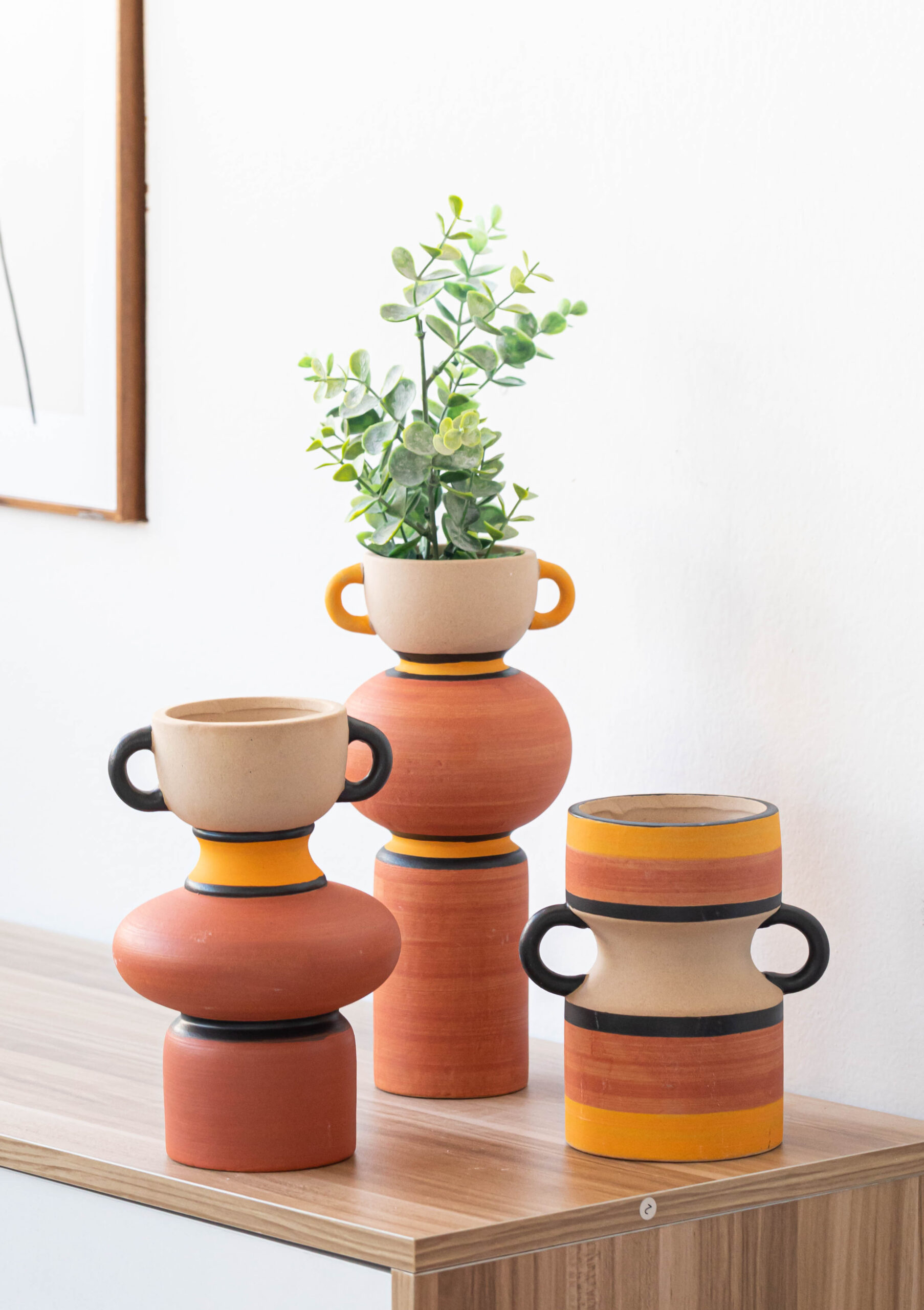
Why Shelf Logic Is the Buyer’s Real Test
As a home decor designer, I like a beautiful single product.
But buyers do not build business from one pretty vase sitting alone on a white background.
They build business from collections.
That is why testing a collection by shelf logic matters. It helps buyers understand whether a group of products can live together on a retail shelf, tell one clear style story, and make the customer want to pick up more than one item.
A vase may be attractive. A candle holder may be cute. A tray may be useful. But the buyer’s real question is:
Do these pieces make sense together?
Retail assortment planning is not just about choosing products; it is about putting the right mix of styles, colors, sizes, and price points into the right channels. Oracle describes assortment planning as the process of offering the right styles in the right sizes and colors through the right channels.
For home decor, that means a collection must be tested like a shelf, not like a moodboard.
The Shelf Does Not Lie
A moodboard can forgive almost anything.
A shelf cannot.
When products sit together, small problems become obvious. One vase is too tall. One glaze is too yellow. One candle holder feels too light. One tray looks like it belongs to another season. One sculptural object is interesting alone but strange next to the rest of the assortment.
This is where finish problems get seen early.
Shelf logic shows whether the collection has rhythm:
A tall piece.
A medium piece.
A low piece.
A texture piece.
A color anchor.
A giftable item.
A price-friendly add-on.
A hero item that catches attention.
This is also where buyers begin to see why some products survive the second order. The winners are usually not just beautiful. They are easy to display, easy to explain, easy to reorder, and easy to combine with other pieces.
Why Recent U.S. Home Trends Make Shelf Testing More Important
Spring 2026 High Point Market coverage showed a strong move toward craftsmanship, warm earthy colors, curvy organic silhouettes, sculptural forms, and richer material expression. Aspire Design and Home described the market as shaped by contrast, craftsmanship, warm earthy colors, and narrative-driven forms.
Architectural Digest also highlighted sculptural curves, artisanal textures, Southwest influence, earthy palettes, and statement pieces at Spring 2026 High Point Market.
These are not flat trends.
They depend on proportion, texture, surface, and material character. That makes shelf testing more important, not less.
A warm terracotta vase may look right on trend. But can it sit beside an ivory candle holder, a carved tray, and a small decorative bowl without looking random?
A sculptural ceramic object may feel fresh. But does it help the collection sell, or does it steal attention from the main item?
A textured glaze may feel artisanal. But does the finish look controlled enough when six pieces sit together?
This is how home decor trends become real products: not by chasing a look, but by checking whether the look can become a shelf-ready assortment.
What Buyers Gain From Sourcing in a Craft Region
When buyers work with a craft-region supplier, they gain more than production capacity.
They gain local making judgment.
That matters because shelf logic is not only a design question. It is a making question.
Can this glaze be repeated across multiple shapes?
Can the same color family work on vase, bowl, and candle holder?
Can a sculptural rim be made safely at production scale?
Can the collection share packaging logic?
Can the supplier adjust one item without damaging the whole story?
This is what buyers gain from sourcing in a craft region: experienced makers who understand how material behavior, hand-finishing, firing, shaping, weight, and packaging affect the final shelf.
MIT professor Eric von Hippel’s work on “sticky information” explains why some useful product knowledge stays close to the place where work is actually done, because it is costly to transfer away from its local context.
For Teruierdecor, that local making knowledge becomes a buyer advantage. It helps buyers see which products should be revised, which should be removed, and which should become the anchor of the collection.
How Local Making Knowledge Improves Product Decisions
The strongest suppliers do not only ask, “Do you like this sample?”
They ask better questions:
Should this vase be shorter so the shelf has better height balance?
Should this matte finish be softened so it works with warmer retail lighting?
Should this candle holder become a set of two?
Should this tray be changed from a hero item to a supporting item?
Should this collection have one bolder piece and three safer pieces?
That is how local making knowledge improves product decisions.
It turns sample feedback into assortment judgment.
Stanford d.school’s design thinking framework includes prototyping and testing as core modes; its guidance treats prototypes as tools for learning, testing assumptions, and improving ideas before moving forward.
For home decor buyers, a shelf-tested sample group works the same way. It is not just a product review. It is a small rehearsal for the retail floor.
Why OEM ODM Workshop Capability Matters
A good idea still needs workshop control.
This is where OEM ODM workshop capability becomes important.
If a buyer tests a collection by shelf logic and finds three problems, the supplier must be able to revise them quickly:
The finish needs to be warmer.
The vase needs a wider base.
The candle holder needs a heavier feel.
The tray needs a cleaner edge.
The collection needs one more small add-on SKU.
That connects directly to the sample revision process home decor buyers rely on. The better the workshop, the more practical the revision becomes.
A supplier with real OEM ODM capability can help buyers move from inspiration to sample, from sample to shelf grouping, and from shelf grouping to production-ready assortment.
TikTok Can Make a Style Popular. Shelf Logic Decides If It Becomes a Collection.
TikTok now pushes home decor trends into the mainstream faster than traditional retail cycles. ELLE Decor recently covered TikTok-driven interiors such as broken floor plans, cabbagecore, and other highly visual home trends entering the broader design conversation.
That speed creates opportunity.
It also creates risk.
A trend may look strong online but fail on the shelf because it is too hard to group, too specific, too seasonal, too fragile, or too difficult to explain.
Shelf logic slows the trend down just enough to ask the commercial question:
Can this become a collection buyers can actually sell?
A Simple Shelf Logic Test for Home Decor Buyers
Before approving a collection, buyers can ask:
Does the collection have one clear visual story?
Does it include different heights and functions?
Does the color palette feel controlled?
Can the hero item and supporting items sell together?
Are the finishes stable enough across shapes?
Can the packaging plan support the assortment?
Can the supplier repeat the result after approval?
Is there a reason for a second order?
That last question matters most.
The first order proves interest.
The second order proves the product made sense.
FAQ: Testing a Collection by Shelf Logic
What does testing a collection by shelf logic mean?
It means reviewing products as they would appear together on a retail shelf, checking height, color, finish, function, price structure, packaging, and collection rhythm.
Why is shelf logic important for home decor buyers?
Because buyers rarely sell one isolated item. They need products that work together as an assortment and help customers understand the style story quickly.
How does shelf logic help during sample revision?
It shows which samples need changes in size, finish, weight, proportion, or role inside the collection before production begins.
Why does a craft-region supplier help with shelf logic?
A craft-region supplier can combine design feedback with making knowledge, helping buyers adjust products in ways that are visually stronger and easier to produce.
Final Thought: The Shelf Is the Real Buyer Meeting
A single sample can impress.
A tested collection can sell.
That is why testing a collection by shelf logic should happen before full production. It helps buyers see finish problems early, use sample revision wisely, understand supplier capability, and build assortments that have a real chance of surviving the second order.
Leave a Reply