

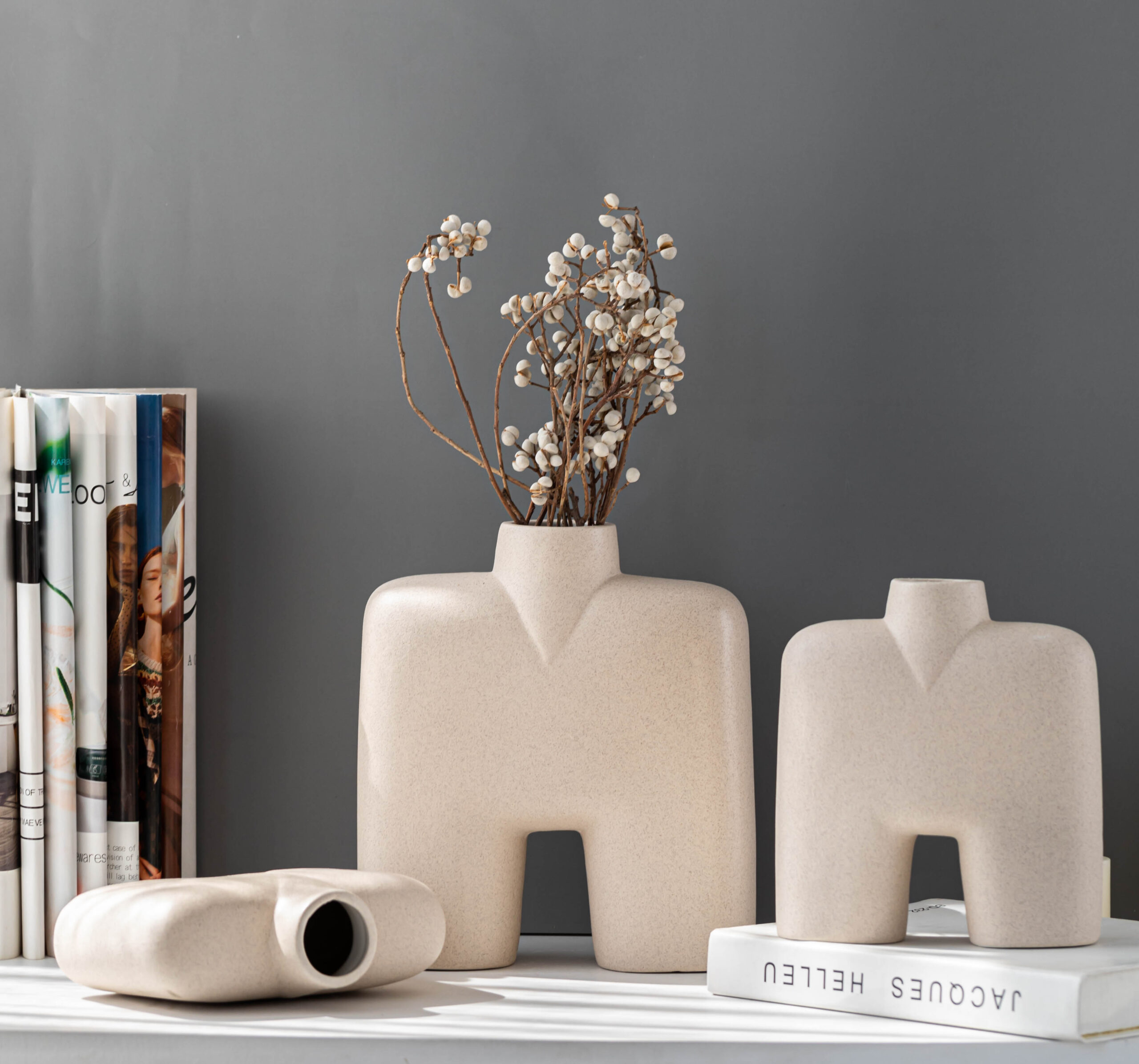
A strong product can win attention. A strong collection can win the order.
This is one of the quiet shifts that separates casual sourcing from serious buying.
Many suppliers still present home decor the same way: item by item, photo by photo, SKU by SKU. A vase here. A planter there. A candle holder somewhere else. Each one trying to stand alone.
But most buyers are not shopping for isolated objects.
They are building a shelf.
A table story.
A seasonal edit.
A category mix.
A price ladder.
A visual rhythm that has to hold together in front of real customers.
That is why buyers often prefer suppliers who think in collections, not just products.
Because a single good item is interesting.
A workable collection is usable.
And in retail, usable usually beats interesting.
Buyers do not buy one piece of decor. They buy how pieces behave together.
This is the first thing many suppliers underestimate.
Even when a buyer starts with one hero item, the decision rarely stays there. They begin asking questions like:
What sits next to it?
Can this tone connect with safer items?
Is there a higher-ticket version?
Is there a more commercial repeater?
Can this shape support a broader family?
Can the assortment work across different visual weights and different customer budgets?
That is collection thinking.
1. Buyers look for internal logic, not just attractive design
A decor supplier may have beautiful items but still feel weak if the assortment looks random.
Buyers notice whether the supplier can create:
- shape relationships
- finish continuity
- tonal coordination
- size hierarchy
- material contrast with control
- price architecture that makes sense
When these things exist, the supplier starts to feel more useful.
Because now the buyer is not just being shown objects.
They are being shown options for building a commercial environment.
2. Collections reduce buying fatigue
A buyer’s job is not simply to find pretty things. It is to make decisions faster with fewer mistakes.
A supplier who presents coherent collections helps reduce friction:
- fewer mismatched choices
- less time imagining pairings
- less effort building visual structure from scratch
- fewer gaps in assortment planning
That matters.
The more commercial pressure a buyer is under, the more they value suppliers who help them decide, not just browse.
Collections make suppliers feel closer to retail reality
This is the deeper reason buyers prefer collection-based thinking.
A supplier who thinks in collections usually sounds like they understand the selling floor better.
Not because they have better taste, but because they seem closer to the way products are actually purchased, displayed, and replenished.
3. Buyers want suppliers who understand how product becomes presentation
Most decorative products do not sell in a vacuum.
A vase may depend on:
- nearby texture
- complementary finish
- proportional contrast
- visual breathing space
- a supporting object that makes the whole story feel intentional
A collection-minded supplier understands that decor is often purchased and perceived in relation, not isolation.
That immediately feels more retail-aware.
4. Collection thinking suggests stronger commercial judgment
When suppliers think in families instead of fragments, buyers often assume — correctly or not — that the supplier is also better at other commercial disciplines:
- product development
- assortment balance
- category planning
- sample direction
- margin layering
- reorder extension
Why? Because collection thinking signals structure.
It suggests the supplier is not merely showing output. They are organizing output into something that can travel further in business.
A collection is not just a visual group. It is a decision tool.
This is where many presentations still go wrong.
Some suppliers call a few similar items a “collection” simply because they share a glaze or shape style. But buyers need more than surface resemblance.
A real collection helps answer decisions.
5. Buyers compare collections by role, not just style
A useful collection often contains different roles:
- hero pieces that attract attention
- safer commercial pieces that carry volume
- bridge pieces that connect styles
- smaller add-ons that increase basket value
- entry pieces that lower hesitation
- elevated pieces that raise perceived value
This mix is what makes a collection commercially alive.
A group of products that all try to be the star often becomes hard to use.
6. Buyers like suppliers who leave room for adaptation
Good collection thinking is structured, but not rigid.
Buyers appreciate suppliers who can show a collection with enough logic to feel complete, while still leaving room for adjustment:
- different color directions
- market-specific material choices
- size simplification
- price-point edits
- packaging or MOQ realities
That kind of flexibility feels professional. It shows that the supplier understands collections as living commercial frameworks, not frozen styling exercises.
Single-product thinking often creates hidden problems later
A supplier may still get an order with strong individual items. But the weaknesses show up later.
This is where buyers become more cautious.
7. Products without collection logic often create display friction
A buyer can like an item and still hesitate, because they do not know what to do with it commercially.
Questions start appearing:
- Does it belong to a larger visual story?
- Will it look lonely in-store?
- Does it need companion pieces to work?
- Is it too specific to scale?
- Can it sit with existing assortment without visual conflict?
When suppliers cannot help solve those questions, the buyer has to do more assembly work mentally.
That added effort lowers momentum.
8. Fragmented assortments are harder to reorder intelligently
This is another problem that appears later.
When items are sourced in isolation, reorder becomes less strategic. Buyers may struggle with:
- how to extend a successful item
- what companion products to add
- how to refresh without breaking continuity
- how to build on a winner instead of starting over
A supplier who thinks in collections makes reorder easier because the growth path is already partially built into the assortment logic.
That is powerful.
Buyers are not only choosing products. They are choosing how much thinking they must do themselves.
This is one of the least visible but most important truths in B2B decor buying.
A supplier who thinks only in products hands the buyer a pile of choices.
A supplier who thinks in collections hands the buyer a more usable framework.
That difference changes everything:
- speed of decision
- confidence in the selection
- clarity in sample requests
- ease of internal presentation
- confidence in shelf storytelling
- ability to expand later
So when buyers prefer collection-minded suppliers, they are not only rewarding creativity. They are rewarding reduced cognitive load.
And reduced cognitive load is a real commercial advantage.
In home decor, collection thinking is often where taste becomes business
This is where the strongest suppliers stand apart.
Anyone can follow a trend and make an item.
Fewer suppliers can shape that item into a family.
Even fewer can shape that family into a retail-ready assortment.
That final step is where real value appears.
Because a collection is where:
- design gets organized
- pricing gets layered
- display gets easier
- assortment gets smarter
- reorder gets more predictable
This is also where Teruierdecor’s kind of positioning becomes stronger. Not simply by offering decorative products, but by helping buyers move from object selection to assortment construction. That is a much more commercially relevant role.
A supplier who can think in collections is no longer just showing taste.
They are helping build a shelf strategy.
Final thought: buyers prefer what they can build with
That is the real reason collections win.
A single product may spark interest.
A coherent collection gives the buyer something to build with.
And in a market where buyers are balancing trend, margin, presentation, and replenishment all at once, the supplier who thinks in collections feels closer to how business actually happens.
That is why buyers keep coming back to them.
Not because the products are louder.
Because the thinking is more usable.
Leave a Reply