

Why the Best Home Decor Programs Begin With a Faster Sample
A lovely idea is nice. A lovely idea you can approve this month is better.
As an interior designer, I do not need more inspiration. I need fewer delays wearing pretty shoes.
That is exactly why a fast sampling home decor supplier matters. Not because speed is fashionable on its own, but because speed helps translate taste into action—before the season shifts, the client cools off, or the shelf plan gets rewritten by something shinier.
And North America is still very much in the mood for fresh product. High Point Market’s Spring 2026 calendar is already framed around trend seminars and “moment-defining” design conversations, while Las Vegas Market continues to position itself as a major destination for discovering new home assortments in person. The appetite is there. The winning suppliers are the ones who can move fast enough to meet it.
Fast sampling is not factory speed. It is decision speed.
This is the stylish little secret.
A quick sample is useful because it shortens the emotional distance between “I like this direction” and “Yes, let’s buy it.” Once a piece is real, you can judge proportion, glaze, surface, shelf presence, and packing logic without relying on hopeful imagination.
Stanford d.school’s prototyping philosophy is built on learning by making. That same logic works beautifully in home décor sourcing: faster samples create faster feedback, and faster feedback creates better buying decisions.
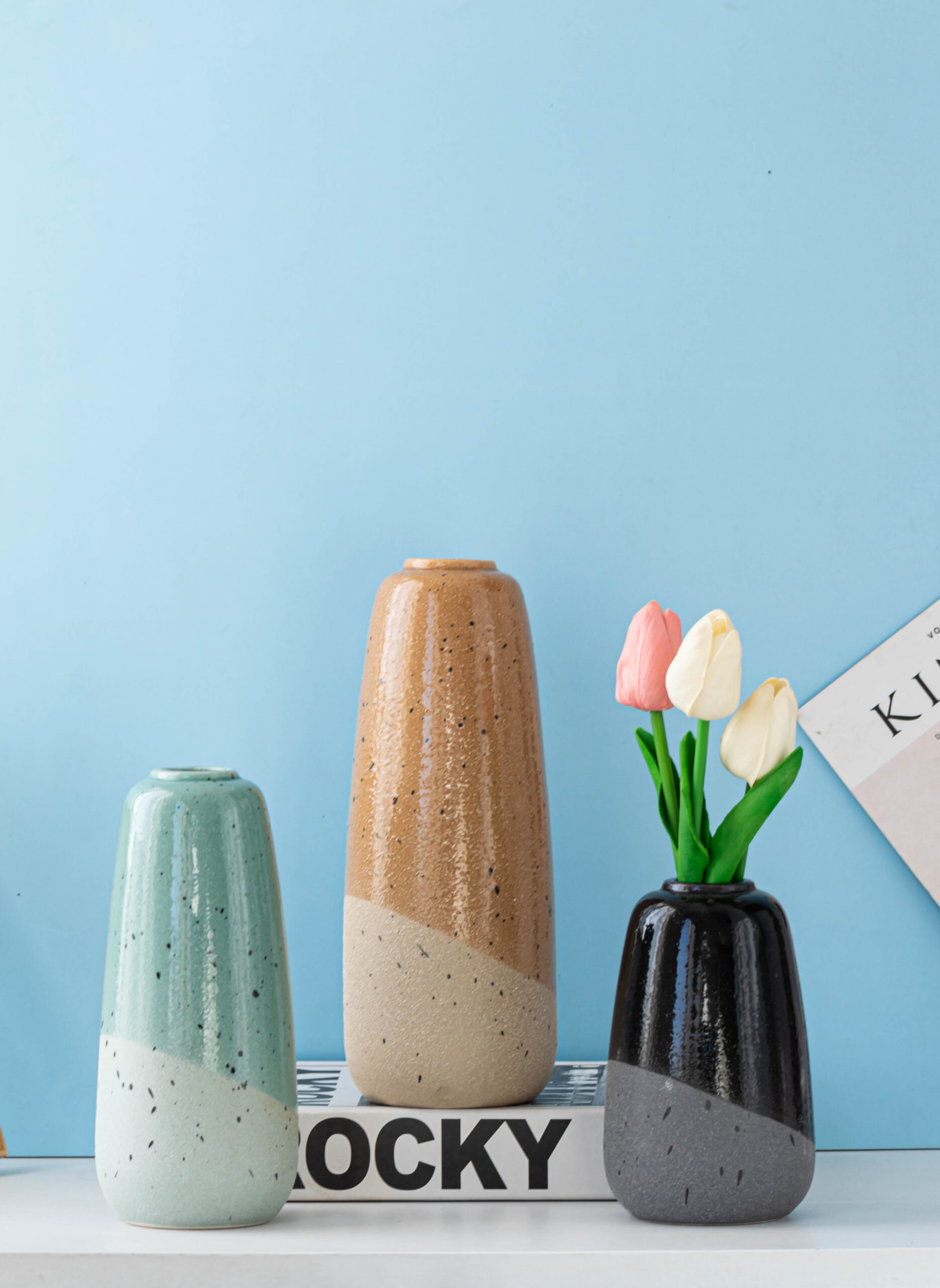
That matters whether you are developing a modern floral vase for a boutique collection, a cheerful American home yellow vase for spring styling, or a broader ceramic program meant to support multiple channels.
The current market wants warmth, character, and pieces that feel easy to love
Recent 2026 trend coverage has leaned toward more color, more character, and more expressive interiors. ELLE’s 2026 décor roundup points to that broader shift, while Elle Decor’s TikTok trend coverage notes that several design movements catching attention online also have real-world staying power. High Point’s Spring 2026 theme, “Preserve,” adds another useful clue: buyers are not just looking for novelty, but for objects with mood, memory, and personality.
This is where ceramics become especially interesting. A vase is easy to style, easy to photograph, and easy to merchandise—if it is developed well. That is one reason wholesale ceramic vases for USA continues to be such a practical category. It sits very comfortably at the intersection of décor, gifting, styling, and repeatable volume.
For designers, a good supplier should feel like a shortcut—not a project
A smart trade program for interior designers should never feel ceremonial. It should feel useful.
It should help narrow choices. It should make finish discussions clearer. It should turn vague references into approval-ready samples. Most importantly, it should protect the designer from wasting time on pieces that look charming in theory and confused in real life.
That same logic scales into hospitality too. HD Expo + Conference is built for designers, purchasers, operators, and developers sourcing for hotels and commercial spaces, which tells you how specification-heavy hospitality buying has become. A strong hospitality procurement supplier today must do more than send beautiful pieces—it has to support a real approval process.
The overlooked advantage is usually quality control, not just design
Beautiful samples open doors. Consistent reorders keep them open.
That is why the quality control process home decor buyers ask about is not a boring detail. It is part of the product story. A ceramic factory should be able to speak clearly about glaze consistency, dimensional tolerances, packing protection, batch stability, and what changes when an item moves from first sample to production run.
Anyone can make one pretty vase for a first impression.
A serious supplier builds a process that makes the second, third, and fourth shipment feel reassuringly familiar.
Fast samples are even more useful when trends move through TikTok at full speed
TikTok is not the whole market, of course. But it is often an early amplifier of what starts to feel visually magnetic. Elle Decor’s 2026 TikTok trend coverage suggests that some of the platform’s design directions are not just quick flashes of attention—they have historical roots and real traction. That matters because home décor buyers are no longer only responding to trade-show floors. They are also responding to the images their customers have already learned to desire.
So a fast sample is not merely a production convenience. It is a way to test a style before the algorithm gets bored of it.
FAQ: What buyers should ask a ceramic supplier before they approve the program
1) What should a fast ceramic sample include?
At minimum: dimensions, finish notes, material details, estimated production lead time, and a first-pass packing concept. A sample should answer questions, not just attract compliments.
2) Why are ceramic vases such a strong wholesale category?
Because they are flexible across channels. A single vase design can serve boutique retail, residential styling, gifting, seasonal assortments, and even hospitality staging.
3) Why does quality control matter so much in home décor?
Because ceramics are visual products. Slight glaze inconsistency, poor balance, weak packing, or shape drift can quietly damage both margin and buyer trust.
4) What paperwork should U.S. importers expect?
U.S. Customs and Border Protection guidance lists common import documentation such as a commercial invoice, bill of lading or air waybill, and packing list, with additional certificates or documents depending on the shipment.
5) What should buyers ask about ceramic compliance?
Ask whether the product is decorative only or intended for food contact. FDA guidance specifically discusses lead and cadmium concerns in ceramic ware in relevant contexts, so intended use matters.
6) Why does sample speed matter for trend-driven décor?
Because speed preserves timing. A trend can still be commercially useful even if it is playful or seasonal—but only if the supplier helps you test it before the window narrows.
The most charming suppliers are usually the most useful ones
That is the real appeal of a fast sampling home decor supplier.
Not drama. Not inflated promises. Not a giant catalog meant to distract you from slow execution.
Just a cleaner path from concept to ceramic to confident order.
And in a market that now rewards both personality and pace, that is not a small advantage. It is the whole point.
Leave a Reply