

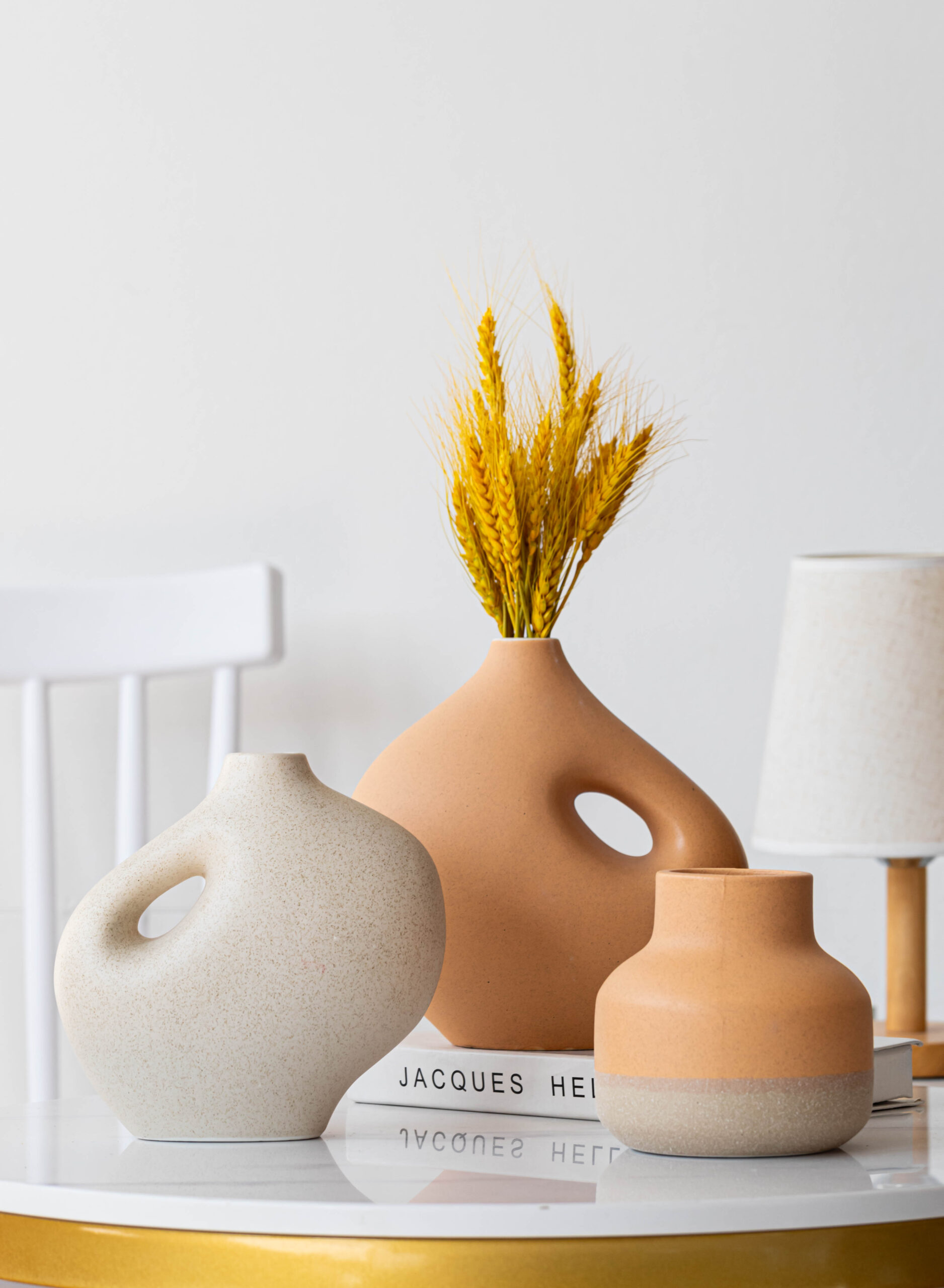
Why the Best Vase Programs Start With a Faster Sample, Not a Bigger Catalog
Some vases sell because they are pretty. The better ones sell because they arrive at the right moment.
As an interior designer, I like beautiful objects. As a working buyer, I like beautiful objects that do not waste my season.
That is why a fast sampling home decor supplier matters so much now. It is not just about getting a prototype on the table quickly. It is about shortening the distance between a trend, a sample, an approval, and a reorder—before the market mood changes its shoes and wanders off.
That timing feels especially relevant in North America. High Point Market’s Spring 2026 programming is centered on “moment-defining trends,” while Las Vegas Market continues to pitch itself as a major in-person sourcing destination spanning more than 3,500 brands. In other words, buyers are still actively hunting for newness, but they need it to move faster from inspiration to shelf.
A fast sample is really a fast decision
That is the elegant part people miss.
The sample is not the finish line. It is the shortcut to clarity.
When a supplier can turn a sketch, a reference image, or a styling direction into a real ceramic sample quickly, everyone downstream gets smarter sooner. You stop debating vague possibilities and start reacting to something tangible: the shape, the glaze, the scale, the weight, the shelf presence, the packing logic.
Stanford d.school’s design framework is built around making, testing, and learning through prototypes. That idea fits sourcing beautifully. A faster sample does not simply save time; it improves judgment.
This is why vase categories still have such commercial sparkle
The vase is one of those rare home categories that can be both expressive and operationally neat.
It works for boutiques. It works for multi-store assortments. It works for styled residential projects. It works for lifestyle brand ceramics because it is decorative, giftable, scalable, and photographically cooperative—which, in this century, is practically a personality trait.
That is also why wholesale decorative vases USA remains such a useful commercial lane. A good vase can sit in a catalog, on a console, in a showroom, or in a hotel mock-up and still make sense.
And right now, the design mood is helping. Recent trend coverage has spotlighted fruit vases and other playful, shape-led accents, while TikTok-influenced 2026 interiors coverage keeps pointing toward more character, more visual warmth, and less beige hesitation. For ceramic sourcing, that is a lovely clue: the market is still rewarding pieces with identity.
Not every buyer needs a giant supplier. They need the right rhythm
Whether you are a boutique retailer, a Los Angeles décor wholesaler, or a growing brand building a new tabletop story, the pain point is usually the same: too many factories are slow when you need speed, and vague when you need specifics.
The better partner is often not the loudest one. It is the one that knows how to turn taste into a working process.
That is where a seasoned Chinese vase manufacturer becomes useful. Not just because of production capacity, but because mature ceramic ecosystems can compress development time when mold thinking, glaze experience, finishing judgment, and export coordination already exist in one orbit.
For US-facing sourcing, that is the quiet logic behind a Teruier manufacturer for US buyers proposition. The real value is not “China” as a generic label. It is a craft-rich manufacturing base translated into a cleaner experience for American buyers.
A pretty sample is lovely. A repeatable program is lovelier.
Anyone can make one handsome vase when the meeting is still flirtatious.
The real question comes later: can the supplier make it again with the same mood, the same finish discipline, the same commercial polish?
That is where fast sampling becomes even more strategic. It lets you test not only style, but repeatability. A supplier who handles samples well is more likely to handle wholesale decorative vases well—because both tasks rely on the same hidden muscles: proportion control, glaze consistency, packaging logic, and production communication.
That is how a trend becomes a program instead of a one-box romance.
The North American market still wants style, but it wants style with receipts
Trade shows and media are both telling the same story. Buyers want pieces that feel tactile, personal, expressive, and current—but they also want confidence in how those pieces move through the real world. High Point continues to spotlight the styles and product directions shaping the market, while Las Vegas Market leans on physical discovery across broad décor categories. The taste is playful; the buying is not.
That is why the smartest suppliers do more than send samples. They send confidence.
FAQ: What buyers should ask a ceramic vase supplier before placing the order
1) What should a fast vase sample include?
A serious sample should include clear dimensions, material notes, finish or glaze details, rough packing logic, and an estimated production timeline. The purpose is not only to admire the object. It is to reduce uncertainty around scale, surface, and sellability.
2) Why are vases such a strong category for US wholesale?
Because they travel well across channels. A vase can work in retail merchandising, design projects, gifting programs, and seasonal collections. That flexibility makes it one of the more practical decorative categories to develop and test quickly.
3) What paperwork should importers expect?
U.S. Customs and Border Protection guidance notes that common import documentation includes a commercial invoice, bill of lading or air waybill, and packing list, with other certificates or special documents required depending on the shipment.
4) What should buyers ask about ceramic compliance?
Ask whether the item is decorative only or intended for food contact. FDA guidance specifically highlights lead and cadmium concerns in ceramic ware in relevant contexts, so intended use matters.
5) Why does sample speed matter so much for decorative vases?
Because vases are often trend-sensitive. If you wait too long to test shape, color, and packaging, the window for merchandising momentum gets smaller.
6) What makes a supplier feel reliable for US buyers?
Clear communication, fast sampling, realistic production notes, stable finishing, and an understanding of export expectations. A good supplier does not merely make objects; it helps buyers make timely decisions.
The best suppliers are not just making products. They are protecting momentum.
That, to me, is the real charm of a fast sampling home decor supplier.
Not frantic speed. Not factory drama. Not a 47-page pitch deck pretending to be support.
Just a smoother path from idea to object to order.
And in home décor—especially in vases—that path can make all the difference between “interesting” and “in the next shipment.”
Leave a Reply