

There is a certain kind of object that disappears in a catalogue and then suddenly becomes essential in a room. A floor vase is one of those objects. Online, it can look like filler. In a real interior, it changes the entire rhythm of a space.
As a Canadian interior designer, I have been thinking about why floor vase wholesale feels newly important. Not because people need more things. Quite the opposite. In a market that is saturated with fast visuals and disposable styling, buyers are looking for fewer objects that can carry more atmosphere. The floor vase does that quietly. It introduces height, silhouette, texture, and pause. Decorative-arts scholarship has long treated the vase as more than a container: Bard Graduate Center describes it as a recurring design motif across major phases of neoclassicism, while The Met notes that oversized decorative vases historically signalled artistic and cultural sophistication.
The object that makes a room feel finished
What I keep seeing across North American buying culture is a move away from flat styling and toward sculptural presence. At High Point Market, the 2025 Style Spotters programme explicitly framed “sculptural vases” as part of “gallery-inspired living.” High Point’s Future Snoops trend theme, Club Kitsch, also pointed to comfort, familiarity, expressive colour, and a retro-modern ease that blends nostalgia with contemporary living. And at Las Vegas Market Winter 2026, ANDMORE positioned the event around trend-forward merchandise across curated neighbourhoods, reinforcing how buyers are sourcing not just products, but mood, identity, and visual distinction.
For buyers, that matters. A floor vase is not only décor. It is a low-footprint, high-visual-impact item that can work in entryways, hospitality corners, show suites, staged living rooms, and retail displays. In smaller homes and condos, especially the kind we often design around in Toronto or Vancouver, it delivers scale without asking for another table, shelf, or console. That is good design, but it is also good merchandising.
Why this works now, not just aesthetically
The old version of decorative retail was about abundance. The newer version is about edit. One strong piece, placed well, photographs better, reads better, and sells better. That is why modern ceramic vase wholesale is becoming more useful than generic filler décor. Buyers want an object with a recognisable outline, a believable material story, and enough presence to hold a corner on its own.
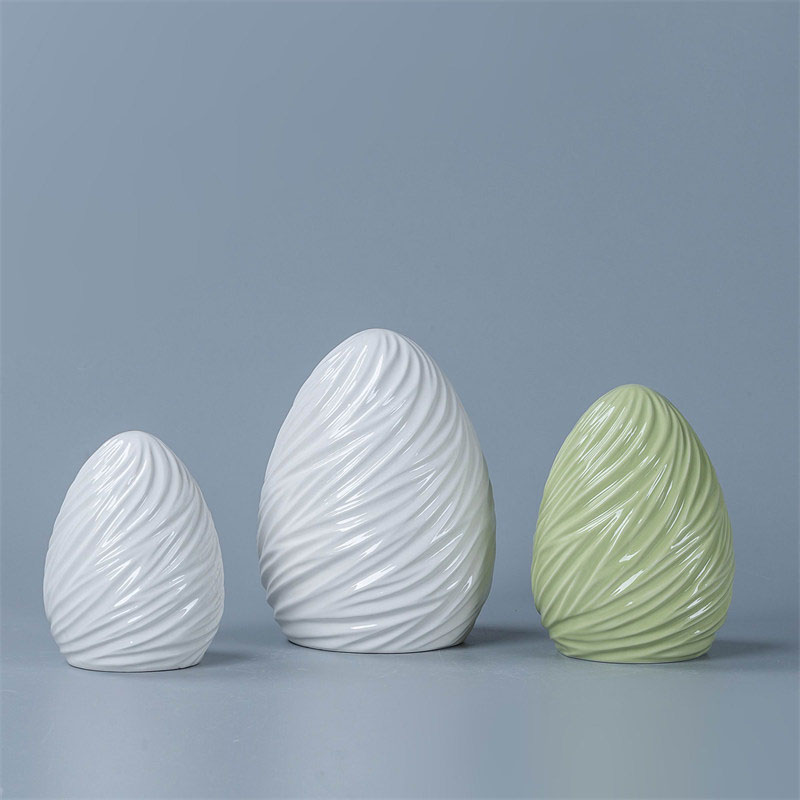
This is also why assortment matters. A strong programme does not stop at one oversized silhouette. It usually works best as a layered family: a statement floor vase wholesale anchor, a companion small ceramic vase wholesale option for shelves and sideboards, and one slightly playful SKU that softens the range for lifestyle merchandising. In some assortments, that playful note might even be an American home lemon vase or another fruit-led accent that gives the collection a little more social energy.
The social-media effect is real, whether buyers admit it or not
Design media in North America are being unusually direct about TikTok’s influence on interiors. ELLE Decor recently wrote that TikTok now has an “outsized influence” on home design trends and cited research relayed from Resonate showing that half of furniture buyers begin inspiration on social platforms before they are ready to buy. At the same time, design coverage is pointing toward more expressive, more collectible-looking objects. House Beautiful’s 2026 trend report highlighted fruit-adorned vases and predicted that fruit-vase forms will be big, while Better Homes & Gardens noted the spread of produce-and-floral arrangements across social feeds.
That matters because the floor vase has moved beyond being a purely traditional object. It now sits at an interesting intersection: part sculpture, part styling tool, part content asset. A buyer may source it for the sales floor, but the customer also reads it as an image-ready object. This is one reason ceramic decoration wholesale has become less about ornament in the old sense and more about visual identity in the digital sense.
What B2B buyers should actually look for
If I were building a collection for a retailer today, I would not chase floor vases that are merely large. I would look for floor vases that are legible from a distance and calm up close. That usually means three things: a silhouette with a clean read, a surface with believable tactility, and proportions that do not become awkward when styled empty.
This is where custom OEM decorative vases become commercially useful. Retailers do not always need radical shapes. Often, they need small adjustments that make a product feel proprietary: a warmer glaze, a taller neck, a softer shoulder, a more matte finish, a more Canadian-friendly neutral palette, a handle detail that makes the vase feel editorial rather than generic. That is where margin lives. Not in decoration alone, but in recognisable restraint.
For Teruierdecor, this is exactly where the opportunity sits. The buyer is not simply looking for a vase supplier. The buyer is looking for a partner who understands how one object travels across functions: showroom piece, hero image, lifestyle prop, seasonal update, hospitality accent, and eventually reorderable SKU.
A quieter kind of bestseller
The most interesting products in home décor are not always loud. Sometimes they are simply clear. A good floor vase tells the customer where to look. It gives the room a centre of gravity. It slows the eye down for a second. In an age of scrolling, that may be the most valuable function an object can have.
That is why I would not treat floor vase wholesale as an accessory category. I would treat it as a strategic one. Not because every room needs a vase, but because more and more rooms now need one object that feels composed, sculptural, and emotionally finished.
And in retail, that kind of calm is surprisingly rare.
Leave a Reply