

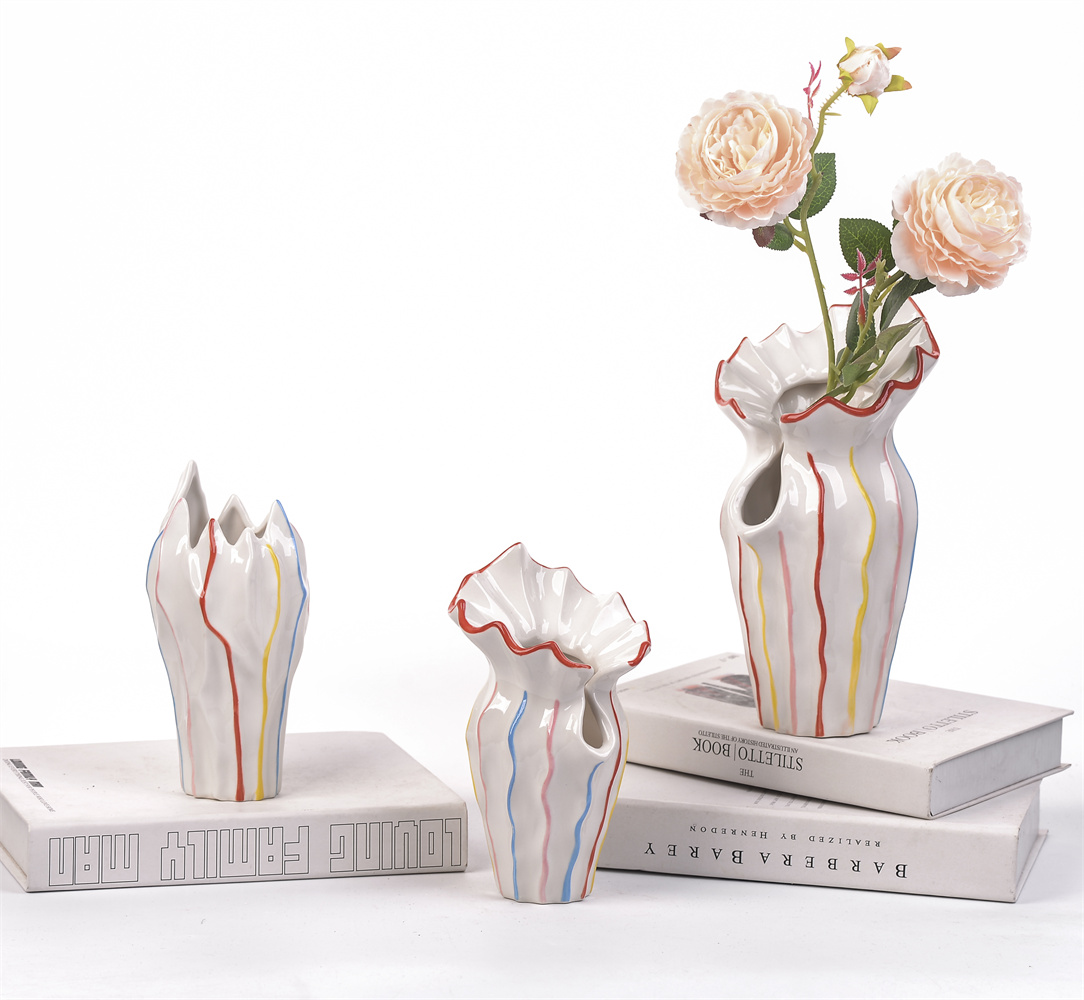
If you ask me what makes Chinese ceramic home decor wholesale compelling today, I would not start with price. I would start with edit.
As a U.S. home designer, I see buyers getting more selective, not less. They do not need another endless catalog of safe pieces. They need ceramics that can hold a shelf, style a room, photograph beautifully, and still justify a reorder six months later. That is why the strongest ceramic programs coming out of China are not winning because they are cheaper. They are winning because they feel clearer.
The market is asking for more character, not more clutter
Recent signals from the U.S. and Europe all point in the same direction. ASID’s Spring 2026 High Point session is centered on expressive interiors, elevated craftsmanship, and design rooted in purpose and performance. Atlanta Market reporting says manufacturers expect 2026 demand to favor beautiful, well-made goods, artisan appeal, and higher perceived value. NY NOW continues to frame itself around sourcing both timeless best-sellers and “the next big thing,” while Maison&Objet’s January 2026 theme, Past Reveals Future, explicitly celebrates craftsmanship, excellence, and design with soul. Ambiente 2026 coverage likewise points to brighter, more expressive objects and decorative pieces that double as art.
That matters because wholesale ceramic home decor is no longer just a fill-in category. The right ceramic line now has to do more than “match.” It has to give a retailer a point of view.
A strong ceramic line should behave like a merchandising tool
The best Chinese factory home decor programs understand this. A vase is not just a vase anymore. It may need to work as a centerpiece, a console accent, a shelf anchor, or part of a layered tabletop story. That is why a serious ceramic vase supplier should be thinking in collections, not isolated samples. Buyers want forms that can scale across sizes, price levels, and channels without losing identity.
This is also why vase bulk import only makes sense when the line has structure. Volume alone does not create value. A coherent family of shapes does.
Good design changes what buyers think the product is worth
There is strong research behind that instinct. A 2021 peer-reviewed study found that design aesthetics affect perceived product value, and a 2022 peer-reviewed study found that design aesthetics positively influence purchase intention through perceived value. In plain English, silhouette, finish, and material presence are not decorative extras. They shape what buyers think the object is worth before they ever touch it.
That is exactly why ceramic vases for home décor keep outperforming flatter accessory categories when they are done well. A better form creates a stronger first impression, a stronger shelf image, and usually a stronger sales story.
TikTok is not the buying plan, but it is affecting what gets noticed
I would never tell a buyer to build a sourcing strategy from TikTok. But I would absolutely tell them to watch what it accelerates. ELLE Decor reported in March 2026 that TikTok continues to shape interior design trends, including ceramics-adjacent motifs like cabbageware, while House Beautiful’s Ambiente coverage called out fruit vases and other playful decorative objects as standout 2026 signals. That tells me something useful: decorative ceramics are moving faster from visual culture into actual buying conversations.
So when a buyer asks a USA home decor supplier for something that feels more distinctive, that request is not random. It is the market reacting to faster-moving taste.
Factory-direct only matters when the product still feels edited
This is where many suppliers get it wrong. Being an OEM home accents manufacturer is not the advantage by itself. The advantage is being able to translate demand into product that still feels intentional at scale. A buyer does not just want factory access. A buyer wants fewer mistakes, cleaner sampling, better repeatability, and shapes that feel current without becoming gimmicky.
That is the real promise of Chinese ceramic home decor wholesale at its best: not more SKUs, but better filtering.
What I would actually buy now
I would buy the ceramic line that feels like someone made decisions.
I would buy the supplier that understands the difference between a showroom sample and a shelf-ready collection. I would buy the assortment where the vases feel strong enough to stand alone, but flexible enough to support gifting, tabletop, and everyday home styling. And I would trust the partner that knows a good Chinese ceramic home decor wholesale program should help a retailer sell atmosphere, not just inventory.
Because in this market, the best ceramics do not win by being the cheapest thing in the container.
They win by being the piece the buyer remembers first.
Leave a Reply