

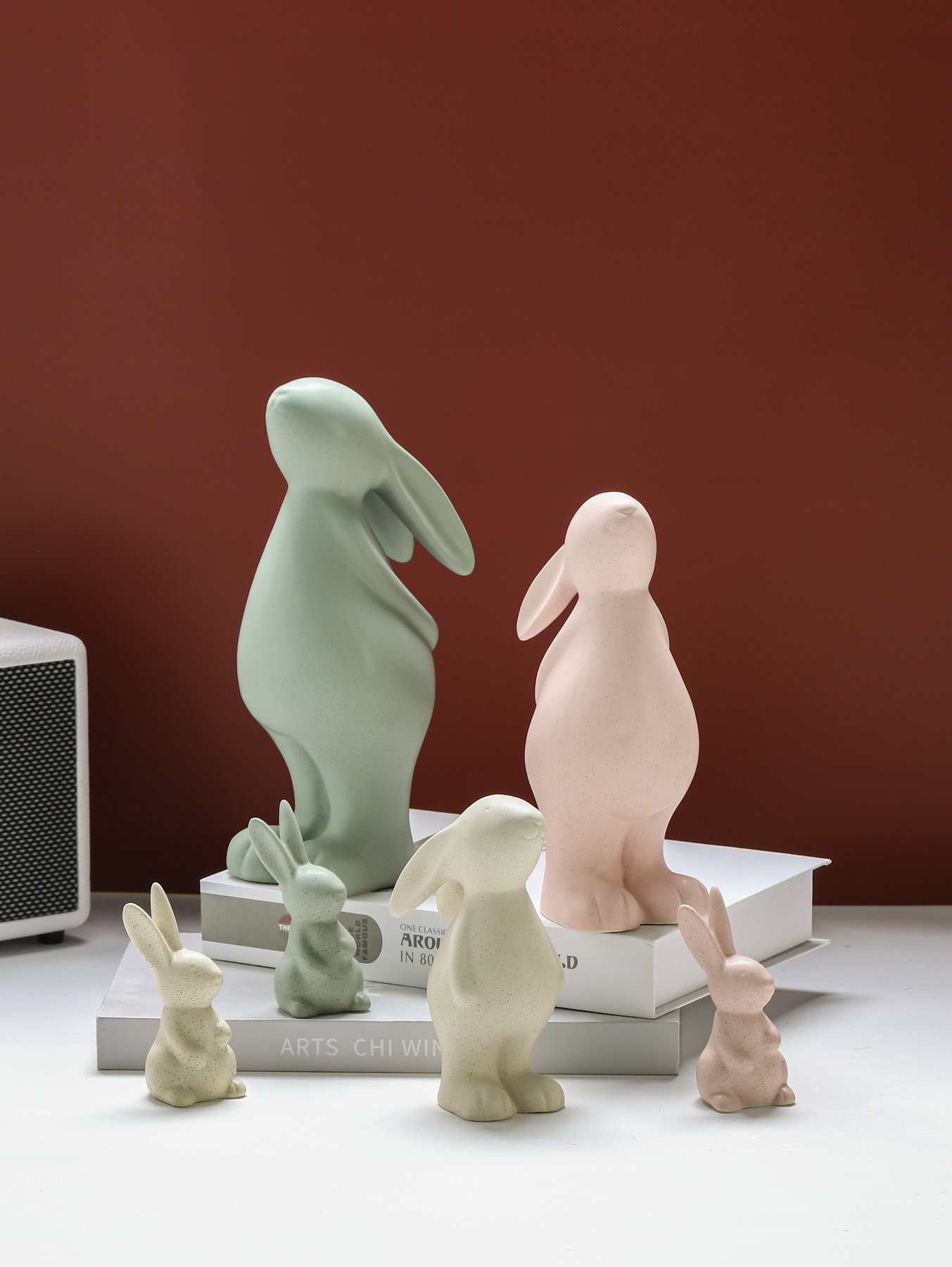
I Don’t Buy “Pretty Ceramics.” I Buy Reorders: How I Build a 2026 Wholesale Ceramic Home Decor Program
The 2026 shift: shoppers want “collected,” not “coordinated”
If you’re still buying ceramics as matching sets, you’re already behind. What’s winning right now is the opposite: warm, lived-in, slightly imperfect rooms—spaces that feel curated over time. Mainstream design editors are openly calling out “matchy-matchy” décor as dated, and recommending more personal, layered styling (which is basically a green light for ceramics).
That’s why wholesale ceramic home decor is trending again in real assortments—not because buyers suddenly became artists, but because ceramics solve a modern retail problem: they add texture and personality fast, without customers needing to repaint a wall.
What I’m watching at U.S. shows: tactile + sensory + bolder moves
At Winter 2026 Las Vegas Market, the selling message is “trend-forward merchandise” across multiple curated neighborhoods and a big mix of permanent showrooms + temporaries—translation: retailers are still shopping hard for newness that can move at scale.
NY NOW (Feb 1–3, 2026, Javits Center) positions itself as the hunting ground for the “jewelry of the home,” with buyers actively sourcing bespoke ceramics and architectural tabletop accents.
And the broader consumer mood? “Invisible wellness” (calm sensory environments, natural materials, subtle tech) is being framed as a major 2026 home trend—exactly the kind of backdrop where ceramic texture feels premium instead of “extra.”
How I translate that into buying decisions:
-
I always carry at least one Bold ceramic vase per story (hero piece that stops the scroll).
-
I build supporting SKUs as interior design ceramic accents (smaller forms that merch easily and boost basket size).
-
I anchor the set with one modern floral vase silhouette that designers actually use (stable base, stem-friendly opening, photogenic profile).
The part most vendors skip: ceramics don’t fail in style—they fail in physics
If your reorder program collapses, it’s usually not because the shape was wrong. It’s because production drifted.
Two “academy-grade” truths that matter in real retail:
-
Pinholing defects can be reduced by optimizing composition and the sintering/firing profile—in other words, a factory that controls process can meaningfully control defect rates.
-
Pinholes and other glaze defects are often tied to gas release from the body and glaze behavior during firing (viscosity/surface tension, raw material distribution). That’s why some samples look clean, then production arrives with visible surface issues.
A reorder-safe ceramic program is built on body + firing + glaze consistency—those three determine visible defects, return rates, and repeat orders.
The “Entryway Rule”: the fastest way to sell ceramics in U.S. retail
Here’s the trick I wish more suppliers understood: customers don’t buy “a vase.” They buy a finished moment.
My fastest-moving layout is an entry/console story:
-
1 hero vase (tall)
-
1 mid-size sculptural vase (tabletop)
-
1 small accent (bud vase / mini vessel)
That format is why the keyword unique flower vase keeps converting: it’s not about weird design—it’s about a piece that looks special, photographs well, and feels like an easy upgrade.
If you’re pitching wholesale ceramic vases for USA, don’t send me 50 random shapes. Show me one coherent story with 3 sizes, 2 finishes, and a clear planogram photo. That’s how buyers think.
When buyers ask for custom ceramic vases bulk: the 6-point procurement checklist
If your pitch includes custom ceramic vases bulk, I’m going to evaluate you like a system, not a studio.
My procurement checklist:
-
Defect standard: what’s acceptable vs rejected (with photos).
-
Batch consistency: how you control color/glaze drift across runs.
-
Surface defect prevention: what you do to reduce pinholes/crawling/crazing (process proof beats promises).
-
Packaging engineering: rim + corner protection, inner-box discipline, drop-test logic.
-
MOQ + reorder timing: can I replenish without missing seasonality?
-
Sample-to-production match: samples must behave like production (same materials, same firing logic).
If a supplier can answer those cleanly, they can earn long-term volume. If they can’t, it’s not a supplier—it’s a one-time gamble.
Where Teruier fits for U.S. buyers
Most factories can make ceramics. What U.S. buyers actually need is a trend-to-SKU engine: turning what we see at High Point, Las Vegas Market, and NY NOW into reorderable families.
That’s where Teruier’s positioning makes sense: a cross-border design–manufacturing collaboration model rooted in a craft hub (“工艺品之乡”), coordinating the three real levers that protect reorders—craft skill, material control, and process discipline. When that system is real, you get what buyers pay for: sample confidence → production confidence → reorder confidence.
If you want to start with Teruier the buyer-friendly way:
Ask for one “entryway story kit” (3 sizes × 2 finishes) plus a one-page defect standard + packaging cross-section. If that passes, scaling the assortment becomes easy.
Leave a Reply