

The Lemon Vase Isn’t a Trend. It’s a Reorder Strategy (If Your Wholesale Supplier Builds It Right).
The “giftables table” is either your easiest margin—or your fastest markdown
I’m an American interior designer, but I spend a suspicious amount of time thinking like a retail buyer. Because the same thing that makes a room feel “done” is what makes a shopper stop, smile, and buy: a small object with a clear point of view.
That’s why choosing a giftware wholesale supplier isn’t a sourcing checkbox. It’s an assortment decision with real operational consequences: breakage rates, replenishment speed, finish consistency, and whether your “newness” becomes a reorderable program.
And here’s the sneaky truth about giftware: people don’t buy it like they buy furniture. They buy it like they buy meaning. Research in the Journal of Consumer Psychology shows recipients interpret gifts through signals like care and expectation—so the perceived “rightness” of the gift matters more than you think.
What the 2026 show floors are signaling: craft is back, but it must scale
If you walked Maison&Objet in Paris (Jan 15–19, 2026), the theme basically said it out loud: “Past Reveals Future”—with trend directions like Metamorphosis, Mutation, Revisited Baroque, and Neo-Folklore. Translation for buyers: heritage cues, tactile surfaces, edited ornament, and objects that feel collected—not generic.
At Las Vegas Market, the commercial version of that message is speed + curation: buyers want clear neighborhoods, fast discovery, and programs that can replenish without drama.
And the macro backdrop from ASID’s 2026 Trends Outlook is blunt: trade pressure, technology (yes, AI), climate and workforce shifts are reshaping how products get specified and delivered—meaning stability matters as much as style.
So where does that leave a buyer who needs giftables that actually move?
Why the vibrant lemon vase is a “yes” in 3 seconds
The vibrant lemon vase is not just cute. It’s a merchandising shortcut:
-
Instant story: citrus reads as fresh, optimistic, and host-ready (housewarming, thank-you, spring reset).
-
Instant color: it pops online and on shelf without needing heavy styling.
-
Instant collectability: once shoppers love it, they want a second one—then a smaller one.
That’s why I always recommend building a two-step program: a hero vibrant lemon vase plus a small lemon vase that feels like an add-on item at checkout (or a quick “gift upgrade”). The point isn’t the lemon—it’s the system.
(If you’re watching broader retail signals, 2026 trend talk is still leaning into warmer tones, rich neutrals, and bolder color moments—exactly the environment where a bright hero SKU can overperform.)
Buyers don’t need “more SKUs.” They need bulk buy table vase sets that merchandise themselves
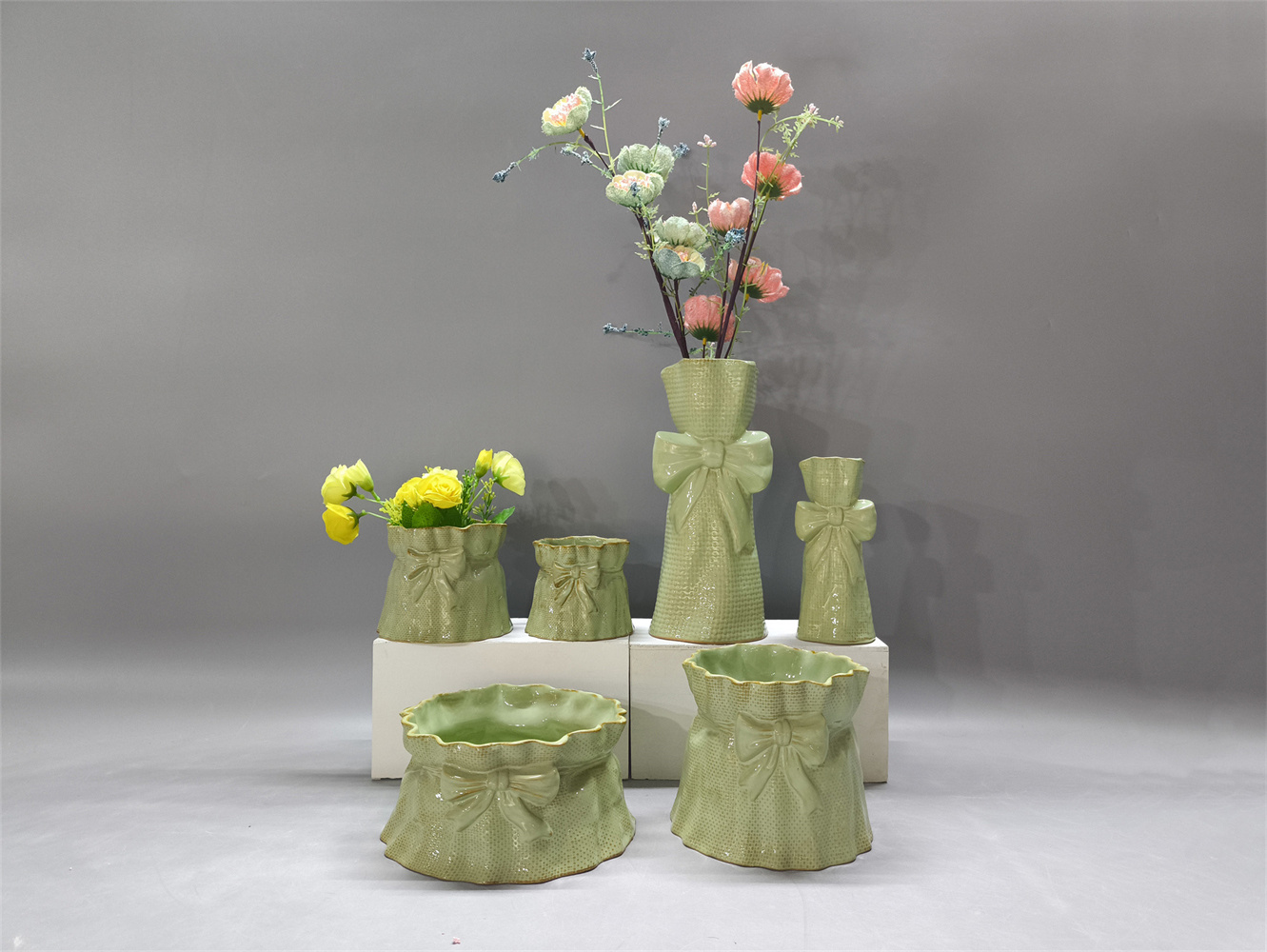
Here’s the move I see smart retailers making: they stop buying random singles and start buying bulk buy table vase sets designed for real displays.
The winners are usually sets of 3 (different heights, same design language) because they solve the buyer’s hardest problem: How do I make this look good in 10 minutes?
A strong giftware wholesale supplier should offer:
-
bulk buy table vase sets (hero + companion + mini)
-
wholesale table centerpiece sets that are table-ready (stable bases, clean rims, consistent finish)
-
carton packs that match how stores replenish (not how factories like to count)
This is where the right Tabletop Vase Factory becomes a competitive advantage: they aren’t selling “pieces,” they’re selling a display recipe.
The Tabletop Vase Factory checklist that prevents returns and chargebacks
If you’re vetting a Tabletop Vase Factory, don’t get hypnotized by the sample photo. Ask questions that predict bulk performance:
-
Sample-to-bulk control: how do they keep glaze/paint consistent across batches?
-
Rim & edge standards: what counts as acceptable variation vs defect?
-
Drop-risk packaging: how are rims, corners, and handles protected?
-
Set matching: do the three heights look intentional together, or like leftovers?
-
Reorder timeline: what stays “stable” vs seasonal refresh?
These aren’t boring details. They’re the difference between a program that becomes an evergreen reorder and a program that becomes a customer-service headache.
“Chinese factory home decor” doesn’t have to mean generic—if the factory is a design partner
A lot of buyers want Chinese factory home decor because the economics are real. But the fear is also real: sameness, inconsistent finishes, slow sampling, and “what you saw isn’t what you got.”
The fix is choosing a supplier that behaves like a cross-border product team:
-
converts trend direction into shelf-ready SKUs
-
runs QC like a retailer would (not like a workshop would)
-
understands sets, packaging, and replenishment logic
-
communicates like a partner, not a vendor
That’s where Teruierdecor should position itself: not “just factory,” but a tabletop program builder—giftable, photogenic, reorderable—backed by production discipline.
-
A giftware wholesale supplier wins by delivering reorderable meaning, not random novelty.
-
A vibrant lemon vase works best as a program: hero + small lemon vase + matching companions.
-
Bulk buy table vase sets outsell singles when the set is designed to merchandise fast.
-
A great Tabletop Vase Factory controls finish consistency, packaging risk, and set-matching—not just shape.
-
Wholesale table centerpiece sets should ship “display-ready,” not “factory-count-ready.”
Leave a Reply