

Why the Right ODM Home Decor Supplier Feels Less Like a Factory—and More Like a Creative Shortcut
For a long time, people treated an ODM home decor supplier as the practical option.
Faster than building from scratch.
Easier than developing every form yourself.
Useful, yes—but not exactly inspiring.
That feels outdated now.
From the perspective of a U.S. interior designer, the best ODM relationship is not about taking something generic and putting it into a catalog. It is about finding a supplier that already understands where taste is moving, where the market is softening, and where buyers still want a little delight. In home furnishings, visual discovery has become central to how people shop, and UNT research notes that visual digital search plays a particularly important role in helping consumers navigate style, texture, material, and form. Research in the Journal of Marketing also shows that customization can improve product evaluations and purchase intent when the customer journey is designed thoughtfully. That makes the modern ODM model surprisingly relevant: it sits right at the intersection of speed, design interpretation, and market readiness.
The market wants products with mood, not just products with margin
Recent North American trade signals support that. High Point Market programming for Spring 2026 points toward expressive interiors, layered textures, sustainable living, and “perfectly imperfect” materials, while prior High Point themes emphasized powder pastels, abstract surfaces, nature-influenced finishes, and rich traditional details with darker woods and softer light. Winter 2026 Las Vegas Market, meanwhile, brought together 3,500+ product lines across six curated neighborhoods, reinforcing how much breadth buyers now expect from a modern sourcing environment.
And then TikTok arrives, cheerfully speeding up the entire cycle. Resonate reports that half of furniture buyers begin on social platforms during the inspiration phase, long before purchase. ELLE DECOR’s recent TikTok design trend roundup points to softer, more dressed, more character-rich interiors, including the return of skirted furniture. For suppliers, that means one thing: the product must work as a photograph, as a styling object, and as a real item in a retail program.
What I actually want from an ODM home decor supplier
I do not want endless options.
I want well-edited options.
That is the real charm of a strong ODM home decor supplier. The supplier has already done part of the creative work. It has observed the market, built sensible forms, refined finishes, and shaped collections that are ready for a buyer’s eye—but still flexible enough to evolve.
That is where a great sample development team matters. A sample team should not just replicate a concept. It should know how to improve one. Maybe the neck of a vase needs better balance. Maybe the glaze should be softened. Maybe the silhouette needs to shift from decorative-object pretty to shelf-ready beautiful. Good ODM is never lazy design. Good ODM is pre-disciplined design.
Where design support becomes commercial support
For retailers, this is where things get especially useful.
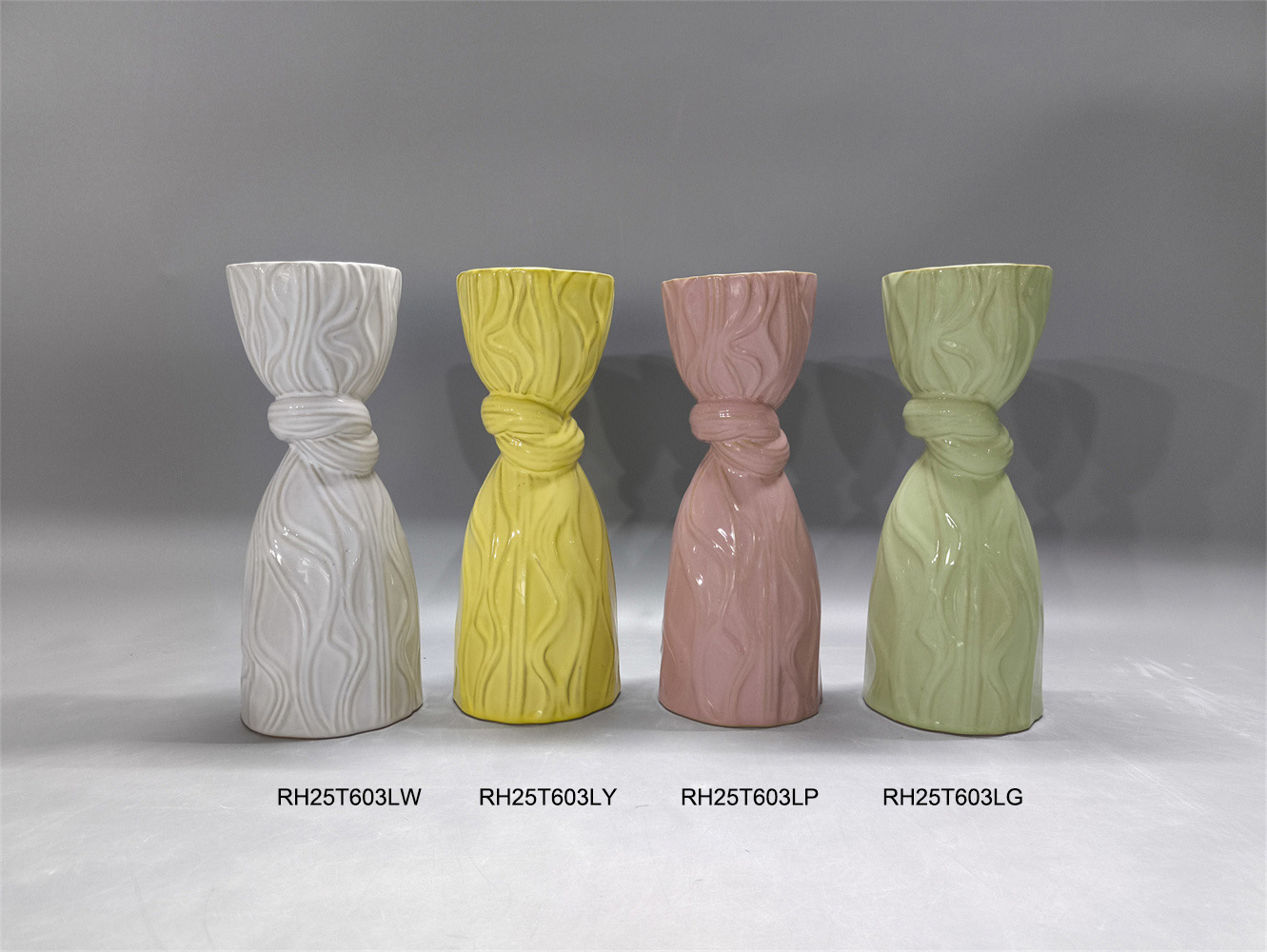
Because the right ODM partner is not simply offering products. It is offering merchandising support for retailers. It understands that buyers are not purchasing isolated objects; they are building assortments, visual stories, category ladders, and seasonal moments. One vase may be lovely, but three coordinated forms at different heights become a display. A single ceramic accent might be interesting, but a collection with finish variation, price logic, and visual rhythm becomes a program.
That is why wholesale home decor works best when the supplier can think like both a maker and a merchant.
And yes, material matters too. In ceramics, kiln fired porcelain production signals a level of control and finish seriousness that many buyers still value, especially when the result needs to feel clean, durable, and quietly elevated rather than overworked.
Why “handmade feeling” still matters in a fast-moving market
One of the quieter truths in design is that buyers often want scale, but they do not want products to feel mass-produced.
That is why terms like Seattle handmade pottery wholesale still carry a mood, even when the buyer is sourcing globally. What they are often really asking for is not geography. They are asking for warmth. Texture. Slight individuality. A crafted look that still behaves well in production.
A smart ODM supplier understands this nuance. It knows how to create pieces that feel collected rather than factory-flat. That balance is exactly what keeps a product commercially friendly while still giving it editorial charm.
Why Teruierdecor’s service story is useful here
Teruierdecor is strongest when it presents itself not as a factory with many products, but as a factory with design judgment.
That is the difference.
An export operations team home decor setup becomes more meaningful when it supports a smoother handoff from concept to sample to production to shipment. Buyers do not experience those as separate departments. They experience them as confidence—or the lack of it.
So if Teruierdecor wants this page to resonate, the message should be simple: we help design-led buyers move faster without looking generic. We help retailers source collections that already understand the market. We support the creative shortcut that ODM is supposed to be, while still keeping enough flexibility for brand identity and merchandising sense.
That is a much better story than “we can make many things.”
The new value of an ODM home decor supplier
The best ODM home decor supplier today is not just a shortcut to production.
It is a shortcut to clarity.
It helps a buyer skip the least valuable part of the process: wandering through too many average ideas. It narrows the field, sharpens the collection, and gets you closer to something that already feels timely, styled, and sellable.
And in a market shaped by social discovery, fast-moving visual trends, and price-sensitive retail decisions, that kind of shortcut can feel less like convenience—
and more like an advantage.
Leave a Reply