

Why a Good Home Decor Distributor Program Should Feel Calm, Curated, and Commercially Smart
A distributor program should reduce friction, not add ceremony
From a German interior point of view, a good distribution model is not about excitement for its own sake. It is about reliability with style. Precision, yes. But not dry. Commercially neat, but still visually attractive.
That is what a proper distributor program home decor should offer. It should help a buyer or distributor build an assortment, repeat it, and grow it without turning every reorder into a fresh little crisis of faith.
In other words, the best partner is not simply a supplier. The best partner helps the business stay composed.
Europe’s current fair mood is more expressive, but also more considered
The recent European fair signals are rather useful here. Ambiente set its 2026 trend direction around three style worlds—brave, light, and solid—under the broader themes of Dreams, Facts, Stories for the Frankfurt fair in February 2026. Maison&Objet’s January 2026 message, Past Reveals Future, positioned design as a response to ecological pressure, overconsumption, and homogenisation, with an emphasis on objects that feel more lived-in and meaningful. Together, these are not signals for empty novelty. They point to design with character, but also with staying power.
The media read on Ambiente says much the same, only with slightly more sparkle. House Beautiful’s February 2026 reporting from Frankfurt highlighted playful lighting, fruit vases, and bolder colour as likely influences for the year ahead. This tells us something important for distributors: the market still welcomes personality, but it wants it edited well.
TikTok, meanwhile, continues to accelerate the whole rhythm. ELLE DECOR noted in March 2026 that trends such as skirted furniture and the broken floor plan are gaining real traction on the platform, and that social channels influence buyers much earlier in the inspiration phase. Even in Europe, that means distributors need partners who can react with discipline, not panic.
This is where the right factory partner becomes very important
A strong distributor model is not built only on product variety. It is built on trust in the production system behind the product.
That is why an audited home decor factory matters. Not as a decorative claim, but as a business signal. It suggests the distributor is not buying from a charming black box. It suggests visibility, control, and a process that can stand up to repeat orders and serious retail conversations.
It is also why many buyers do not merely want a vendor anymore. They want a global sourcing partner China can realistically support—someone able to align design, documentation, quality, timing, and shipment without making the distributor coordinate fifteen moving parts by hand.
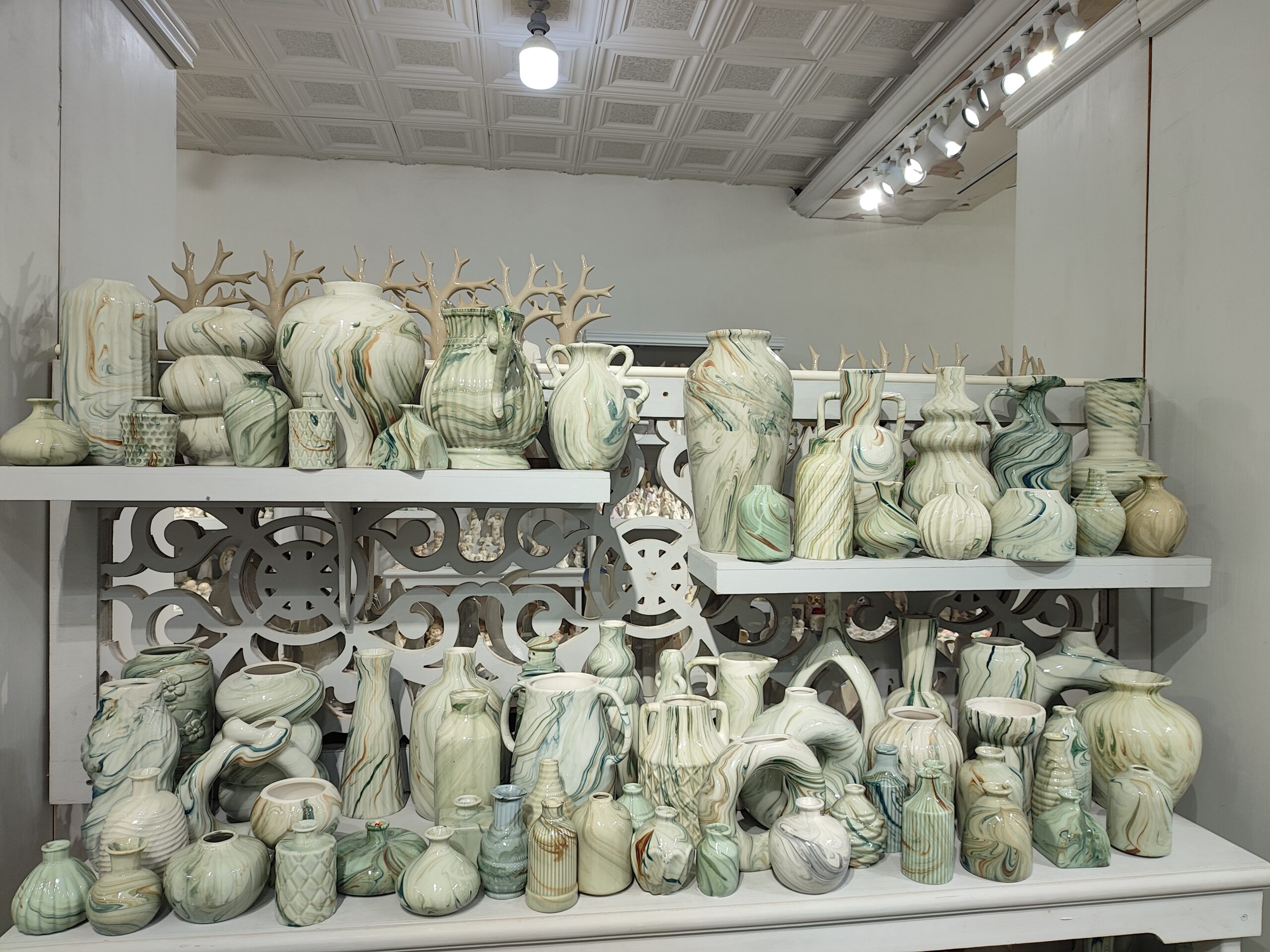
And if ceramics are part of the program, the need for operational maturity becomes even clearer. Categories such as porcelain vase wholesale and handmade ceramic vase wholesale are attractive because they can give an assortment shape, texture, and range. But they also require control: finish consistency, packaging discipline, and sensible batch management.
That is where strict QC checkpoints home decor stops sounding technical and starts sounding rather beautiful. Because beautiful products are much easier to love when they arrive intact and look as they were approved.
The research is rather supportive of this logic
Academic research on supplier integration has consistently found that stronger supplier involvement can reduce costs, improve quality, and shorten development cycles when relationships are structured properly and communication is clear. So the factory-partner question is not only operational. It is strategic.
Research on buyer expectations points in the same direction. Manufacturing buyers increasingly expect suppliers to improve products, processes, communication, and relationships, with product quality and process improvement ranking especially high. This is very close to what a distributor really buys: not just stock, but dependable business continuity.
Recent resilience research adds one final, very sober note: poorly performing suppliers are associated with more frequent and longer disruptions, and those disruptions can affect quality. That is exactly why the calmness of a supply relationship is commercially valuable.
Teruierdecor works best when the program feels steady, not heavy
That, to me, is the strongest version of the Teruierdecor story.
Not simply “we have products.” Not simply “we can quote.” And not only “we understand trend.”
The stronger message is that Teruierdecor can support a distributor program home decor buyers can actually build with: one shaped by audited production discipline, careful quality checkpoints, and ceramic depth that gives the assortment real decorative substance.
A good distributor program should feel curated, stable, and ready for real retail life.
Which is, in the end, a very elegant thing.
Leave a Reply