

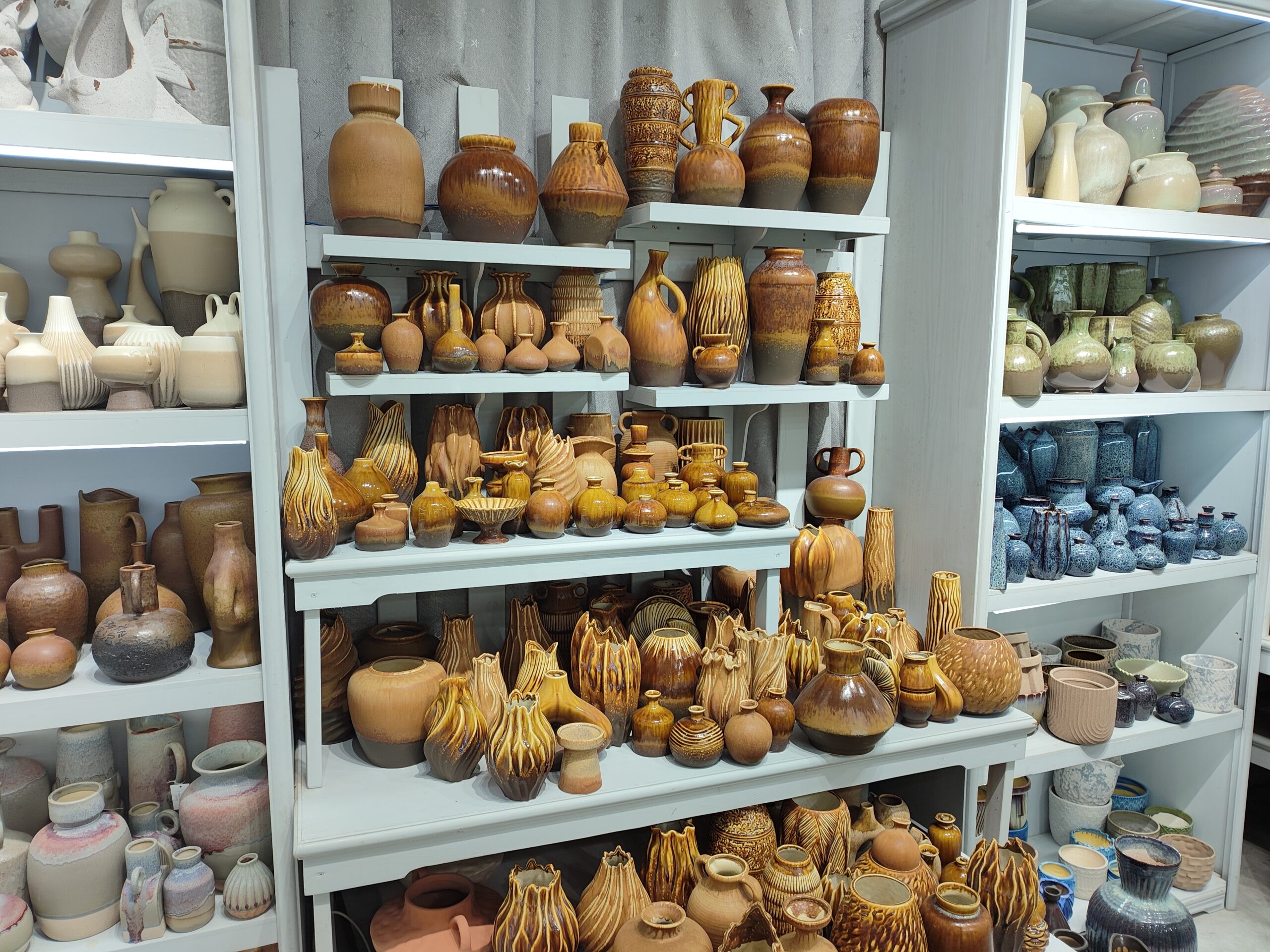
The “Unbreakable Look”: Why Stoneware Is the Wholesale Vase I Trust When a Room Has to Feel Finished Fast
I’m a U.S. interior designer, and I’ll say what buyers and clients both feel (but rarely name): a room doesn’t read “designed” until the scale + texture are right.
Furniture gives you function. Lighting gives you mood.
But the piece that seals the deal—especially in entryways, corners, and open shelving—is the vase.
And when deadlines are real and reorders matter, I don’t gamble on one-off finds. I spec stoneware vase wholesale because stoneware gives me the rare combo of design presence + practical performance.
Stoneware, defined in one sentence
Stoneware is a high-fired, vitrified ceramic (often around 1,200°C) that becomes dense and liquid-resistant—typically opaque and built for durability.
Why stoneware wins the “project reality” test
Here’s the quiet reason stoneware keeps earning a spot in my sourcing plan: it behaves like a professional material.
-
It’s typically fired hot enough to become dense and impervious, so it holds up in real homes and real retail floors.
-
It reads warm and tactile—exactly the “crafted, collected” direction designers are leaning into as market conditions and client expectations shift.
If you’re building wholesale decorative vases for U.S. distribution, stoneware is the safest statement: it looks premium without requiring precious handling.
The 2026 show signal: sculptural ceramics are not optional anymore
At Winter 2026 Las Vegas Market, the messaging wasn’t subtle: decorative ceramics are a key lane for newness. Las Vegas Market itself is positioning Winter 2026 as expanded sourcing across thousands of brands—meaning buyers are actively hunting fresh accessories that move.
And brands are betting big on it. Global Views’ Winter Las Vegas introductions explicitly call out “decorative ceramics” alongside art glass and sculptural lighting—exactly the category mix that tells you accessories are driving the story this season.
Translation: in 2026, vases aren’t filler. They’re headline product.
Stoneware vs. porcelain: how I choose what to spec (and why buyers should too)
I love porcelain—but I use it differently.
-
Porcelain vase wholesale is my pick when the project needs that clean, luminous, “fine” look. Porcelain is typically vitrified and often translucent in Western definitions.
-
Stoneware vase wholesale is my pick when the vase needs to be a reliable workhorse: big presence, tactile surface, repeatable finish, and fewer headaches.
In practice, the most profitable programs carry both—stoneware for volume and durability, porcelain for premium moments.
My “3-size system” for B2B vase programs
If you want your vase line to sell through (and reorder), don’t buy random singles. Build a system:
-
Large statement (this is your large ceramic vase wholesale lane)
-
Medium anchor (the everyday hero)
-
Small add-on (the “one more” item at checkout or in a styled vignette)
Why this works: bundle-style presentation increases total purchasing because shoppers perceive grouped items as a unified whole and underestimate how much they’re buying.
This is the difference between “we sell vases” and “we sell finished looks.”
The silhouette that keeps outperforming: geometric vases
In 2026, rooms are getting more expressive—curves, texture, bold accents—without turning chaotic. That’s why geometric vases keep winning: they deliver structure and modernity even in a layered, nostalgic room.
Stoneware is perfect for geometric forms because it holds shape and reads substantial. In retail terms: it looks expensive before anyone touches the price tag.
TikTok is speeding up micro-trends (so your vases should be reorderable)
Social platforms are accelerating décor motifs faster than traditional retail calendars. “Cabbagecore,” for example, has pushed playful ceramic motifs into the mainstream conversation again—great for small accent moments and themed merchandising.
The smart wholesale takeaway isn’t “chase every trend.” It’s: build your stoneware base program so you can add one playful seasonal SKU—then reorder winners quickly.
What I require from a modern ceramic vase manufacturer
Whether you’re working with a domestic partner or a Chinese vase manufacturer, the standards are the same if you want U.S.-ready results:
-
Finish consistency rules (what variation is acceptable vs. defect)
-
Packaging engineered for rims (breakage is margin leakage)
-
Reorder discipline (if it wins, you must repeat it)
-
Size families that support the 3-size system above
Visual merchandising research also consistently supports what every designer knows: presentation drives impulse buying—so your wholesale program should be display-ready, not SKU-chaos.
Where Teruierdecor fits
If you’re sourcing stoneware vase wholesale for the U.S., the win is a repeatable program: stoneware foundations, a porcelain premium lane, and a few geometric “statement” silhouettes—built in size families and packaged for real distribution.
That’s what Teruierdecor is built to support: designer-grade vases that merchandize as a system, not a pile of singles.
Leave a Reply