

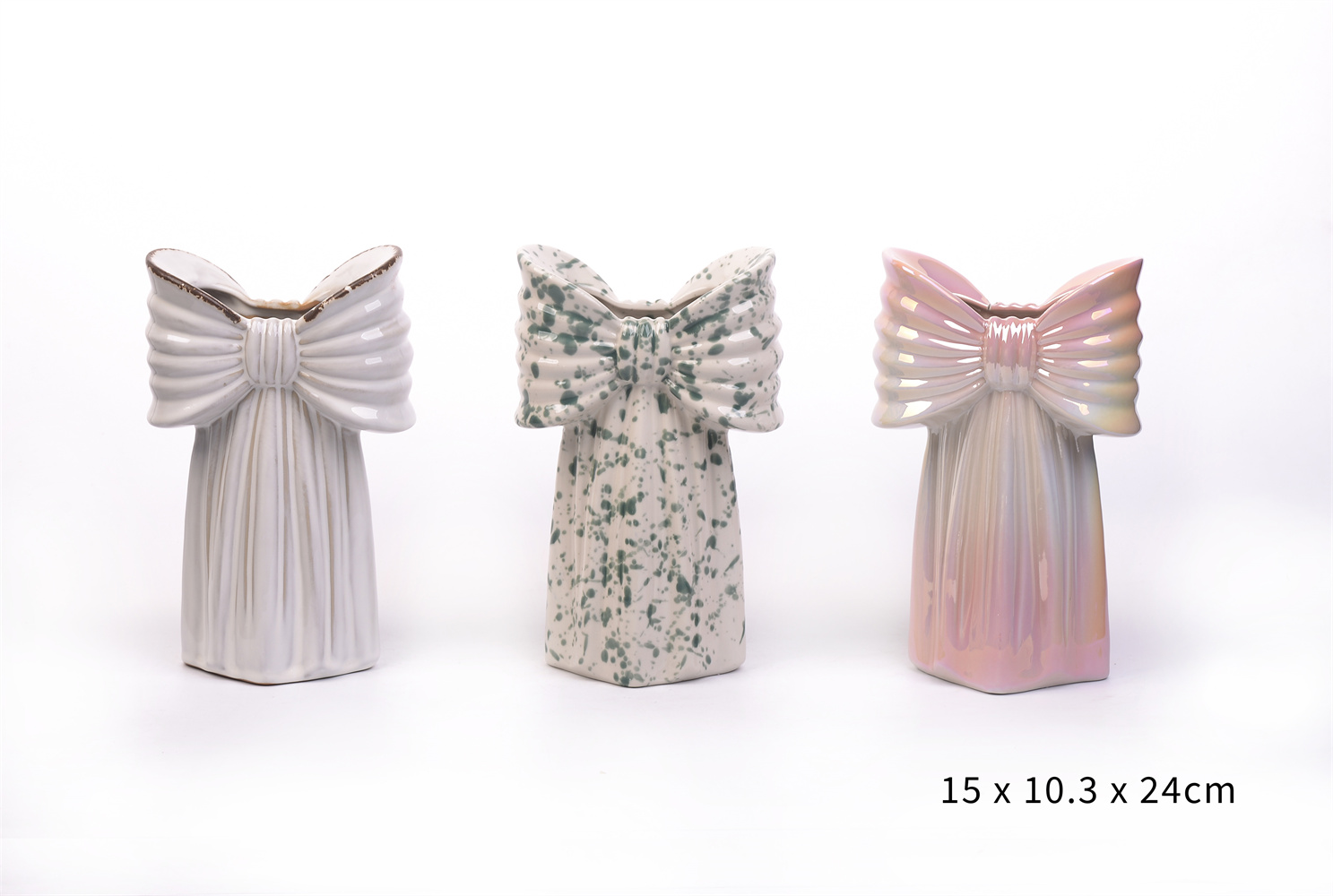
The Tiny Vase That Quietly Raises Every Ticket: Why I Buy Small Ceramic Vases Wholesale
I’m an American interior designer, and I’ll say something that surprises most buyers:
the small vase is often the highest-ROI object in the room.
Not because it’s dramatic—because it’s repeatable. It sits on nightstands, open shelves, kitchen ledges, bathroom vanities, coffee tables, reception desks, and retail checkouts. It solves “the room feels empty” in seconds.
That’s why I source small ceramic vase wholesale as a system—especially when my clients need spaces to look finished on a deadline, and my retail partners need fast turns without bloated SKUs.
The 2026 market signal: ceramics are a headline category, not a filler
On the U.S. show circuit, decorative ceramics are being treated like main-stage product again. For Winter Las Vegas Market 2026, Global Views highlighted new introductions that included decorative ceramics alongside art glass and sculptural lighting—this is the “design-led accessories” lane getting bigger, not smaller.
And Atlanta remains one of the fastest places to confirm what’s about to be “normal” in gift + home. Winter 2026 Atlanta Market ran Tuesday, January 13 – Monday, January 19, 2026—a key calendar moment for anyone working with an Atlanta furniture market supplier.
The designer definition
Small ceramic vase wholesale = sourcing compact, display-ready ceramic vases in bulk (often in coordinated finishes and size families) so designers and retailers can build repeatable “finished look” moments—without relying on one-off retail finds.
Why “small” wins: it sells like décor, but behaves like a utility
A small vase is the easiest “yes” in styling. It doesn’t require a room reset. It pairs with books, trays, figurines, candles, stems, and even empty “negative space.”
That’s why I always link small ceramic vase wholesale to two adjacent lanes:
-
handmade ceramic vase wholesale for warmth and authenticity (the premium cue)
-
decorative ceramic vases wholesale for coordinated sets and merchandising consistency
There’s research behind the handmade premium: consumers will pay significantly more for products labeled “handmade” versus machine-made alternatives.
Stoneware vs. porcelain: the two-lane program I actually spec
If you’re building a wholesale program, don’t mix everything into one pile.
-
Stoneware vase wholesale = my workhorse lane. Stoneware is fired at high temperature (about 1,200°C) until vitrified—dense and impervious to liquid—so it’s practical for daily life and retail handling.
-
Porcelain lane (often bundled inside decorative programs) = my “polish” lane. Porcelain is vitrified pottery with a fine-grained body that is usually translucent (in Western definitions), so it reads cleaner and more formal.
My rule: stoneware carries the program; porcelain headlines a moment.
The 3-size method: small vases don’t stand alone
Here’s the sourcing pattern that prevents dead inventory:
-
Small (your everyday winner)
-
Medium (the shelf anchor)
-
Large ceramic vase wholesale (the floor/entry statement)
Why? Because customers and clients buy a complete look faster than a random single. A 2024 study in Journal of Retailing and Consumer Services found that choosing product bundles increases basket size—people perceive bundled items as a unified whole and end up buying more.
So even if your focus is small, your assortment sells better when it’s planned as a family.
“Collectible ceramic art” is how you raise price points without feeling expensive
One of the easiest upgrades in 2026 is to treat small vases like mini-sculpture: unusual lips, soft asymmetry, tactile glazes, and forms that look good even empty.
That’s how collectible ceramic art quietly increases perceived value—especially when it’s surrounded by simpler, reorderable stoneware basics.
TikTok is accelerating motif cycles—small vases are the safest way to test trends
TikTok-driven interiors are moving motif trends faster. ELLE Decor’s 2026 roundup calls out cabbagecore and notes sharp growth in “cabbageware” interest and the #CabbageCore hashtag—exactly the kind of playful ceramic moment that can spike quickly.
The smart B2B move: keep a stable stoneware base, then rotate one seasonal “motif” small vase SKU per drop. Small scale = lower risk, faster feedback.
What I require for “wholesale ceramic vases for USA” (the boring part that protects margin)
If you’re shipping into U.S. projects or retail distribution, quality isn’t just glaze—it’s logistics.
My non-negotiables:
-
rim protection (inner supports that prevent edge impact)
-
defined finish tolerance (what’s “handmade character” vs. defect)
-
reorder discipline (same finish family, minimal drift)
-
display-ready casepacks (so staff can merchandise fast)
Visual merchandising research consistently supports what every designer already knows: better display and presentation increases impulse behavior—small vases are made for that role.
Where Teruierdecor fits
If you’re building a real wholesale program, the win isn’t “more SKUs.” It’s a small-vase core line that reorders, plus a coordinated medium/large family, plus one seasonal collectible moment.
That’s what Teruierdecor should be for: small ceramic vase wholesale assortments that are merchandisable, reorderable, and built for U.S. timelines—so designers can finish rooms faster and retailers can sell complete looks, not lonely singles.
Leave a Reply