

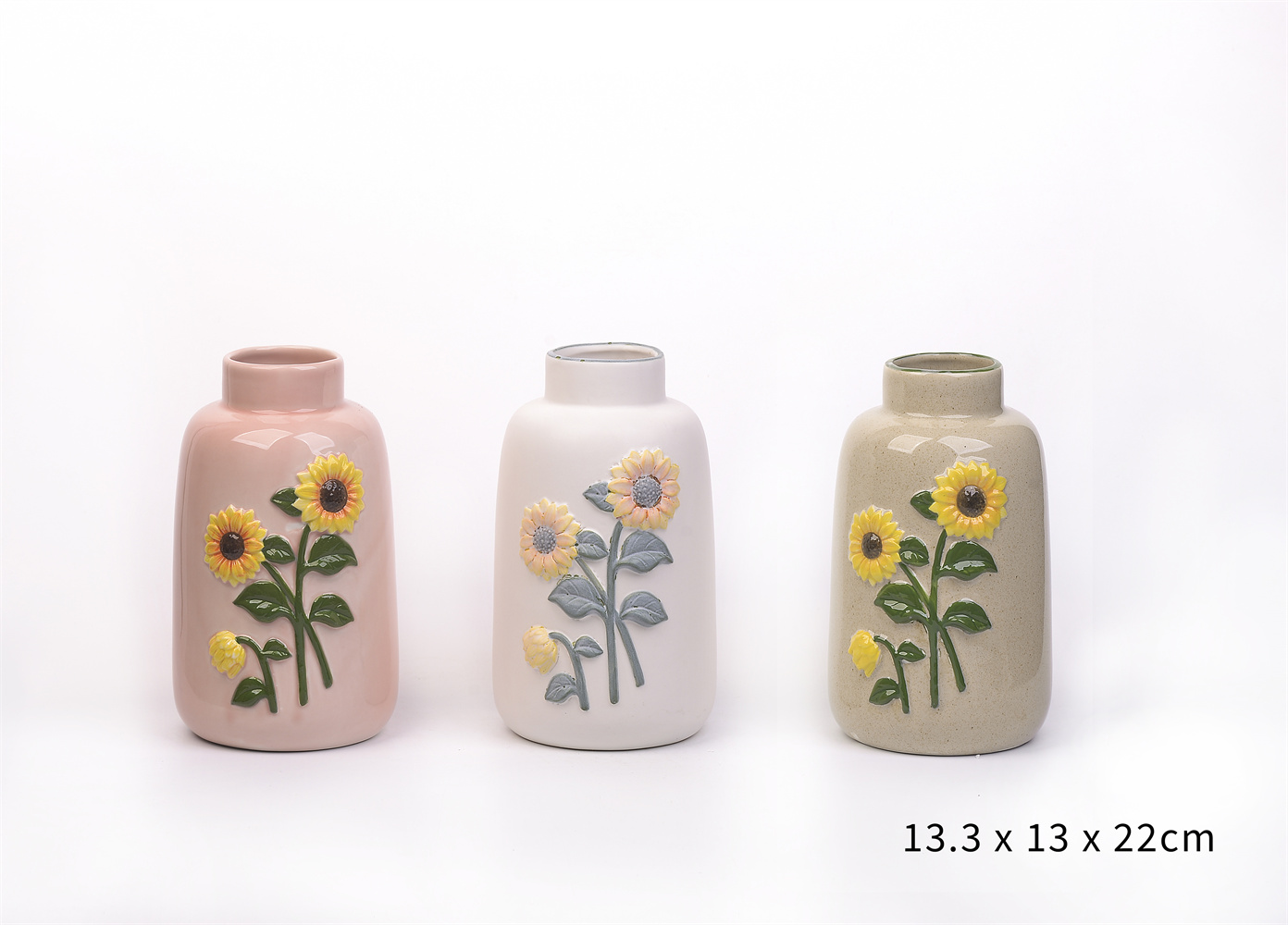
The “One Vase” Rule That Makes a Room Look Designed: Why I Source Modern Ceramic Vases Wholesale
I’m an American interior designer, and I’ll tell you the uncomfortable truth: most rooms don’t fail because of the sofa. They fail because the finishing layer looks generic.
The fastest way I fix that—without adding clutter—is a modern ceramic vase placed with intent. One vessel can add scale, texture, and a “collected” feeling in minutes. And when I need that result across multiple projects (or a retailer needs it across multiple doors), I don’t shop one-off retail.
I source modern ceramic vase wholesale as a repeatable system—because the market is moving faster, clients want more personality, and “one perfect piece” isn’t a plan.
Why modern ceramics are having a serious 2026 moment
Two forces are colliding right now:
-
Design direction: ASID’s 2026 Trends Outlook frames the year around disruption (trade, technology, climate, workforce) and how those pressures reshape what clients value—more meaning, more durability, more human warmth.
-
Market validation: Las Vegas Market Winter 2026 (Jan 25–29) reported strong buyer engagement and order writing—buyers are actively hunting “high-impact, fast-refresh” categories.
Ceramics win because they deliver emotion + texture + versatility in one object.
My wholesale system: small, medium, large (and why “small” secretly drives the program)
If you want wholesale to reorder (not just look good in a catalog), you need a size-family strategy.
Here’s what I spec, every time:
-
Small ceramic vase wholesale = the high-ROI workhorse (nightstands, bathroom shelves, open shelving, hostess gifts).
-
Medium = the shelf anchor (console tables, mantels, built-ins).
-
Large ceramic vase wholesale = the room finisher (entry corners, hearth flanks, dead corners that photograph awkwardly).
Why it works: people buy “a finished look,” not isolated objects. A 2024 Journal of Retailing and Consumer Services paper found that choosing product bundles increases total purchasing because shoppers perceive bundled items as one unified whole.
So even if your hero is modern and sculptural, your program becomes profitable when it sells like a “set story.”
Stoneware vs. porcelain: how I choose what’s modern (and what survives real life)
Modern doesn’t just mean shape. It means performance.
-
Stoneware vase wholesale is my core lane. Stoneware is fired at high temperature (about 1,200°C) until vitrified—dense and impervious to liquid—so it holds up in real homes and real retail handling.
-
Porcelain vase wholesale is my “polish lane.” Britannica defines porcelain as vitrified pottery with a fine-grained body that is usually translucent (in Western definitions). It reads crisp and elevated—great for clean modern styling, but it can be less forgiving at scale.
My rule: stoneware carries the season; porcelain headlines the moment.
Handmade character + modern silhouette is the winning mix
Here’s what’s changed: clients still want modern lines, but they don’t want sterile perfection.
That’s why I often pair:
-
handmade ceramic vase wholesale (subtle variation, glaze movement, artisan feel)
with -
modern shapes (clean geometry, strong negative space, sculptural proportion).
It’s also why decorative ceramic vases wholesale programs are outperforming “plain basics.” The decorative part isn’t loud—it’s tactile: a mineral matte, a reactive glaze, a rim detail, a soft asymmetry that reads human-made.
If you’re buying for multiple projects or multiple stores, this is the sweet spot: modern enough to feel current, handmade enough to feel premium.
The Bold ceramic vase: the safest way to add “trend” without gambling your inventory
If you want one trend lever that sells in-store and photographs online, it’s a Bold ceramic vase—one hero color or motif, surrounded by calmer basics.
The reason is simple: trend cycles are accelerating.
ELLE Decor has been tracking TikTok-driven interiors for 2026, including “cabbagecore” and other playful, nostalgia-coded motifs that show up fastest in ceramics and tabletop accessories.
My recommendation to B2B buyers:
Keep your stoneware core stable, then rotate one bold seasonal hero per drop. That gives you upside without turning your warehouse into a costume closet.
What I ask a supplier before I commit (the questions that protect margin)
Whether you’re a retailer or a designer buying for installs, wholesale success is mostly about what happens after the first shipment:
-
Finish tolerance: what variation counts as “handmade character,” and what counts as defect?
-
Packaging discipline: how are rims and edges protected (especially in large ceramic vase wholesale)?
-
Reorder discipline: can you repeat winners in 60–120 days without glaze drift?
-
Size family planning: can you support small + medium + large in the same finish story?
-
Material clarity: which SKUs are stoneware, which are porcelain, and why?
When a supplier can answer these clearly, you’re not just buying product—you’re buying a program.
Where Teruier fits for US buyers
If you’re building a modern vase program that needs to work across timelines and reorders, this is the role of a Teruier manufacturer for US buyers: coordinated finish stories, size-family logic, and packaging/QC discipline that makes wholesale workable—not stressful.
That’s how modern ceramic vase wholesale becomes a repeatable “finished room” engine instead of a one-season experiment.
Leave a Reply