

The Bulk Order That Still Feels Handmade: A Designer’s Playbook for Retail-Ready Vases
The fastest way to lose money in décor is to order “safe” at scale.
I’ve watched it happen: a buyer places handmade vase bulk orders, the cartons arrive, the silhouettes feel generic, and suddenly the “handmade” story is invisible from six feet away. That’s not a craft problem—it’s a merchandising problem.
In 2026, the trade shows are basically giving us permission to be braver. Maison&Objet’s January theme (“Past Reveals Future”) is openly about design reconnecting with craftsmanship, memory, and soul—an antidote to overconsumption and sameness. And at Ambiente, the official trend framing for 2026 is all about “brave, light and solid”—future-friendly living that rewards strong forms and honest materials.
If you’re sourcing for American rustic decor wholesale, garden centers, lifestyle chains, or design-led boutiques, here’s how I’d build a bulk vase program that stays handmade and sells like a system.
Treat your vase wall like “small sculpture,” not filler
The best-performing vases right now don’t whisper. They anchor.
That’s why I want a bulk order to read like a collection—not a pile of units. Think: a recognizable silhouette family, two coherent glaze directions, and a few “hero” shapes that make customers stop.
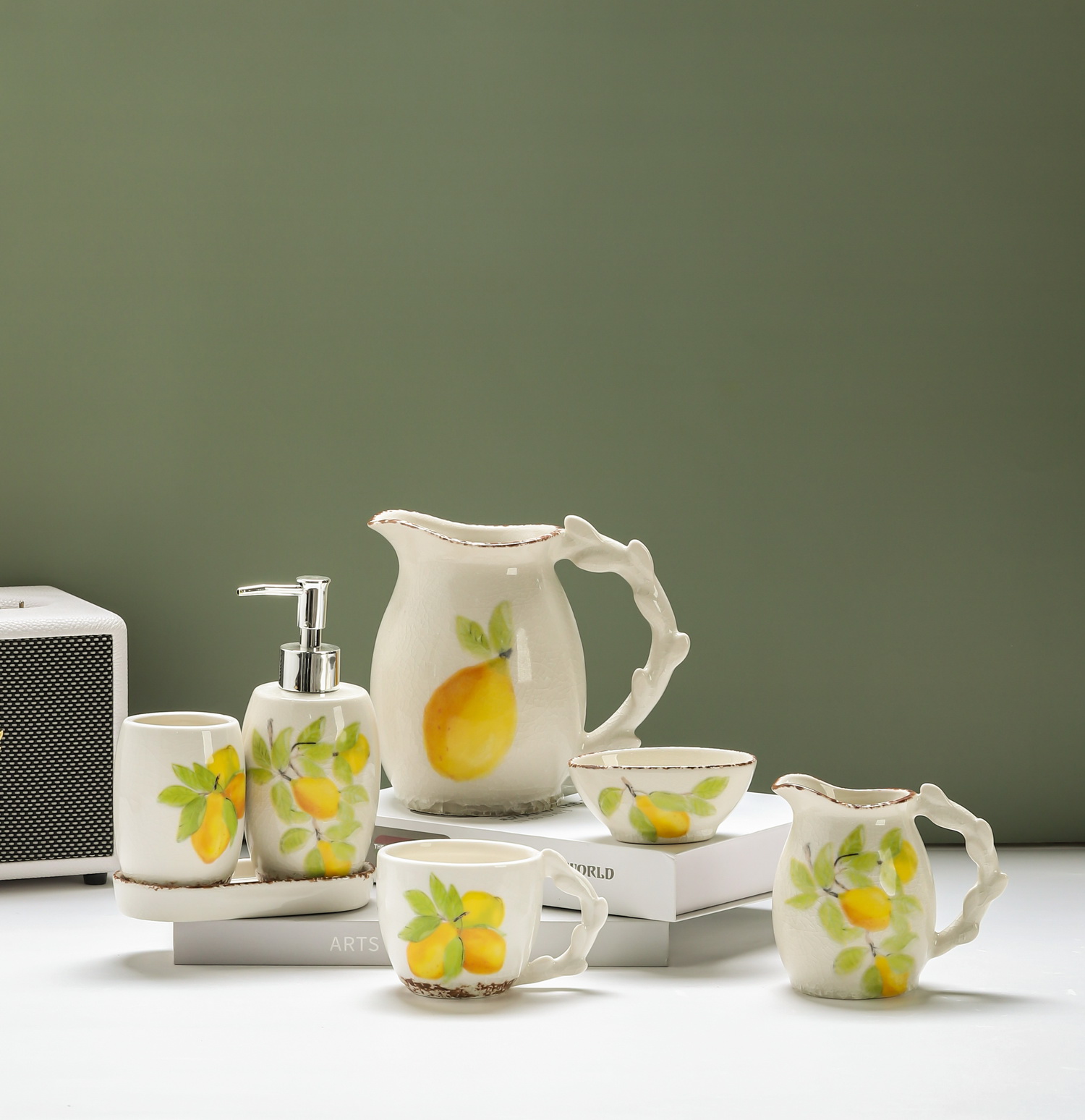
In my own specs, I always include one unmistakable attention-getter—a piece that merchandises itself. A playful example is the Teruierdecor Lemon Vase: it’s not just a container, it’s a conversation starter that works in kitchen vignettes, spring resets, and giftable moments without needing a discount sign.
Build a “mantel bundle,” not a single SKU
Retailers don’t need more items. They need more ready-to-sell moments.
That’s why I like designing a mantel decor bundle wholesale approach: a vase trio that shops as a set (tall + medium + bud), with styling compatibility baked in. The customer can picture it instantly on a mantel, entry console, or bookshelf—and that mental image is what converts.
My rule: if a new vase can’t complete a 3-piece vignette (vase + candle/holder + small tray/book), it’s not a bulk winner.
Use the 2026 show signals to decide shape + surface
Here’s what the 2026 show landscape suggests—without getting lost in “trend-of-the-week” noise:
-
Craft-forward storytelling is mainstream again (Maison&Objet is explicitly framing 2026 around craft, excellence, and meaning).
-
Future-livable design is being staged through boldness and material clarity (Ambiente Trends 26+).
-
Sustainability is no longer a sidebar—Ambiente’s Ethical Style program highlights hundreds of exhibitors carrying a sustainability label across the 2026 fairs, which is a strong signal about what buyers are being asked to prioritize.
-
In the U.S. wholesale landscape, Las Vegas Market continues to position itself as a major sourcing hub with thousands of brands—meaning “newness” is abundant, but only the most identifiable product stories cut through.
What that means for vases: go for unique silhouettes (pinched waists, totem stacks, exaggerated rims), and pair them with surfaces that photograph well (matte, speckle, reactive glazes—controlled, not chaotic).
Bulk garden pottery needs a different spec sheet than tabletop décor
A lot of buyers lump vases and outdoor pottery together. Don’t.
If you’re ordering bulk garden pottery, you’re dealing with heavier weights, higher breakage risk, and different customer handling (garden centers, porch pickup, seasonal exposure). That changes how you think about:
-
rim thickness and chip resistance
-
stable bases (no “wobble” on uneven surfaces)
-
packaging density and pallet pattern
Meanwhile, for indoor programs—especially if you’re working with a porcelain vase manufacturer—you can push cleaner profiles and finer edges, but only if your QC and packaging are disciplined.
The “unsexy” part that protects your margin: packaging + transit testing
In bulk, breakage isn’t an accident—it’s a predictable tax.
If you want your handmade vase bulk orders to survive modern parcel and mixed-channel distribution, your factory should be able to speak clearly about packaging performance. One widely used benchmark is ISTA Procedure 3A, designed for individual packaged-products shipped through a parcel delivery system (150 lb / 70 kg or less).
You don’t need to turn your décor program into a laboratory, but you do need three basics:
-
drop protection at corners and rims
-
consistent inner carton fit (no “air gaps”)
-
proof of pack-out discipline (photos + carton checklist)
That’s how a pretty vase becomes a profitable SKU.
The order structure I recommend to buyers (simple, scalable, reorder-friendly)
If you’re building an American rustic decor wholesale assortment (or a seasonal refresh program), here’s a clean starting structure:
-
3 silhouettes (statement / everyday / bud)
-
2 finishes (one neutral, one personality glaze)
-
one hero piece that becomes your “program face” (this is where something like the Teruierdecor Lemon Vase earns its keep)
-
case-packs that match planograms, not factory convenience
The goal is not “more options.” The goal is fewer decisions at store level—and faster turns.
Leave a Reply