

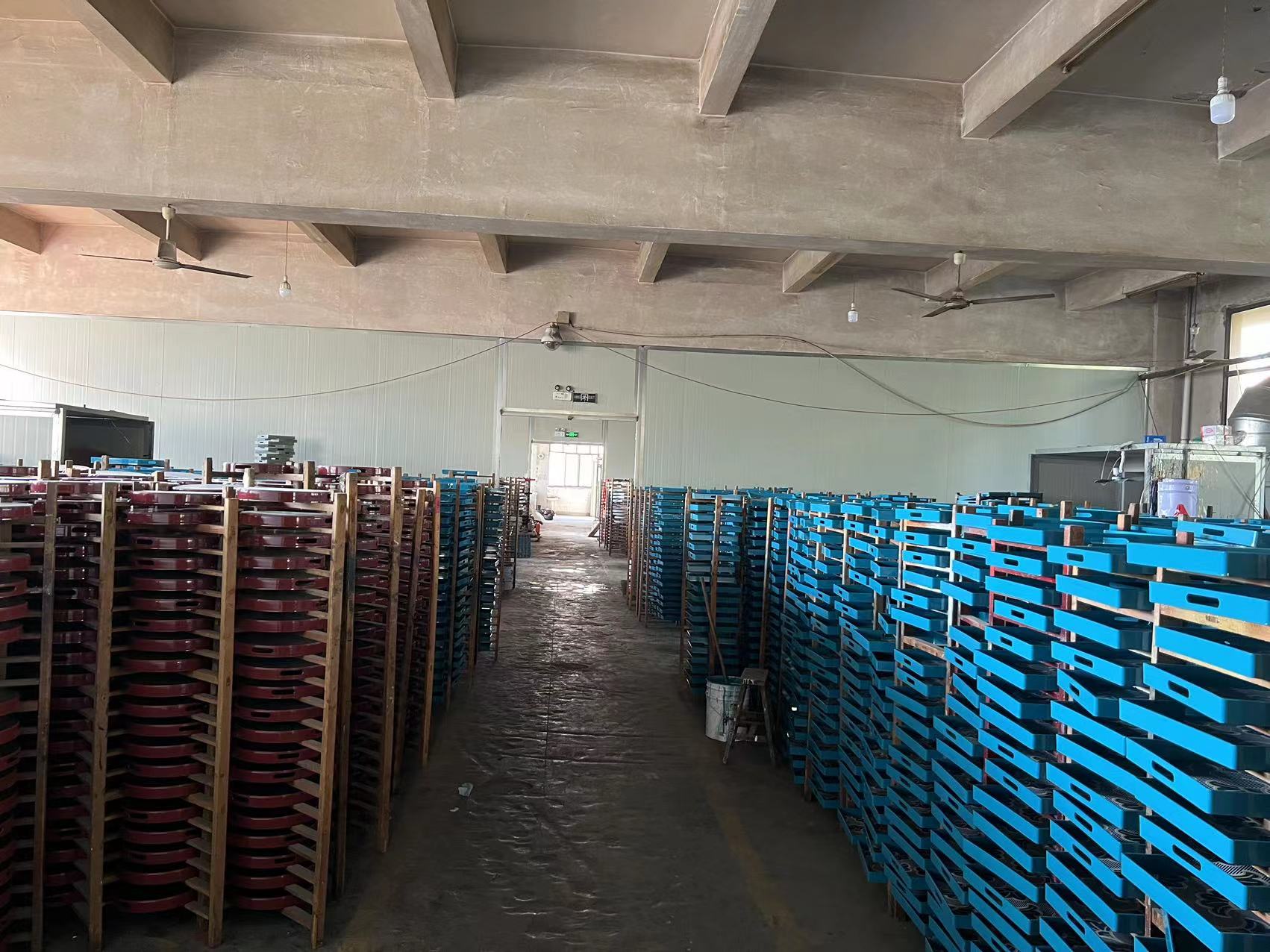
There is a rather old-fashioned way to think about an OEM home decor manufacturer: a factory that receives instructions, follows them faithfully, and sends the goods along. Efficient, perhaps. Useful, sometimes. But in today’s market, that definition feels a little too narrow and a little too beige. The better OEM partner is not simply a producer. It is a translator—someone who can take a design intention and carry it all the way into a retail-ready outcome without letting the charm fall apart somewhere between sample room, QC table, and shipping schedule.
That broader role feels especially relevant in 2026. High Point Market’s Spring theme, “Preserve,” and ASID’s 2026 outlook both point toward interiors that are more expressive, more crafted, and more rooted in purpose and performance. Las Vegas Market’s current themes also lean into softness, sculptural form, and emotionally resonant objects. These are not blunt trends. They are subtle ones. And subtle trends need a manufacturing partner that can interpret, refine, and stabilize them—not merely copy them.
An OEM manufacturer should make the product—and reduce uncertainty.
That is where Teruierdecor’s factory advantage becomes interesting. In a craft-rich manufacturing ecosystem, the value of custom home decor manufacturing is not only that the product can be made. It is that the product can be made with judgment. MIT research on product development notes that rapid prototyping enables earlier testing and tighter feedback loops, helping teams reduce uncertainty before scale. For home decor, that is quietly crucial. A sample is never only a sample. It is an early test of proportion, finish, price logic, and production feasibility.
So when buyers search for a fast sampling home decor supplier, what they are often really asking for is an OEM partner that understands momentum. The market moves, social mood shifts, retailers tighten calendars, and a lovely idea can age surprisingly quickly if the sample cycle drifts. Speed alone is not the miracle, of course. But speed with discipline is.
Good OEM work looks calm because a lot of thinking happened early.
This is also where strict QC checkpoints home decor matters. The best OEM manufacturer does not wait until the final inspection to start being serious. It builds checkpoints into the process: finish review, color tolerance, assembly consistency, carton method, labeling, and shipment readiness. In a supply chain context, recent quality research notes that traditional systems can lack the traceability and adaptability needed in dynamic environments. Buyers may not say it in those academic terms, but they feel the difference immediately: factories with clearer checkpoints create fewer expensive surprises.
That operational clarity is not separate from style. In fact, in today’s market, it supports style. If a collection depends on tactile glaze, soft curves, layered finishes, or a particular silhouette, quality discipline is what keeps those details from becoming inconsistent at scale.
Private label is not just branding. It is production judgment with manners.
The same is true for private label home decor. A private label line cannot rely on visual appeal alone. It has to carry a brand’s promise with a straight face—through the sample, the product, the carton, the shelf, and the reorder. A capable OEM partner understands that branding is not only the logo or the hangtag. It is whether the item arrives looking as intentional as it looked in the first presentation.
And because buyers are now watching the whole journey more closely, retail-ready packaging service has become part of what makes an OEM relationship feel premium. Academic work increasingly treats packaging as a foundational design decision because product protection, logistics performance, and sustainability all meet there. In other words, the packaging is not the boring bit after the design is done. It is one of the systems that protects the design from disappointment.
Social media raised the bar for every manufacturer, whether they wanted that or not.
TikTok has added an extra layer of scrutiny here. ELLE Decor reports that TikTok continues to shape interiors in 2026 and cites research indicating that about half of furniture buyers begin their inspiration phase on social platforms. TikTok’s own North America trend report also suggests audiences are moving away from generic hype and toward real-world testing, comment-led trust, and specific recommendations. Which means products are no longer judged only in a still image or a trade booth. They are judged in motion, in rooms, in unboxings, and in public reaction.
For an OEM manufacturer, that matters. A good product now has to survive not only production and freight, but also social visibility. It has to feel coherent from moodboard to shipment to shelf to screen.
The best OEM partner understands that shipping is part of the design outcome.
That is why consolidated shipping home decor belongs in the same conversation. Buyers rarely source a single isolated object. They source programs, assortments, stories. An OEM partner that can support consolidated shipping is not merely solving logistics. It is making the buying experience smoother, more legible, and more commercially usable. High Point’s 2026 programming reflects that broader operational awareness too, with sessions focused on damage reduction, visibility, transit performance, and the practical mechanics of better delivery.
And that, finally, is what makes Teruierdecor’s version of OEM valuable. Not that it behaves like a silent factory somewhere in the distance, but that it behaves like a thoughtful production partner inside a craft-driven system. It helps buyers move faster, refine better, package smarter, and ship more calmly.
So yes, an OEM home decor manufacturer should make the product. Naturally. But the better one does something more elegant than that. It makes the buy easier. It makes the launch steadier. It makes the reorder likelier. And in home decor, that sort of competence is not merely practical. It is part of the beauty.
Leave a Reply