

Why Sample Revision Is Where Real Buying Decisions Happen
As a home decor designer, I never judge a supplier only by the first sample.
The first sample tells me what the supplier can make.
The revision tells me how the supplier thinks.
That is why the sample revision process home decor buyers use is so important. A vase, candle holder, tray, or decorative object may look promising at first glance, but the revision stage shows whether the product can become retail-ready.
A good revision process answers the questions that matter:
Can the finish be controlled?
Can the shape be improved without losing the idea?
Can the product hit the right price point?
Can the packaging protect it?
Can the supplier repeat it after approval?
Can this item survive the second order?
Stanford d.school identifies prototyping and testing as core parts of design thinking, which is useful for home decor sourcing because a sample should not be treated as a final answer. It should be treated as a learning tool.
Where Finish Problems Get Seen Early
In home decor, finish problems rarely announce themselves in a product rendering.
They show up in the sample.
This is where finish problems get seen early: under natural light, in the hand, next to other pieces, and against the buyer’s actual assortment plan.
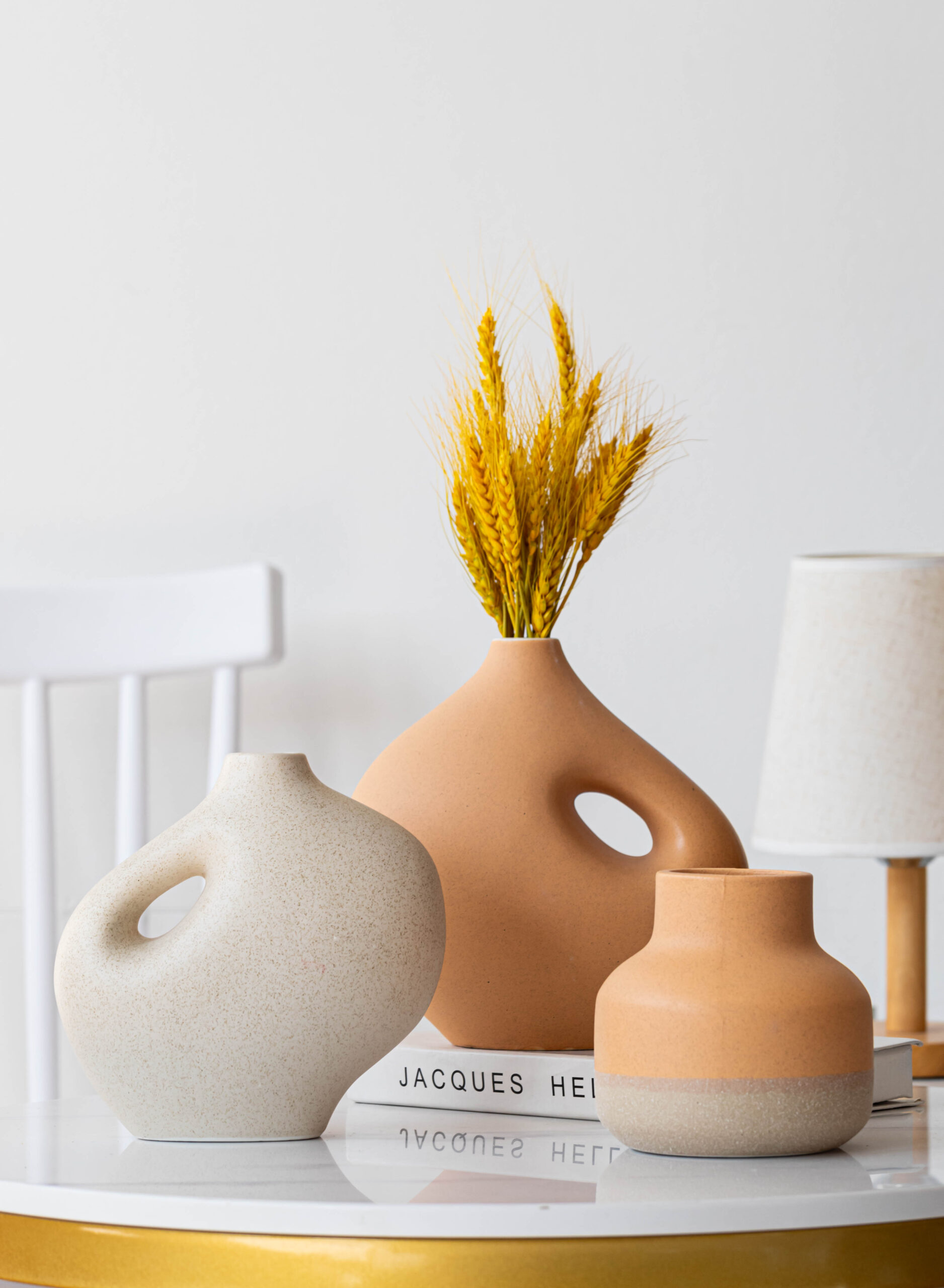
For ceramic products, the revision stage is especially important. A matte glaze may feel too flat. A reactive finish may vary too much. A warm white may turn yellow. A terracotta tone may feel too orange for the U.S. shelf. A sculptural shape may look beautiful but lean slightly, sit awkwardly, or pack poorly.
For buyers comparing ceramic vase suppliers USA searches or looking for a custom ceramic vase supplier, the real question is not simply “Who can make this shape?”
The better question is:
Who can help improve this sample before it becomes a production problem?
That is the value of revision.
What Buyers Gain From Sourcing in a Craft Region
A craft region gives buyers something a catalog cannot: people who have seen the same problem hundreds of times.
They know when a curve is too thin.
They know when a glaze will be hard to repeat.
They know when a handle, rim, edge, or carved detail will create packing risk.
They know when a beautiful sample is too slow for production.
This is what buyers gain from sourcing in a craft region. The local making knowledge helps turn visual ideas into commercial decisions.
MIT professor Eric von Hippel’s research on “sticky information” explains why some knowledge is costly to move away from the place where the problem is being solved. In product development, useful local knowledge often stays close to the people and places doing the actual work.
For Teruierdecor, this is why the revision process is not just about “changing a sample.” It is about using craft knowledge to reduce buyer risk.
How Recent U.S. Home Trends Make Revision More Important
At Spring 2026 High Point Market, U.S. design coverage pointed toward sculptural forms, richer textures, earthy palettes, artisanal surfaces, and expressive craftsmanship. Architectural Digest highlighted sculptural curves, Southwest-inspired textures, earthy palettes, and larger-scale statement pieces; Aspire Design and Home described the market as shaped by contrast, craftsmanship, warm earthy colors, curvy silhouettes, and narrative-driven forms.
That sounds exciting.
It also makes product development harder.
When trends were flat, plain, and minimal, a buyer could approve a sample more quickly. But when the trend depends on texture, glaze, curve, hand-finished detail, and material character, the revision stage becomes the commercial filter.
A sculptural vase may need a softer curve.
A ceramic candle holder may need a wider base.
A carved decorative object may need a cleaner texture.
A warm brown glaze may need to move closer to taupe.
A handmade look may need to feel crafted, not inconsistent.
That is how a trend becomes a product buyers can actually place on a shelf.
TikTok Creates the Spark. Revision Builds the SKU.
TikTok has become part of the home decor trend cycle. ELLE Decor recently reported TikTok-driven interior trends such as skirted furniture, broken floor plans, friction-maxxing, and cabbagecore entering the wider design conversation.
But TikTok does not solve production.
It does not tell a buyer whether a glaze can be repeated.
It does not explain whether a shape can ship safely.
It does not show whether a product can sit in a retail collection.
It does not prove whether the item can be reordered.
That is why the sample revision process matters. It slows down the trend just enough to make it sellable.
Why Some Products Survive the Second Order
The first order often tests taste.
The second order tests the product.
This is why some products survive the second order and others disappear. The winning products usually have a cleaner revision history before production begins.
They were adjusted early.
The finish was corrected.
The size was improved.
The packaging was checked.
The collection logic was clarified.
The supplier warned the buyer about risk before the order became expensive.
In home decor, second-order potential is rarely an accident. It is built during sampling.
What a Smart Sample Revision Process Should Include
A strong revision process should not feel random. It should help the buyer move from idea to decision.
A practical process usually includes:
First sample review: check shape, size, finish, weight, stability, and first visual impression.
Buyer feedback: identify what must change and what must stay.
Factory review: explain what is easy, risky, costly, or unstable in production.
Second sample: correct finish, scale, details, and packaging direction.
Collection check: test whether the item works with related SKUs.
Pre-production confirmation: make sure the approved version can be repeated.
For a custom ceramic vase supplier, this process is not extra service. It is the difference between a nice prototype and a product that can be sold, shipped, and reordered.
FAQ: Sample Revision Process Home Decor
What is the sample revision process in home decor?
It is the process of reviewing a first sample, identifying issues, adjusting size, finish, material, structure, or packaging, and confirming whether the item is ready for production.
Why does sample revision matter for ceramic home decor?
Ceramic products depend heavily on glaze, firing, texture, weight, and shape stability. Revision helps catch problems before bulk production.
Where do buyers usually find sample problems?
Buyers often find problems in finish color, surface texture, proportion, weight, base stability, packaging risk, and whether the product works inside a larger assortment.
How does a craft-region supplier help during revision?
A craft-region supplier can use local making experience to explain what is realistic, what is risky, and how to adjust a product without losing its design value.
Final Thought: Revision Is Not Delay. It Is Buyer Protection.
The sample revision process is not a slow step.
It is the step that protects the buyer.
It is where a pretty idea becomes a safer product. It is where finish problems get seen early. It is where local making knowledge improves product decisions. And it is where buyers begin to understand whether a supplier can help them build products that survive beyond the first order.
Leave a Reply