

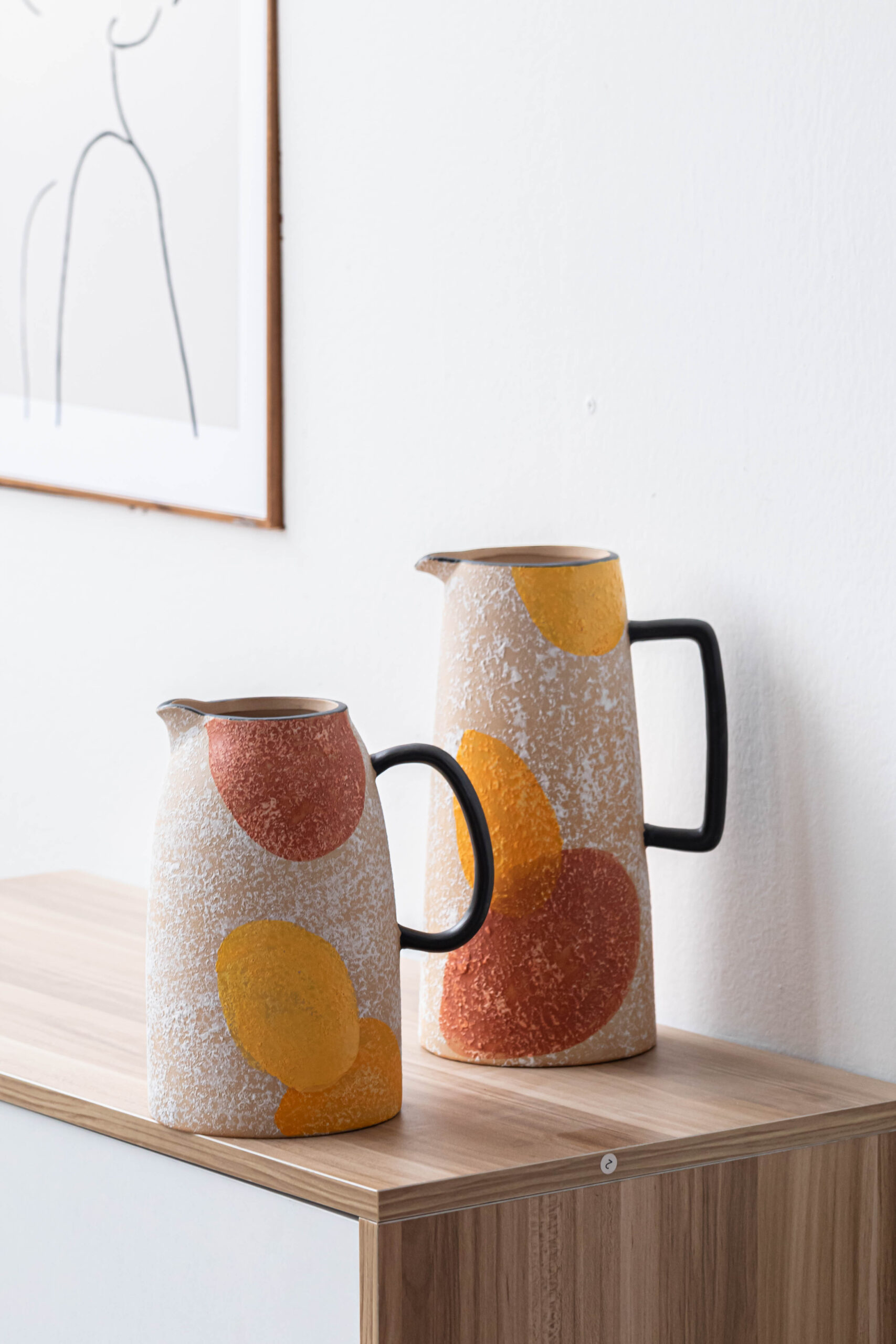
Interior Designers Need More Than Pretty Product Photos
Interior designers are very good at seeing what a room needs.
A softer vase on the console.
A warmer wall piece behind the sofa.
A bench that makes the entryway feel finished.
A mirror finish that does not fight the lighting.
A tabletop group that makes a shelf look intentional instead of random.
But sourcing those products is a different job.
A product can look good online and still fail in a real project. The size may be wrong. The finish may look different under room lighting. The packaging may not protect the piece. The sample may not match the final batch. The supplier may not understand why a small color shift matters in a designed space.
For interior designers, the real question is not only:
Can I find a beautiful item?
The better question is:
Can this supplier help me turn a design direction into products that match the room, arrive safely, and feel right in the final installation?
That is where Teruierdecor supports designers.
What Interior Designers Usually Need From a Home Décor Supplier
Interior designers need suppliers who can understand design intent and production reality at the same time.
A good home décor supplier should support:
- material and finish review
- sample development
- custom size or custom finish discussion
- product notes and specifications
- room-style coordination
- mirror, ceramic, tabletop, wall décor, and small seating matching
- packaging and shipping planning
- project timing
- MOQ and lead time clarity
- communication before final approval
This matters across products such as:
- ceramic vases
- tabletop décor
- wall décor
- mirrors
- ottomans and benches
- decorative trays
- candle holders
- mixed-material accents
- small decorative furniture
- seasonal or project-specific accessories
Interior designers do not only need products.
They need products that behave well inside a real room.
The First Designer Question: Will This Product Fit the Room?
A product may look good by itself, but interior design is not about one object alone.
It is about the whole room.
Before choosing a product, designers usually think about:
- scale
- color temperature
- material balance
- texture
- lighting
- furniture proportion
- wall height
- shelf depth
- client lifestyle
- installation setting
- how the piece works with nearby objects
A ceramic vase that looks strong in a catalog may feel too small on a large console.
A wall décor piece may look beautiful in a photo but feel too flat in a room with high ceilings.
A gold mirror frame may look elegant alone but too yellow beside bronze lighting.
A bench fabric may look neutral online but too gray in a warm interior.
Teruierdecor helps designers review products through room use, not only catalog appearance.
Material and Finish Matter More Than Designers Admit
Designers know this already: finish can quietly ruin a room.
A matte ceramic vase that is slightly too cold can make a warm neutral shelf feel off.
A metal frame that is too shiny can fight with lighting hardware.
A wood tone that is too orange can make the room feel dated.
A fabric texture that looks soft in a photo may feel cheap in person.
For interior designers, materials and finishes are not small details.
They are the room’s language.
Useful finish areas include:
| Finish Area | Designer Concern |
|---|---|
| Ceramic glaze | Warmth, texture, color consistency |
| Metal finish | Bronze, soft gold, black, brushed tone coordination |
| Wood tone | Natural warmth, undertone, grain visibility |
| Upholstery fabric | texture, hand-feel, pattern scale |
| Woven material | softness, casual texture, durability |
| Wall décor finish | surface depth, edge quality, lighting response |
| Mirror frame finish | coordination with hardware and lighting |
A supplier should help designers understand what can be controlled and what may vary.
That is especially important for ceramic glaze, natural wood, woven material, and hand-finished products.
Custom Does Not Always Mean Complicated
Interior designers often need some level of customization.
But customization does not always mean creating a completely new product from zero.
It may mean:
- adjusting a finish
- changing a color tone
- modifying a size
- selecting a different fabric
- choosing a different metal finish
- adapting a catalog item for a project
- creating a coordinated product group
- developing a sample from a design direction
For many projects, the smartest path is not full custom development.
It is controlled customization.
A designer may start with an existing ceramic vase shape and request a warmer glaze.
A bench may use a familiar frame but a different upholstery texture.
A mirror may keep the same proportion but use a finish that better coordinates with the project.
A tabletop group may be adjusted around a shared color and material story.
This saves time, reduces risk, and keeps the product closer to production reality.
Sample Development Helps Designers Avoid Expensive Mistakes
A designer should not approve home décor products only from photos.
Samples help check:
- real color
- hand-feel
- surface texture
- scale
- weight
- finish quality
- proportion
- room compatibility
- packaging feasibility
- production repeatability
For Teruierdecor, sample development is not only about making one attractive piece.
It is about helping designers answer:
Can this product become a real item for the project or collection?
A practical sample review should include:
- Does the finish match the design direction?
- Does the size work in the intended room or display?
- Does the material feel right in person?
- Does the product coordinate with other selected items?
- Does the packaging protect the product?
- Can the supplier repeat the same finish in bulk?
- Does the lead time fit the project schedule?
A good sample reduces guessing.
That is valuable for designers, because guessing is where project mistakes become expensive.
Designers Need Product Notes, Not Just Inspiration
Interior designers often need to explain product choices to clients, contractors, purchasing teams, or project managers.
That means product notes matter.
Useful product notes may include:
- product name
- item number
- dimensions
- material
- finish
- color
- weight
- usage notes
- water-use note for vases
- care instruction
- packaging method
- MOQ
- sample lead time
- production lead time
- customization options
- available finish variations
These details help designers communicate clearly.
A beautiful product with missing details creates friction.
A product with clear notes becomes easier to specify, approve, quote, and reorder.
How Teruierdecor Helps With Finish Coordination
Many design problems happen because products are sourced separately.
The vase comes from one supplier.
The mirror comes from another.
The bench comes from another.
The wall décor comes from another.
The tray comes from another.
Each product may look fine alone, but together the finishes do not speak the same language.
Teruierdecor helps designers think across categories:
- ceramic vases with mirror frames
- ottoman fabric with wall décor texture
- tabletop trays with wood or metal finishes
- decorative bowls with shelf styling
- wall décor with entryway benches
- mixed-material accents with room hardware
For example:
A soft gold mirror frame should not look too yellow beside a bronze bench leg.
A taupe ceramic vase should not turn gray next to warm beige upholstery.
A black metal tray should not feel too harsh in a soft neutral room.
A woven wall piece should not clash with the wood tone of furniture nearby.
Finish coordination is not about making everything match.
It is about making everything belong.
Project Timing: Designers Need Realistic Lead Time
Interior design projects often run on fixed timelines.
Install date.
Client presentation.
Project handover.
Retail opening.
Hotel fit-out schedule.
Photography date.
Seasonal launch.
A supplier who cannot explain timing clearly creates pressure for the designer.
Designers should ask:
- Is this item available from catalog?
- Does it require sample development?
- Is the finish custom?
- Does the product need new packaging?
- What is the sample lead time?
- What is the production lead time?
- What is the shipping preparation time?
- Can the product arrive before the project deadline?
Teruierdecor helps designers separate fast options from development options.
Catalog-based products may move faster.
Custom samples need more time.
Custom finishes need testing.
Mixed-material products need more coordination.
Fragile products need packaging review.
Clear timing helps designers avoid last-minute sourcing panic.
Packaging Matters Even for Beautiful Projects
Designers often focus on the product. That is natural.
But packaging decides whether the product arrives ready for the room.
A ceramic vase with a chipped rim cannot be installed.
A wall décor piece with dented corners cannot be photographed.
A bench with dirty fabric cannot go into a finished space.
A mirror with scratched frame finish creates a client complaint.
A mixed-material accessory damaged during shipping loses its value immediately.
For home décor products, designers should ask about:
- inner box structure
- surface protection
- fragile point protection
- carton strength
- hardware protection
- fabric dust cover
- corner protection
- label and shipping mark
- packaging photos before shipment
Good packaging protects the designer’s schedule and reputation.
A late replacement is not just a product issue. It can affect the whole project.
MOQ: What Designers Should Understand Early
Interior designers may need smaller quantities than retail buyers or distributors.
That can create MOQ questions.
Some products may support small project quantities.
Some custom finishes may require higher MOQ.
Some fabrics or materials may have supplier-side minimums.
Some ceramic glazes may require batch testing.
Some mixed-material products may need minimum production setup.
Designers should ask early:
- What is the MOQ for catalog items?
- What is the MOQ for custom finishes?
- Can several items be grouped together?
- Can samples be ordered first?
- Are there recommended alternatives with lower MOQ?
- Which products are better for project-based sourcing?
A good supplier should explain MOQ clearly instead of hiding it until late in the conversation.
Trade Program Thinking: What Designers Actually Need
A trade program for interior designers should not only mean a discount.
Designers usually need support in these areas:
- faster product clarification
- sample guidance
- finish references
- material notes
- project-friendly communication
- product specification support
- packaging information
- lead time clarity
- custom option discussion
- repeat order support
In other words, designers need a supplier who reduces decision friction.
Teruierdecor’s role is not to replace the designer’s taste.
It is to help the designer turn taste into workable sourcing decisions.
How Teruierdecor Supports Interior Designers
| Designer Need | Teruierdecor Support |
|---|---|
| Product sourcing | Provide catalog and category options |
| Custom development | Adjust size, finish, color, material, or product direction |
| Sample review | Support material, finish, scale, and packaging checks |
| Finish coordination | Help match ceramic, metal, wood, fabric, mirror, and wall décor finishes |
| Project timing | Clarify sample, production, and shipping lead time |
| Product notes | Provide dimensions, materials, finish, use notes, and packaging details |
| MOQ discussion | Explain catalog, custom, and project quantity logic |
| Packaging review | Protect fragile and surface-sensitive products |
| Reorder support | Keep notes for future project or collection repeats |
This support helps designers move from inspiration to real sourcing.
Comparison: Retail Buyer vs Interior Designer Needs
| Buying Area | Retail Buyer Focus | Interior Designer Focus |
|---|---|---|
| Product role | Shelf and assortment performance | Room fit and client approval |
| Finish | Retail consistency | Room coordination and lighting response |
| Sample | Production readiness | Material feel, scale, and project match |
| Packaging | Store and warehouse protection | Installation schedule and damage prevention |
| MOQ | Buying plan and price ladder | Project quantity and customization limits |
| Product notes | Retail selling and reorder | Specification, client approval, purchasing clarity |
| Supplier role | Assortment partner | Design-to-product sourcing partner |
Interior designers need a supplier who understands that a product is not only a SKU.
It is part of a room.
Practical Checklist for Interior Designers
Before sourcing home décor products, designers can ask:
Room Fit
- Where will this product be placed?
- Does the size match the space?
- Does the product support the room story?
Material and Finish
- Does the finish match nearby materials?
- Will it look right under project lighting?
- Is the material suitable for the room use?
Sample
- Do we need a physical sample?
- Should we test finish or material first?
- Can the sample be revised?
MOQ and Timing
- Does the MOQ match the project?
- Is this catalog-based or custom?
- Can it arrive before installation?
Packaging
- Is the product fragile?
- How will it be protected?
- Can packaging reduce installation risk?
Product Notes
- Are dimensions clear?
- Are material and finish notes available?
- Are usage notes needed?
These questions help designers avoid sourcing products that look good online but fail in the real project.
Common Mistakes Designers Make in Home Décor Sourcing
Mistake 1: Choosing only by image
Photos cannot fully show size, texture, finish, weight, or room compatibility.
Mistake 2: Ignoring finish undertone
Warm white, cool white, taupe, bronze, soft gold, and wood tones can all shift under lighting.
Mistake 3: Requesting custom work too late
Custom size or custom finish usually needs more sample and production time.
Mistake 4: Not asking about MOQ early
MOQ may affect whether a design idea is practical for the project.
Mistake 5: Treating packaging as someone else’s problem
If the product arrives damaged, the designer still has to solve the project problem.
Mistake 6: Not requesting product notes
Clear product notes help with client approval, purchasing, and installation planning.
FAQ: Home Décor Sourcing for Interior Designers
What should interior designers look for in a home décor supplier?
Interior designers should look for a supplier that can support samples, materials, finishes, custom options, product notes, packaging, lead time clarity, and project-based communication.
Can Teruierdecor support custom home décor products?
Teruierdecor can discuss custom size, finish, color, material, and product development depending on category, MOQ, timeline, and production feasibility.
Why are samples important for interior designers?
Samples help designers check real color, texture, scale, material quality, finish, and room compatibility before committing to production or project use.
What product categories can interior designers source from Teruierdecor?
Interior designers may source ceramic décor, decorative vases, tabletop décor, wall décor, mirrors, ottomans, benches, trays, and mixed-material home décor.
What should designers include in a sourcing request?
Designers should include product category, reference image, target size, material, finish, quantity, project timeline, customization needs, packaging requirements, and any room or design context.
Does MOQ apply to interior designer projects?
Yes. MOQ depends on product category, material, finish, customization level, and production process. Catalog products may have different MOQ from custom-developed items.
Final Buying Judgment
Interior designers do not need a supplier who only sends more product photos.
They need a supplier who can help answer the real project questions:
Will this product fit the room?
Will the finish match the design direction?
Can the sample become a real product?
Can it arrive safely before installation?
Can the supplier explain MOQ, lead time, and customization clearly?
If these questions are answered early, sourcing becomes easier.
Teruierdecor helps interior designers connect design ideas with product development, material choices, finish coordination, packaging, and delivery planning.
Because in interior design, a product is not successful when it looks good in a catalog.
It is successful when it looks right in the room.
Leave a Reply