

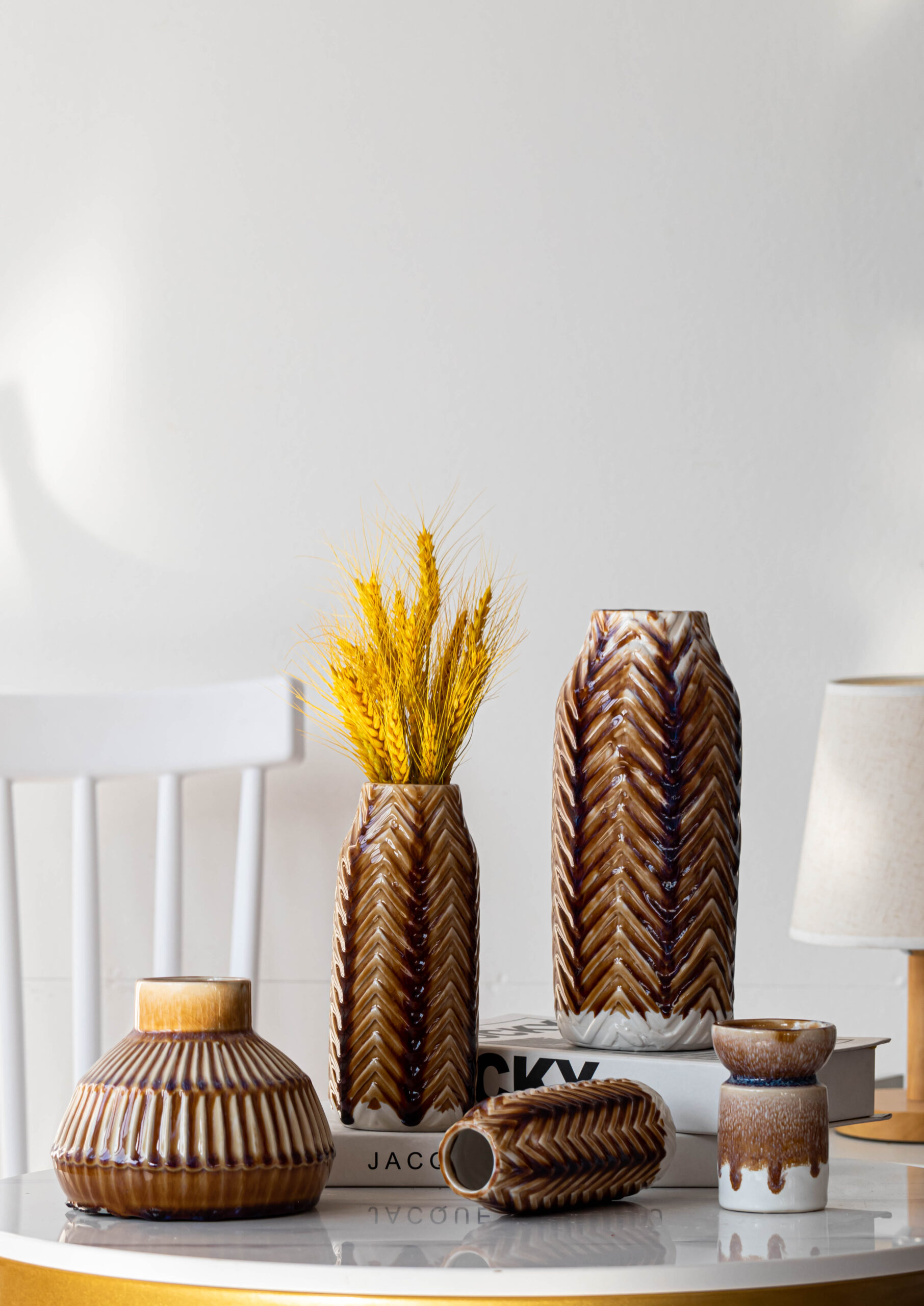
Importers and Distributors Need More Than Attractive Products
Importers and distributors do not buy home décor the same way a single store buyer does.
A retailer may focus on what fits one buying season or one retail shelf.
An importer or distributor has to think about a wider chain.
Will this product work for multiple customers?
Can the assortment support different price levels?
Will the packaging survive long-distance shipping?
Can the supplier repeat the same finish in the next order?
Are the documents, labels, carton marks, and product notes clear enough?
Can the line be presented to retailers, designers, small stores, and project buyers?
For importers and distributors, a product is not just a product.
It becomes part of a catalog, a sales program, a warehouse plan, a reorder system, and a customer promise.
That is why Teruierdecor supports importers and distributors with more than product photos. The goal is to help build home décor lines that can be sold, shipped, explained, and reordered with fewer surprises.
What Importers and Distributors Usually Need From a Home Décor Supplier
Importers and distributors often sit between the factory and the market.
They need products that are easy to present to customers, but also practical to manage behind the scenes.
A useful supplier should support:
- catalog-ready product groups
- retail-ready home décor assortments
- MOQ and lead time planning
- material and finish consistency
- packaging and shipping details
- carton and label information
- QC checkpoints
- reorder stability
- product notes and specifications
- mixed-SKU order planning
- category expansion over time
This matters across categories such as:
- ceramic décor
- decorative vases
- tabletop décor
- wall décor
- mixed-material home décor
- ottomans and benches
- small decorative furniture
- seasonal home accents
A distributor does not only need one good item.
A distributor needs a product line that can be shown, quoted, packed, shipped, and repeated.
The First Distributor Question: Can This Product Fit a Catalog Line?
A product for importers and distributors must be easier to organize than a random sample.
It should fit into a clear catalog structure.
For example:
| Catalog Role | Product Example | Why It Matters |
|---|---|---|
| Core item | Matte ceramic vase, neutral tabletop décor | Easy to explain and reorder |
| Price-entry item | Small ceramic object, candle holder | Good for broad customer access |
| Visual anchor | Large vase, wall décor, bench | Helps the catalog feel stronger |
| Seasonal refresh | color-driven tabletop or vase | Adds newness without rebuilding the line |
| Mixed-material item | tray, wall accent, decorative object | Raises perceived value |
| Reorder item | stable shape, finish, packaging | Supports long-term distributor sales |
A distributor’s catalog should not feel like a pile of unrelated products.
It should help customers understand the line quickly.
Teruierdecor helps buyers think through product role, category fit, finish family, and price ladder before products are pushed into a wider sales program.
The Second Question: Can the Assortment Serve Different Customers?
Importers and distributors often sell to more than one customer type.
Their customers may include:
- retail stores
- community home stores
- interior designers
- online sellers
- small chains
- hospitality buyers
- project procurement teams
- regional wholesalers
- gift and home décor shops
That means the assortment needs flexibility.
A product line should include safe core items, but also enough visual interest for customers who want something new.
For example:
A ceramic décor line may include warm neutral vases for broad use, plus a few textured or colored pieces for seasonal refresh.
A tabletop line may include simple trays and bowls, plus giftable small objects.
A wall décor line may include medium-size pieces for stores and larger accents for project buyers.
An ottoman or bench line may include neutral upholstery for wide use, plus limited pattern or metal finish options for trend response.
The best distributor assortments usually balance three things:
broad appeal, clear price levels, and enough newness to help customers buy again.
MOQ and Lead Time Matter More for Distributors
For importers and distributors, MOQ is not only a purchasing number.
It affects warehouse planning, customer commitments, catalog launch timing, cash flow, and reorder rhythm.
A distributor may need to ask:
- What is the MOQ per SKU?
- Can several products be combined?
- Can colors or finishes be grouped?
- Which products are better for test orders?
- Which products need higher MOQ because of material or finish?
- What is the sample lead time?
- What is the bulk production lead time?
- What is the reorder lead time?
- Are there seasonal production risks?
Teruierdecor helps buyers understand MOQ and lead time by product type.
A simple catalog-based ceramic item may move faster than a custom mixed-material product.
A standard finish may be easier than a custom glaze.
A neutral fabric bench may be easier to reorder than a special patterned item.
A wall décor item with custom size or hardware may need more review before production.
For distributors, realistic planning matters more than overly optimistic timing.
A late shipment can affect many downstream customers at once.
Packaging Is a Distributor’s Margin Protection
Home décor products often fail in the supply chain, not in the showroom.
That is especially important for importers and distributors because products may move through multiple handling points:
factory, container, port, warehouse, distributor storage, customer shipment, retail floor.
Every extra handling step increases risk.
Packaging should protect:
- ceramic rims
- vase necks
- handles
- wall décor corners
- metal finishes
- fabric surfaces
- bench legs
- hanging hardware
- mixed-material surfaces
- barcode labels
- master carton marks
A distributor needs packaging that is not only safe for export, but also practical for warehouse handling and customer delivery.
Useful packaging details include:
- inner box size
- master carton size
- pieces per carton
- gross weight and net weight
- carton strength
- surface protection method
- fragile point protection
- hardware placement
- barcode and label position
- shipping marks
- carton photo references
Teruierdecor treats packaging as part of sourcing resources because packaging directly affects claims, warehouse efficiency, and reorder confidence.
QC Should Protect the Whole Distribution Chain
Quality control for importers and distributors should be stricter than a quick visual check.
A distributor may not sell the goods directly to the final consumer. But if products arrive with finish problems, label errors, weak cartons, or unstable packaging, the distributor still carries the cost.
QC should cover:
- product size
- material
- finish
- color consistency
- surface condition
- structure
- stability
- packaging fit
- label accuracy
- carton marks
- quantity
- approved sample match
- batch-to-batch consistency
For different categories, the focus changes.
Ceramic décor needs glaze, cracks, chips, rim quality, base stability, and packaging checks.
Decorative vases need water-use notes, rim protection, glaze consistency, and base stability.
Wall décor needs back structure, hanging hardware, corners, and surface finish.
Ottomans and benches need fabric cleanliness, frame stability, leg balance, and hardware completeness.
Mixed-material products need attachment strength, material separation, finish coordination, and abrasion control.
A distributor’s customer may not know where the problem happened.
They only know the product arrived wrong.
That is why QC needs to happen before shipment.
Documents and Product Notes Help Distributors Sell
Importers and distributors often need more product information than a retail buyer.
They may need to answer questions from many customers.
Useful product notes may include:
- product name
- item number
- dimensions
- material
- finish
- color
- usage notes
- decorative-only note if needed
- water-use note for vases
- care instructions
- packaging method
- carton details
- MOQ
- lead time
- available variations
- customization options
- country of origin
- label requirements
This information helps distributors quote faster, prepare catalogs, answer customer questions, and reduce misunderstandings.
A product without clear notes creates repeated back-and-forth.
A product with clean notes becomes easier to sell.
Reorder Stability Is Where Supplier Reliability Shows
For distributors, the second order is often more important than the first order.
The first order helps launch the product.
The second order proves whether the line can continue.
A reorder-friendly product should have:
- stable material source
- repeatable finish
- clear size standard
- documented packaging method
- stored approved sample reference
- QC checklist
- carton and label records
- production notes
- previous issue tracking
If the first order’s matte ceramic vase is warm ivory and the second batch becomes gray, the customer may lose confidence.
If a bronze finish changes too much, the line may no longer match the catalog photo.
If packaging is changed without approval, damage rates may rise.
If fabric is discontinued, a bench line may become difficult to maintain.
Teruierdecor helps support reorder stability by keeping product and packaging notes for future orders.
For distributors, that memory matters.
Why Distributors Should Avoid Product-Only Sourcing
Product-only sourcing looks simple.
The supplier sends photos.
The buyer asks for price.
The buyer places an order.
But for importers and distributors, that process can create hidden risk.
A product-only approach may miss:
- whether the item fits the catalog
- whether the finish can repeat
- whether MOQ supports the sales plan
- whether packaging fits warehouse handling
- whether labels and carton marks are correct
- whether customers can understand product notes
- whether the second order can match the first
A distributor needs products, but also a working system around the products.
That system includes catalog logic, quotation clarity, packaging records, QC standards, and reorder planning.
Teruierdecor’s value translation approach is useful here.
The goal is to translate factory products into a form distributors can actually sell, explain, manage, and repeat.
How Teruierdecor Supports Importers and Distributors
| Distributor Need | Teruierdecor Support |
|---|---|
| Product catalog planning | Organize items by category, role, finish, and price level |
| Assortment building | Support ceramic, vase, tabletop, wall décor, bench, and mixed-material lines |
| MOQ and lead time planning | Clarify quantity and timing based on category and customization |
| Sample development | Help test materials, finishes, size, packaging, and production feasibility |
| Packaging review | Protect fragile products, surfaces, labels, and carton structure |
| QC support | Review product, finish, packaging, labels, and quantity before shipment |
| RFQ preparation | Help buyers quote with clearer product and packaging details |
| Reorder support | Keep production notes, approved standards, and packaging records |
| Custom development | Translate market needs into workable SKU directions |
This support helps distributors reduce the gap between factory output and market-ready selling.
Comparison: Retail Buyer vs Importer & Distributor Needs
| Buying Area | Retail Buyer Focus | Importer / Distributor Focus |
|---|---|---|
| Product selection | Shelf fit and customer appeal | Catalog fit and multi-customer usability |
| MOQ | Store or chain buying plan | Warehouse, customer base, and reorder rhythm |
| Packaging | Store delivery and damage control | Export, warehouse, resale, and customer delivery |
| QC | Retail presentation | Product consistency across wider distribution |
| Product notes | Store and customer use | Sales team, catalog, quotation, and customer support |
| Reorder | Repeat sales | Line continuity and customer retention |
| Supplier role | Product execution partner | Product + documentation + logistics support partner |
Importers and distributors need a supplier who can support the full chain, not only the product itself.
Practical Checklist for Importers and Distributors
Before adding a home décor product to a distributor line, buyers can ask:
Catalog Fit
- Does this product belong in a clear category?
- Does it support the existing catalog?
- Does it add a useful price point or product role?
Customer Use
- Which customer types can buy this product?
- Is the style broad enough?
- Does the product need explanation?
MOQ and Lead Time
- Is MOQ realistic for the sales plan?
- Can products be grouped efficiently?
- Is lead time suitable for customer commitments?
Packaging
- Can the product survive export and warehouse handling?
- Are carton details clear?
- Are labels and marks suitable?
QC
- Does the batch match the approved sample?
- Are finish and material standards clear?
- Are packaging and quantity checked before shipment?
Reorder
- Can this product be reordered?
- Is the finish stable?
- Are production and packaging notes recorded?
If the product cannot answer these questions, it may still be a test item.
But it may not be ready for a distributor program.
Common Mistakes Importers and Distributors Make
Mistake 1: Building a catalog from random products
A catalog should have category logic, price levels, and product roles.
Mistake 2: Comparing only unit price
A low price may hide weak packaging, finish risk, or poor reorder stability.
Mistake 3: Ignoring carton details
Carton size, gross weight, labels, and master carton structure affect warehouse planning.
Mistake 4: Not asking for product notes
Without product notes, sales teams and customers ask the same questions again and again.
Mistake 5: Treating custom development like standard catalog sourcing
Custom products need more time, more clarification, and stronger sample review.
Mistake 6: Not separating test items from reorder items
Trend-test products and reorder-core products should not follow the same buying logic.
FAQ: Home Décor Sourcing for Importers and Distributors
What should importers and distributors look for in a home décor supplier?
They should look for a supplier that can support product lines, catalog planning, MOQ and lead time clarity, packaging, QC, product notes, labels, and reorder stability.
Why is packaging important for distributors?
Distributors often handle products through export, warehouse storage, resale, and customer delivery. Weak packaging increases damage, claims, and margin loss.
What makes a home décor product distributor-friendly?
A distributor-friendly product has clear category fit, stable material and finish, realistic MOQ, safe packaging, clear product notes, and strong reorder potential.
Can Teruierdecor support mixed home décor assortments?
Yes. Mixed assortments may include ceramic décor, vases, tabletop décor, wall décor, ottomans, benches, and mixed-material items. Feasibility depends on MOQ, production path, packaging, and timeline.
Why are product notes important for distributors?
Product notes help distributors prepare catalogs, quote customers, answer sales questions, explain product use, and reduce sourcing misunderstandings.
What makes a product easier to reorder?
A product is easier to reorder when its material, finish, size, packaging, labels, and QC standards are documented and repeatable.
Final Buying Judgment
Importers and distributors need products that can do more than look good once.
A strong home décor line should answer five questions:
Can it fit a catalog?
Can it serve different customer types?
Can it ship through a longer supply chain?
Can the product details be explained clearly?
Can the second order match the first?
If the answer is yes, the product has a better chance to become part of a real distributor program.
Teruierdecor helps importers and distributors connect product development, catalog logic, packaging, QC, documents, and reorder stability.
Because in home décor distribution, the product is only the beginning.
The real value is a line that can sell, ship, and repeat.
Leave a Reply