

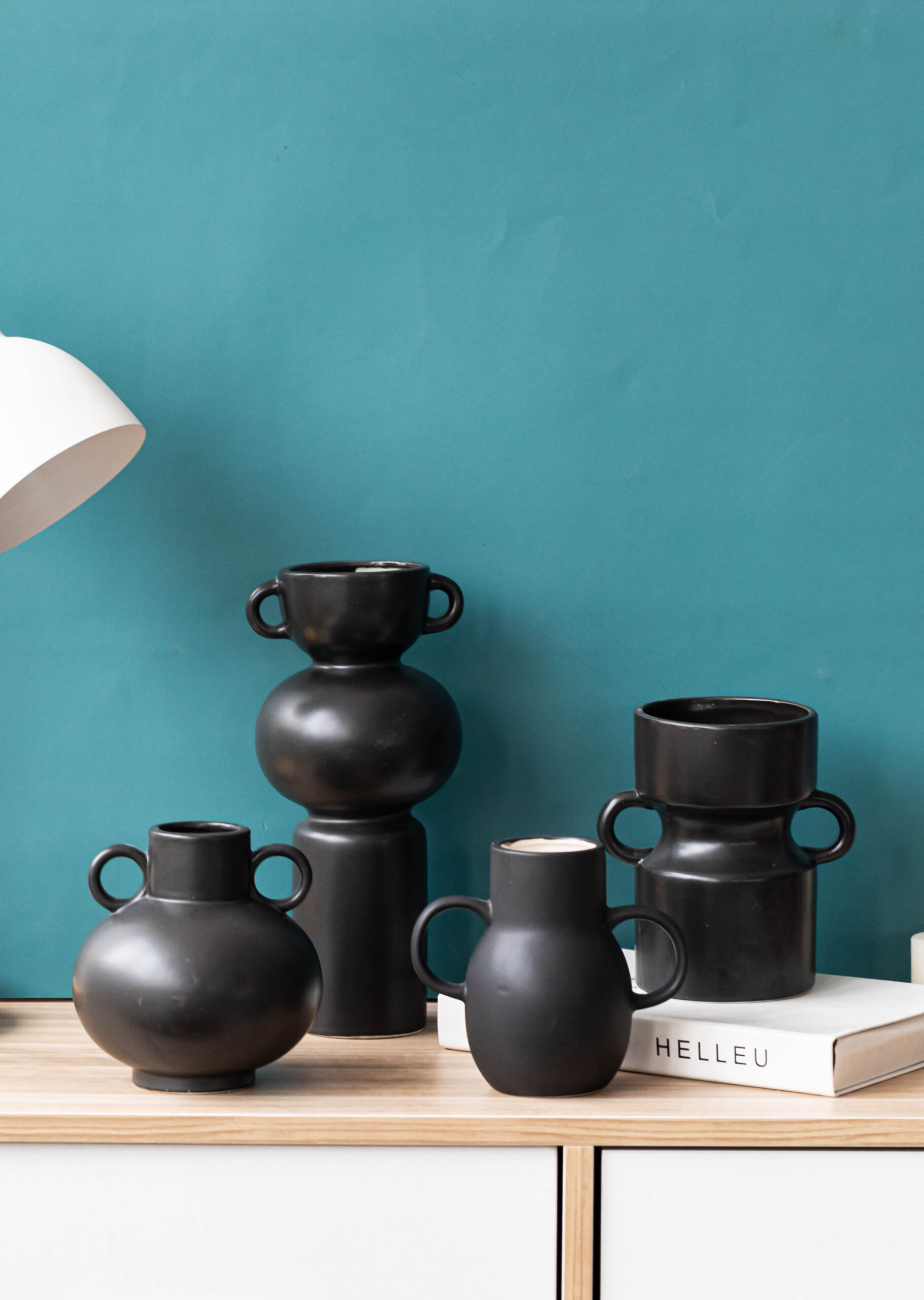
Ceramic Décor Buying Guide: Why One Good Vase Is Not Enough
A ceramic vase can look beautiful in a sample photo and still fail on the retail floor.
That is the part many buyers learn the hard way. The issue is not always design. Sometimes the shape is hard to display. Sometimes the glaze looks different from batch to batch. Sometimes the packaging cannot survive long-distance shipping. Sometimes the piece sells once, but the supplier cannot repeat the finish in the second order.
For retail buyers, ceramic décor is not just about “pretty objects.” It is about building a group of pieces that can work together on shelf, support different price points, travel safely, and remain stable enough for reorders.
That is why Teruierdecor treats ceramic décor buying as a category decision, not a single-product decision.
What Is Ceramic Décor in Retail Buying?
Ceramic décor usually refers to decorative home products made through clay forming, glazing, firing, and finishing processes. In a wholesale home décor assortment, this may include:
- ceramic vases
- tabletop decorative objects
- ceramic bowls
- candle holders
- planters
- sculptural pieces
- centerpiece items
- seasonal ceramic accents
For buyers, the real question is not only whether the item looks good.
The better question is:
Can this ceramic piece fit into a retail-ready home décor assortment?
That means the product should support shelf presentation, price ladder planning, material coordination, packaging safety, and reorder stability.
The Buyer’s First Question: What Role Does This Piece Play?
A ceramic décor item should not enter the assortment randomly. It needs a role.
Some pieces are visual anchors.
Some pieces are price-entry items.
Some pieces create texture in a shelf story.
Some pieces support seasonal color.
Some pieces are add-on purchases near larger home items.
Before selecting a ceramic product, a buyer should ask:
Is this piece a hero item, a supporting item, or a volume item?
This one question changes the whole buying logic.
A hero vase can have more shape, texture, and stronger visual identity.
A supporting ceramic item should coordinate easily with mirrors, ottomans, trays, textiles, and wall décor.
A volume item needs stable cost, reliable packaging, and repeatable finish control.
Teruierdecor’s role is to help buyers place each product into the right retail function before pushing it into sampling or production.
Shape: The First Shelf Test
Shape decides whether a ceramic product can stand out on shelf.
But not every interesting shape is a good wholesale product.
For retail buyers, a strong ceramic shape should meet three conditions:
- It is recognizable from a few feet away.
- It can be packed safely without excessive cost.
- It can sit well with other items in the same assortment.
A vase with a very narrow base may photograph well, but it can create stability problems in stores. A highly sculptural handle may look unique, but it may also increase breakage risk. A wide-mouth centerpiece vase may feel premium, but it needs to match the buyer’s floral, tabletop, or seasonal display logic.
Good ceramic décor is not only designed for the eye.
It is designed for the shelf, the carton, and the reorder.
Finish: Where Buyers Should Be More Careful
Ceramic glaze finishes can make or break the product.
Matte ceramic décor is popular because it feels soft, modern, and easy to coordinate with neutral home interiors. Glossy finishes can create a stronger decorative effect. Reactive glazes can add depth and variation. Textured finishes can make simple shapes feel more premium.
But finish also brings risk.
For example:
| Finish Type | Retail Advantage | Buyer Risk |
|---|---|---|
| Matte glaze | Soft, modern, easy to coordinate | Surface marks may show more easily |
| Glossy glaze | Bright, decorative, giftable | Reflections may expose uneven areas |
| Reactive glaze | Rich color variation, artisanal look | Batch consistency must be controlled |
| Textured ceramic | Higher perceived value | Dust, glaze pooling, and packaging abrasion need checking |
| Metallic accent | Premium shelf effect | More QC attention needed for rubbing and color stability |
A buyer should never judge a ceramic finish only by one sample.
The better approach is to check:
- sample finish under natural light
- sample finish under store-style lighting
- finish consistency across multiple units
- glaze coverage at edges, rims, and bottom areas
- surface marks after handling
- color stability between sample and pre-production batch
This is where a factory with local making knowledge matters. In a craft-based production area, the team can often see finish problems earlier because the material behavior, glaze reaction, and firing process are part of daily production knowledge.
Price Ladder: The Part Many Ceramic Assortments Miss
A ceramic décor assortment should not sit at one price level.
Retail buyers usually need a clear price ladder. This allows customers to enter the category at different spending levels and gives stores more room for display planning.
A simple ceramic décor price ladder may include:
| Product Role | Typical Retail Function | Example Product Type |
|---|---|---|
| Entry item | Easy add-on purchase | Small ceramic object or mini vase |
| Mid-level item | Main shelf seller | Medium ceramic vase or planter |
| Statement item | Visual anchor | Large vase, sculptural piece, centerpiece |
| Seasonal item | Refresh driver | Colored or themed ceramic accent |
| Giftable item | Impulse purchase | Decorative bowl, candle holder, small vase set |
For Teruierdecor, the goal is not to push buyers into buying more random ceramic products.
The goal is to help the buyer build a ceramic décor ladder that looks intentional.
A good ladder gives the buyer:
- better shelf depth
- easier merchandising
- wider customer reach
- more flexible reorder options
- lower risk than betting on one single hero SKU
This is why ceramic décor should be planned as a group, not as isolated samples.
Packaging: Ceramic Décor Must Survive the Journey
Ceramic products are fragile. That sounds obvious, but many buying mistakes happen because packaging is treated too late.
A ceramic décor sample may look perfect. But if the final carton structure is weak, the item becomes a supply chain problem.
For ceramic décor wholesale orders, buyers should ask suppliers about:
- inner box structure
- foam or paper protection method
- carton thickness
- drop test expectations
- master carton layout
- fragile surface protection
- handle, rim, and base protection
- shipping mark requirements
- mixed-SKU carton possibility
A good ceramic décor supplier should not treat packaging as an afterthought.
For buyers, packaging is not just a logistics detail. It protects margin.
Every broken unit is not only product loss. It also creates claims, delayed shelf fill, customer complaints, and internal pressure on the buying team.
QC: What Buyers Should Check Before Bulk Production
Ceramic décor QC should focus on the parts that affect both appearance and repeatability.
Key QC checkpoints include:
- shape accuracy
- glaze coverage
- color consistency
- surface cracks
- pinholes or glaze defects
- base stability
- rim smoothness
- weight consistency
- packaging fit
- barcode and label accuracy
- carton strength
- batch-to-batch comparison
For ceramic vases especially, buyers should also check whether the product is decorative only or designed for water-holding use. That distinction should be clear in product notes, because it affects customer expectations and after-sale risk.
Teruierdecor’s value is not only producing ceramic décor. It is helping buyers see where the risk may appear before the order becomes expensive.
Sample Development: Do Not Approve Too Fast
Ceramic sample development should not be judged only by the first “nice-looking” piece.
A better sample review process includes:
- Reviewing the shape and proportion
- Checking the finish under different lighting
- Comparing color to the intended assortment
- Testing display compatibility with other products
- Reviewing packaging feasibility
- Confirming cost and MOQ logic
- Checking whether the finish can be repeated in production
This is especially important for products with reactive glaze, hand-applied texture, or custom color.
A buyer does not need a perfect sample in the first round.
A buyer needs a sample that can become a stable production item.
That is a very different standard.
How Ceramic Décor Works With Other Home Décor Categories
Ceramic décor becomes stronger when it supports the whole assortment.
For example:
- ceramic vases can coordinate with wall mirrors through shared tones or finishes
- ceramic bowls can support tabletop and entryway stories
- matte ceramic décor can soften metal, glass, or wood-heavy displays
- sculptural ceramic pieces can add shape to neutral shelves
- seasonal ceramic colors can refresh an existing collection without rebuilding the whole line
This is where Teruierdecor’s cross-border design manufacturing model becomes useful.
The buyer may see a trend from the retail market.
The factory may understand the material and production limits.
The design team can translate the trend into sellable SKU choices.
The production team can check whether the finish, shape, and packaging can hold up in real orders.
That is the real value of turning a design idea into a retail-ready home décor product.
Comparison: Single Product Buying vs Category Buying
| Buying Method | What It Focuses On | Main Risk |
|---|---|---|
| Single product buying | One attractive item | Hard to build shelf story or reorder logic |
| Price-only buying | Lowest unit cost | Quality, finish, and packaging risk |
| Trend-only buying | Popular style or color | Short shelf life and weak continuity |
| Category buying | Role, price ladder, finish, packaging, reorder | Requires stronger supplier coordination |
For serious retail buyers, category buying is safer.
It does not remove risk completely, but it makes the risk visible earlier.
That is the whole point of a ceramic décor buying guide: to help buyers judge the product before the purchase order, not after the shipment arrives.
FAQ: Ceramic Décor Buying Questions
What should buyers check first when sourcing ceramic décor?
Buyers should first check product role, shape stability, finish repeatability, packaging feasibility, and price ladder fit. A ceramic product should not only look good in a sample photo. It should work inside a real retail assortment.
Is matte ceramic décor still a good wholesale direction?
Yes, matte ceramic décor remains useful because it works well with neutral interiors, soft textures, and modern retail displays. The key is to control surface marks, color consistency, and packaging abrasion.
Why is glaze consistency important in ceramic décor?
Glaze consistency affects how the product looks across a full retail order. If the first batch and reorder batch look too different, the buyer may face shelf inconsistency, customer complaints, or reorder hesitation.
What makes ceramic décor easier to reorder?
A ceramic product is easier to reorder when the shape is stable, the glaze can be repeated, the packaging is tested, the cost structure is clear, and the supplier keeps production notes for future batches.
Should buyers choose one hero ceramic item or a full ceramic assortment?
A hero item can attract attention, but a full ceramic assortment usually gives buyers stronger shelf logic. A balanced assortment can include entry items, mid-price sellers, statement pieces, and seasonal refresh items.
What should be included in ceramic décor product notes?
Useful product notes should include size, material, finish, weight, usage notes, packaging method, carton information, MOQ, lead time, and any special care or display instructions.
Final Buying Judgment
Ceramic décor buying is not about finding the most beautiful vase.
It is about finding products that can pass four tests:
Can it sell visually?
Can it fit the assortment?
Can it ship safely?
Can it be reordered with confidence?
If a ceramic product cannot pass these tests, it may still be beautiful, but it is not yet a strong wholesale item.
Teruierdecor helps buyers connect design, material, craft knowledge, packaging, and reorder planning before the order moves too far.
That is how ceramic décor becomes more than decoration.
It becomes a retail-ready category.
Leave a Reply