

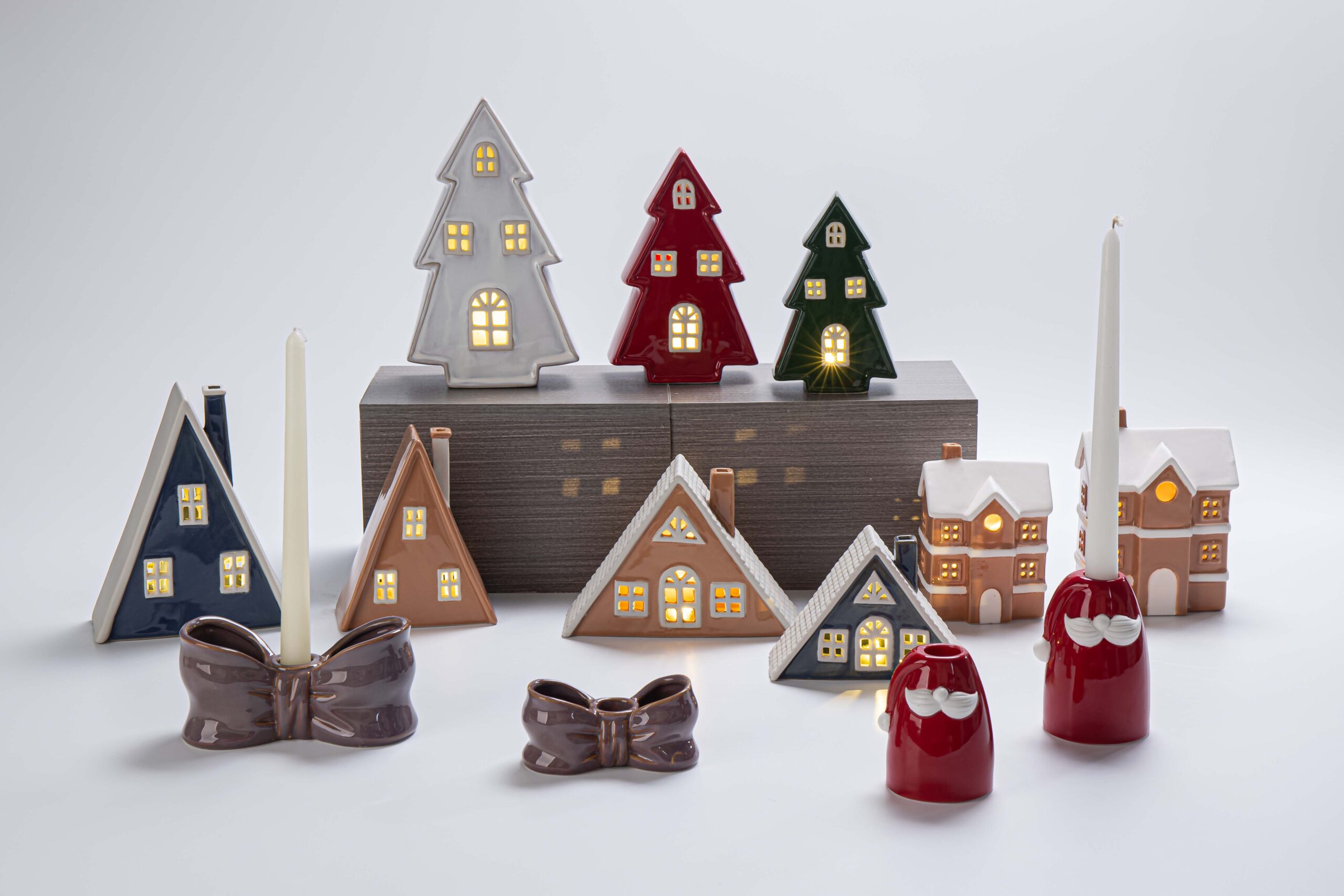
Packaging is not a back-end detail. To buyers, it is an early warning system.
A surprising number of suppliers still treat packaging as something to discuss later.
First the product.
Then the quote.
Then the sample.
Then maybe, somewhere down the line, packaging.
Buyers do not think that way.
Especially in home decor, experienced buyers often ask about packaging much earlier than suppliers expect — sometimes before they even ask for a formal quote, and certainly before they feel fully comfortable moving forward.
This is not because they are being overly cautious.
It is because packaging affects far more than protection.
It affects:
- landed cost
- damage rate
- storage efficiency
- retailer complaints
- visual quality on arrival
- internal handling
- reorder confidence
In other words, buyers ask about packaging early because packaging is already part of the product decision.
Buyers have learned that beautiful products can fail inside ugly cartons
This is one of the most common sourcing disappointments in decor.
A product looks right in the catalog. The sample feels promising. The pricing is workable. Everything seems fine — until the packaging enters the picture.
Then problems start appearing:
- the carton is too large
- the protection is too weak
- the structure is inefficient
- the inner support does not hold the item securely
- the packaging cost distorts the margin
- the item arrives looking less premium than it should
- breakage risk makes the product harder to scale
That is why buyers do not treat packaging as an afterthought.
They treat it as one of the first signs of whether a supplier understands real shipment conditions.
1. Packaging tells buyers how real the supplier is
This happens quickly.
When a supplier can speak clearly about packaging, buyers usually assume the team has actually lived through export problems, warehouse handling realities, and damage-related cost pressure.
When a supplier speaks vaguely — “safe packaging,” “strong carton,” “good packing” — buyers hear the opposite.
Because experienced buyers know that real packaging conversations usually include specifics:
- inner box or no inner box
- foam, pulp, partitions, or custom support
- master carton logic
- drop-risk awareness
- packing density
- carton size efficiency
- fragile item reinforcement
- display-sensitive protection
The more natural this sounds, the more operationally grounded the supplier feels.
Buyers do not ask about packaging because they love cartons. They ask because they hate surprises.
This is the psychological layer many suppliers miss.
Packaging questions are really risk questions.
2. Buyers are trying to detect future pain early
A buyer asking about packaging is often really asking:
- Will this item survive shipping?
- Will the carton logic destroy the margin?
- Will warehouse teams hate handling it?
- Will retailers complain about presentation damage?
- Will the item require too much babysitting after arrival?
- Will the first successful order become a messy repeat problem later?
All of these questions sit inside the packaging conversation.
So when buyers bring it up early, they are not “getting into details too soon.”
They are testing whether the product has a clean path into business reality.
In home decor, packaging affects commercial value more than many suppliers admit
This is especially true in ceramics, glass-adjacent looks, coated finishes, delicate silhouettes, and visual-value decor.
A product may be attractive, but if the packaging is weak, inefficient, or cost-heavy, the commercial equation changes.
3. Packaging changes the real cost, not just the protective cost
Some suppliers still think packaging is just a support expense.
Buyers know better.
Packaging can influence:
- per-unit landed cost
- container loading efficiency
- damage replacement cost
- labor cost during receiving
- retailer markdown risk
- warehouse slotting efficiency
- perceived product quality upon unpacking
A decorative item that looks cheapened by poor arrival condition is no longer the same product.
That is why buyers often bring up packaging while they are still deciding whether the item deserves further development at all.
4. Packaging also affects whether an item feels scalable
This is a big one.
Some products are workable in small quantities but become harder to justify in scale because the packaging logic is too heavy, too fragile, too space-consuming, or too expensive.
Buyers are very sensitive to this.
They want to know:
- Can this item move from test order to scale?
- Will packaging become the hidden blocker later?
- Does the protection method still make sense in volume?
- Is the carton structure helping the business, or fighting it?
A product with elegant packaging logic often feels more scalable than a visually stronger product with messy shipping reality.
Buyers notice whether packaging is discussed like a business issue or a technical side note
This difference changes trust.
5. Weak suppliers talk about packaging only when asked
And even then, they often answer defensively or minimally.
That creates a bad signal.
It suggests that packaging is something they react to, not something they manage with discipline.
6. Stronger suppliers bring packaging into the conversation naturally
Not because they want to complicate the sale, but because they know it supports the sale.
They understand that packaging is part of:
- quality control
- transport survival
- retail readiness
- customer satisfaction
- reorder confidence
So they are comfortable discussing it early.
That comfort matters. Buyers can feel when a supplier sees packaging as part of the commercial model instead of a burden to be hidden until later.
Early packaging questions are often a proxy for trust
This is one of the most useful ways to read buyer behavior.
If a buyer asks about packaging early, it usually means they are already thinking beyond first impression. They are imagining actual execution.
That is a good sign.
7. Buyers ask early when they can imagine ordering
Casual interest stays on styling.
Serious interest moves into operations.
When packaging enters the conversation early, it often means the buyer is already evaluating:
- what internal approval may require
- how the item will perform in transit
- whether this SKU fits their system
- whether the supplier feels dependable enough to keep moving with
So packaging questions are not resistance. Often, they are a form of progression.
8. Buyers use packaging to compare suppliers
This is another reason it comes up early.
When catalogs look good and pricing is still under review, packaging maturity becomes a differentiator.
A supplier who can explain packaging with clarity often feels:
- more experienced
- more stable
- more export-ready
- more aware of downstream issues
- more likely to protect the buyer from avoidable mess
That is a strong competitive advantage in decor, where small damages can create outsized annoyance and cost.
The smartest suppliers know packaging is part of the pitch
This does not mean turning every product page into a carton manual.
It means understanding that packaging supports confidence.
A buyer does not need endless technical detail at the start. But they do want signals that the supplier is thinking ahead.
Those signals can come from:
- how packaging is mentioned in product presentation
- how fragile categories are explained
- how export-readiness is framed
- how sampling and protection are connected
- how damage prevention is treated as a normal topic, not an awkward one
When these things are present, the supplier feels more commercially awake.
And that matters more than many people realize.
In decor, packaging is part of how the product gets believed
This is perhaps the most important point.
Packaging is not just how the item travels.
It is part of how the item becomes believable as a business decision.
A buyer may love the design.
But if the packaging makes the item feel risky, clumsy, overbuilt, underprotected, or margin-unfriendly, confidence drops.
On the other hand, when the packaging logic feels disciplined, the buyer starts to believe more in everything else too:
- the supplier’s seriousness
- the product’s readiness
- the item’s repeat potential
- the feasibility of scaling the order
This is why packaging often influences trust far beyond its visible role.
For a supplier like Teruierdecor, this is an area where operational maturity can become part of brand perception. Not by overselling cartons, but by showing that fragile decorative products are being developed with transport, presentation, and reorder logic already in mind. That is where sourcing starts to feel safer.
Final thought: buyers ask about packaging early because they are already thinking later
That is the whole point.
Suppliers often think packaging belongs later in the process.
Buyers bring it up early because they are already imagining what comes later:
the shipment, the warehouse, the arrival condition, the complaint risk, the scaling decision, the reorder conversation.
Packaging is where future friction becomes visible in advance.
That is why smart buyers ask earlier than expected.
And that is why smart suppliers are ready with better answers.
Leave a Reply