

A quote request is not the start of the buying decision
For experienced buyers, the decision starts earlier.
Long before the first email goes out, they are already filtering suppliers in their head. Not by who has the prettiest product photos. Not by who says “factory direct.” And definitely not by who can type the fastest on WhatsApp.
They are asking quieter, sharper questions:
Can this supplier understand my shelf, not just my sketch?
Can they think in collections, not just in single items?
Can they move from trend to SKU without losing the commercial point?
And if one item works, can they support reorder without quality drift, packaging surprises, or sample-to-production disappointment?
That is where real sourcing starts.
In home decor, especially for retail buyers, importers, and design-led trade programs, the first quote is often not a price conversation. It is a risk conversation.
Product photos attract attention. Judgment happens elsewhere.
A supplier can have beautiful ceramics, stylish vases, or a polished catalog. That may get a buyer to stop scrolling. But it does not win trust.
What buyers really notice before they ask for a quote is whether the supplier seems ready for business reality.
1. Do they show products, or do they show thinking?
A product page can say a lot without saying much.
If everything is just “new design,” “high quality,” and “competitive price,” buyers feel the gap immediately. They want clues that the supplier understands the real work behind the order:
- how items will sit in a collection
- what materials or finishes are stable in production
- what can ship safely
- what has real repeat potential
- what kind of packaging is needed for fragile or high-visual-value items
Good buyers are not only evaluating taste. They are evaluating commercial intelligence.
2. Do they think in SKUs, or in assortments?
This is one of the biggest gaps in home decor sourcing.
Many suppliers show products one by one. Buyers, however, often think in sets, families, tonal groups, shelf stories, price ladders, and seasonal balance.
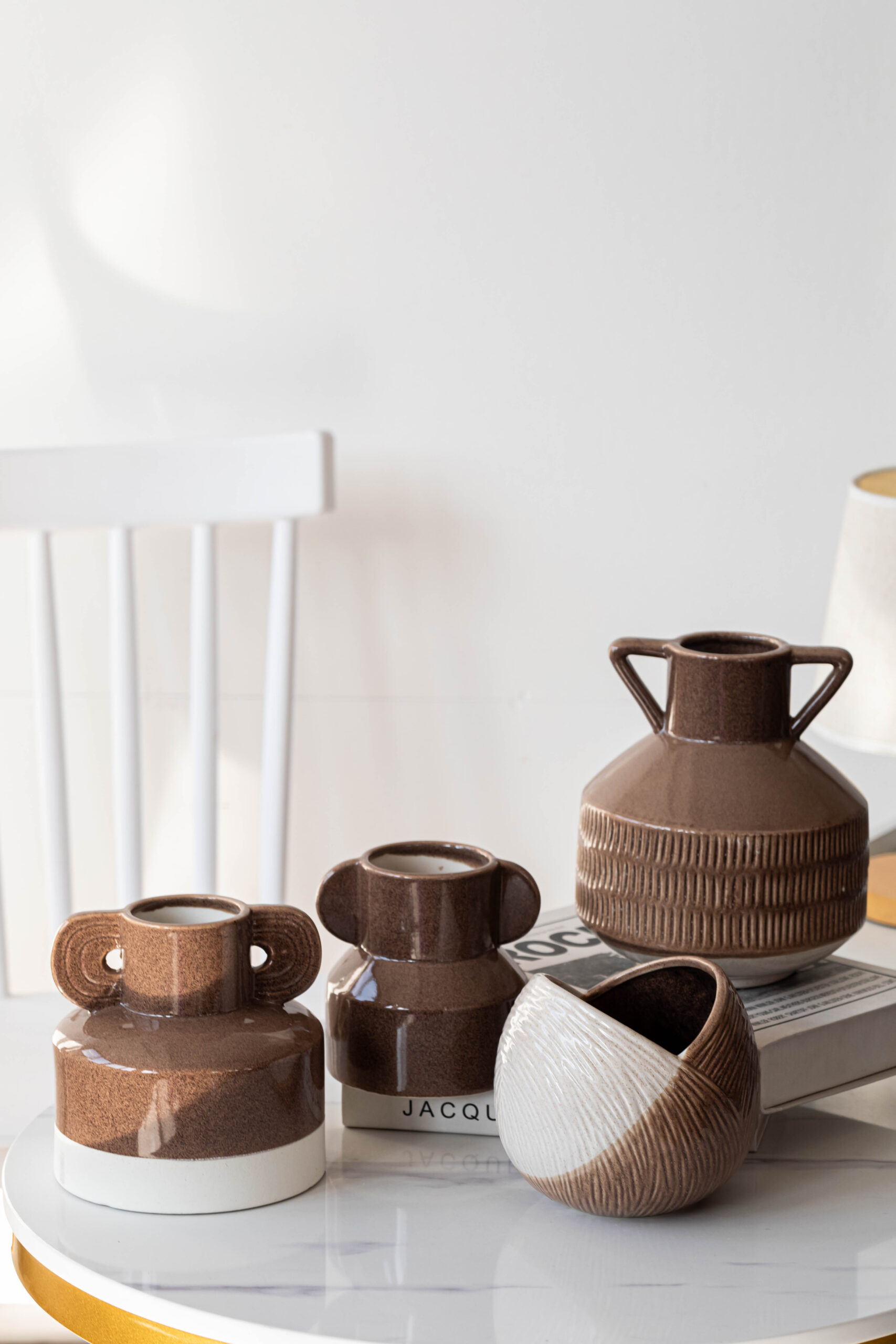
A vase is not just a vase. It may need to work with:
- a lower-priced companion item
- a more decorative “hero” piece
- a neutral filler for wider placement
- a packaging format that supports mixed-container efficiency
When a supplier understands assortment logic, the buyer feels it fast. Even before a quote.
3. Do they understand retail context?
A beautiful object is not automatically a good retail item.
Some products photograph well but fail in-store. Some have strong design but weak carton logic. Some look premium but are too fragile for the price point. Some are attractive individually but do not belong to a broader retail story.
Buyers watch for whether a supplier seems aware of things like:
- shelf presence
- visual weight
- pack-out efficiency
- consistency across batches
- seasonal transition potential
- reorder safety
This is why experienced buyers often respond better to suppliers who talk about application, collection fit, and stability rather than just “craftsmanship” in the abstract.
Before price, buyers are checking for friction
A lot of sourcing fails not because the price was wrong, but because the process looked tiring.
If a buyer feels that every step will require extra explanation, extra follow-up, and extra correction, they mentally downgrade the supplier before the conversation even starts.
4. Can they move from idea to sample without confusion?
Fast sampling is not just about speed. It is about clarity.
Buyers notice whether a supplier can take a loose reference and turn it into a usable development path. That means understanding:
- proportions that matter
- finish references that are actually achievable
- what should be hand-done and what should be standardized
- where visual intention may conflict with packing, cost, or durability
A supplier that can translate design intent into sample reality reduces decision fatigue. That matters more than many people think.
5. Do they speak clearly about packaging?
Serious buyers pay attention when a supplier talks well about packaging.
Because packaging is not a back-end detail. It is part of the commercial model.
In home decor, especially with ceramics and fragile decorative pieces, packaging affects:
- damage rate
- landed cost
- warehouse handling
- retailer complaints
- reorder confidence
A supplier that can explain inner box logic, master carton structure, protective materials, drop-risk thinking, or export-ready preparation sounds much more real than one who just says “safe packing available.”
6. Do they show quality control as a process, not a slogan?
“Strict QC” means almost nothing by itself.
Buyers want to feel that quality is managed through checkpoints, not wishful language. They look for signs that the supplier understands where defects usually happen:
- glaze variation
- color inconsistency
- shape deviation
- surface marks
- carton weakness
- fit or balance issues in assembled decor items
The more concrete the supplier sounds, the more credible they become.
The best suppliers reduce invisible workload
This is one of the least discussed truths in B2B sourcing.
Buyers are not only buying products. They are buying a smoother decision path.
The supplier that wins is often not the one with the most dramatic item. It is the one that reduces the buyer’s invisible workload:
- less guessing
- less repeated explanation
- less uncertainty around sampling
- less fear around breakage
- less concern around consistency
- less cleanup after the order is placed
That is why sophisticated buyers are drawn to suppliers who act like commercial partners rather than catalog senders.
In decor, buyers notice whether the supplier can translate taste into business
This is where many factories still miss the point.
Design taste gets attention. But buyers are usually managing something larger than taste:
- margin expectations
- shelf coherence
- assortment planning
- supplier reliability
- calendar pressure
- replenishment potential
So when they look at a supplier, they are really asking:
Can this team convert visual inspiration into a commercially stable item?
Can they turn a trend into a workable SKU?
Can they help me build a range, not just source a sample?
Can they support me after the first PO, not only before it?
That ability to translate design into business is what makes a supplier memorable.
At Teruierdecor, this matters because the strength is not only in making home decor. The real strength is in bridging three worlds that often stay disconnected: design language, manufacturing reality, and buyer expectations. That is where a craft-region supplier becomes more than a production source. It becomes a value translation partner.
What makes a buyer actually send the first inquiry?
Usually, it is not one big reason. It is a cluster of small signals.
A buyer is more likely to ask for a quote when they feel:
- this supplier understands the retail side
- this team can think beyond a single item
- the sample process will be manageable
- packaging and QC will not be an afterthought
- there is a realistic path to reorder
- communication will not create more work than the product is worth
In other words, the quote request happens when the supplier looks commercially usable.
That is a very different standard from simply looking creative.
Final thought: buyers notice readiness before they notice price
The first quote is not won by the lowest number.
It is won by the supplier who already feels usable, dependable, and commercially aware before the buyer ever reaches out.
That is what smart buyers notice first.
And in home decor, where style changes fast but operational mistakes stay expensive, that difference matters more than ever.
Leave a Reply