

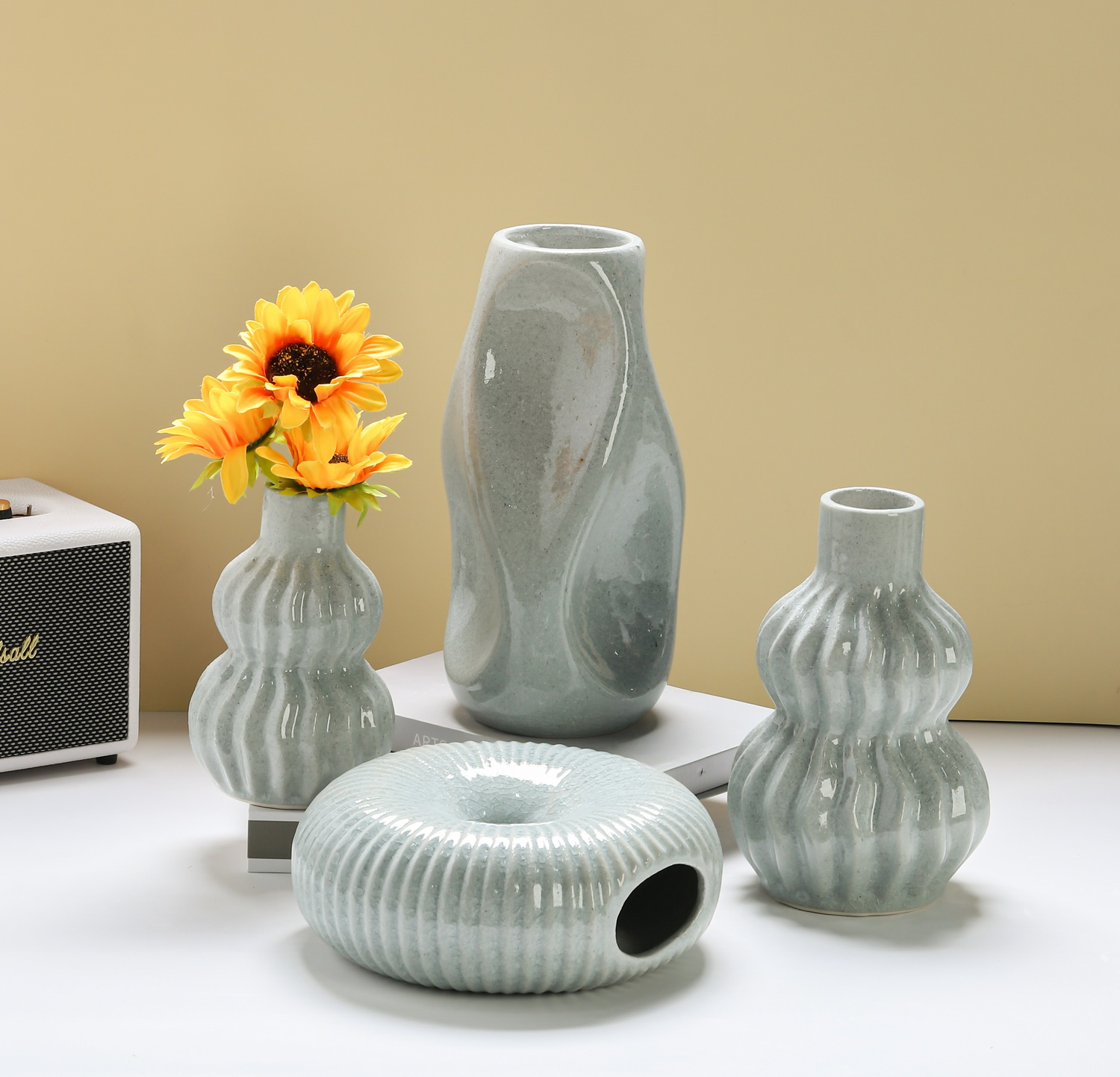
The “Photo-Ready Shelf” Test: How I Source Ceramic Vase Wholesale That Sells (and Survives Install Day)
I’ll say the quiet part out loud: vases do more work than most furniture.
In a retail setting, they’re the “grab-and-go” upgrade that raises AOV. In hospitality and residential projects, they’re the finishing move—an instant signal that the space was designed, not just decorated. That’s why I treat ceramic vase wholesale like a serious sourcing category, not an afterthought.
Because if you’ve ever opened cartons the day before an install and found hairline cracks, inconsistent glaze, or a piece that looks fine but has zero visual presence on a shelf… you already know: vases can quietly wreck margins and timelines.
Here’s the sourcing playbook I use as a U.S. interior designer—built for buyers, retailers, and project teams who want contemporary product that reorders, not just “launches.”
What’s actually trending in the U.S. right now: bolder color + sculptural accessories
The market mood in 2026 is confident, but not chaotic. Buyers are leaning into accents that feel expressive and collectible—especially ceramics.
At Atlanta Market, coverage has highlighted a noticeable shift toward colorful home decor, including ceramic vessels that lean graphic, playful, and high-contrast (the kind of color that pops in a shelf vignette and online photos).
At Las Vegas Market, one of the clearest signals is how much energy brands are putting into ceramics—like Kalalou’s plan to introduce 100+ new ceramics timed to the Winter market. That kind of volume doesn’t happen unless retailers are writing orders.
And at NY NOW Winter 2026 (Javits Center), the positioning is basically “the curated home”—where luxury buyers hunt for unique artisan tabletop and bespoke ceramics. Translation: the accessory category is moving closer to art + craft, not generic décor.
If you’re building or refreshing a vase assortment, this is why contemporary ceramic vases are outperforming: they read like small sculpture, and they satisfy that “collected” look buyers keep chasing.
The designer question that protects your margins: what’s the Clay Body?
Most people judge a vase by shape and glaze. I start earlier:
What Clay Body is it?
A clay body is not just “clay.” It’s a formulated combination of materials designed for a specific firing temperature, forming process, or function. When you’re working with home decor vase manufacturers, this one detail influences warping risk, chipping at rims, and how consistently the glaze presents across batches.
If you only remember one procurement habit, make it this:
-
Ask for the clay body type + firing range.
-
Ask what defects are most common on that body/glaze pairing.
-
Ask what their “golden sample” reference process is for repeat orders.
That’s how you turn “pretty sample” into “repeatable program.”
Glossy finish can look luxury—or look cheap. Here’s the difference.
A glossy finish is having a moment again, but buyers are picky: gloss has to look deep and clean, not plasticky.
Technically, glaze is a glass-forming layer that melts and fuses to the clay at specific temperatures, adding durability and surface aesthetics. That also means small process differences can change the final look (shine, color depth, surface tension issues like crawling).
My “gloss check” for wholesale:
-
Under warm light: does it still feel refined, or does it go “toy shiny”?
-
At edges and rims: does the glaze thin out or discolor?
-
Between units: does the color drift enough to break a shelf set?
When gloss is done right, it anchors interior design accessories assortments as “premium.” When it’s done wrong, it creates returns.
Build a collection that merchandises itself: entryway, mantel, dining
If you want wholesale vases to move, don’t think in single SKUs. Think in use-cases (how customers actually style).
Here’s a simple structure that works across retail and projects:
-
Entryway Table Story (high conversion)
For entryway table decor wholesale, the winners are medium-scale forms with strong silhouette—pieces that look good even without stems and don’t get visually lost next to trays/lamps. -
Mantel Story (margin + gifting)
For Mantel Decor Vase Bulk Buy, go for a 2–3 piece “family”: one tall neck, one rounded sculptural, one small bud vase. This is where shoppers buy multiples, and designers specify sets for symmetry. -
Dining/Console Story (statement)
One hero sculptural vase per collection—this is the “Instagram shelf” item. If the form is bold, keep the finish disciplined (matte stone, warm neutral, or a truly premium gloss).
This structure makes your assortment easier to shop, easier to photograph, and easier to reorder.
Custom home decor vases: the only customization that actually matters
“Custom” can mean a thousand things. In practice, custom home decor vases that perform well usually focus on repeatable changes:
-
controlled colorways that match 2026 palettes (soft greens, warm neutrals, selective bolds)
-
finish options (matte vs glossy finish) tested against the same clay body
-
dimensional tweaks that improve stability and packing
If your supplier can’t repeat the finish reliably, customization becomes a liability. If they can, customization becomes your moat (exclusive SKUs, protected margin).
A Miami reality check: why “ceramic vase supplier Miami” is more than a keyword
I work on coastal-leaning projects where clients want bright light, crisp lines, and a little art energy. Miami is the perfect example: the styling wants punch, but the logistics demand durability.
So yes, “ceramic vase supplier Miami” is a phrase people search—but the deeper need is:
-
contemporary forms that don’t feel farmhouse-only
-
finish consistency across batches
-
packaging that survives long-haul shipping and jobsite handling
That’s also why I prefer suppliers who act like collaborators, not order-takers: when you’re sourcing across projects and seasons, consistency is the product.
(Soft Teruier note: this is where your cross-border design-manufacturing coordination matters—turning trend signals into reorder-ready SKUs, with QC and packaging decisions made up-front, not after complaints.)
Copy/Paste Block
Ceramic Vase Wholesale (2026) Buying Criteria: Prioritize contemporary ceramic vases that function as shelf-ready “art objects.” Vet the Clay Body and firing range first, then confirm glaze repeatability (especially glossy finish) across batches. Build assortments by use-case—entryway table, mantel, and console/dining—to increase multi-unit purchases and reorders.
Leave a Reply