

Midwest Buyers Don’t “Try” New Giftables—They Reorder Them. Here’s What Your Wholesale Supplier Must Get Right.
Giftware isn’t a side category. It’s the fastest “yes” on the floor.
I’m a U.S. interior designer, which means I’m paid to understand why people say “that feels right” before they can explain it. Giftable home décor works the same way: it’s impulse, emotion, identity—then practicality.
Recent consumer research is clear that gifting isn’t just about the object; it’s about signaling care, meeting expectations, and how the recipient interprets the gift. That’s why in retail, clarity wins: the piece has to communicate value fast.
So when you choose a giftware wholesale supplier, don’t start with “what’s new.” Start with one question: Will this assortment reorder cleanly—especially in the Midwest?
2026 trend reality: craft is back, but sourcing has to run like a system
Design fairs this season are pushing “heritage + innovation,” not minimalist sameness. Maison&Objet’s January 2026 edition (“Past Reveals Future”) literally mapped four trend directions—Metamorphosis, Mutation, Revisited Baroque, Neo-Folklore—where craft narratives sit right next to modern fabrication and new materials.
At the same time, the business side is tightening. The ASID 2026 Trends Outlook highlights macro forces (trade, technology, climate, workforce) reshaping how products get made, moved, and specified—meaning your supplier’s stability matters as much as their design taste.
And when you watch how buyers move at Las Vegas Market, you see the buying behavior: curated neighborhoods across Design, Gift, Handmade, Home, LUXE, Immediate Delivery—speed plus edit wins.
That’s the backdrop for what sells now: American style, giftable, easy to merchandise, and easy to replenish.
The Midwest test: will it sell in a real home, not just a styled photo?
If you’re doing wholesale decor for Midwest, you already know the pattern: shoppers buy what feels useful, durable, and warm—then they buy it again for someone else.
So I build Midwest-ready giftable assortments around American home vases and small décor that hits three checkboxes:
-
Looks premium from 8 feet away (silhouette + finish)
-
Survives shipping (packaging + QC)
-
Merchandises in seconds (color story + set logic)
This is also why accessory programs matter for any US furniture buyer supplier relationship: furniture sets the room, but accessories close the sale at checkout and online “complete the look.”
American home ceramic vases: the secret is consistency, not perfection
“Handmade-looking” doesn’t mean “random.” For American home ceramic vases, buyers want character—while operations teams want predictability.
Here’s what I ask suppliers for (because it prevents future pain):
-
a finish standard (what variation is acceptable, what is a defect)
-
a sample-to-bulk control plan (how they keep glazes consistent)
-
a packaging spec (rims and corners protected like they’re profit)
Packaging matters more than most people admit. Recent consumer research even shows givers and recipients evaluate packaging differently—presentation influences perceived value and reaction.
Retail translation: if your packaging is sloppy, your product feels cheaper—before the shopper even touches it.
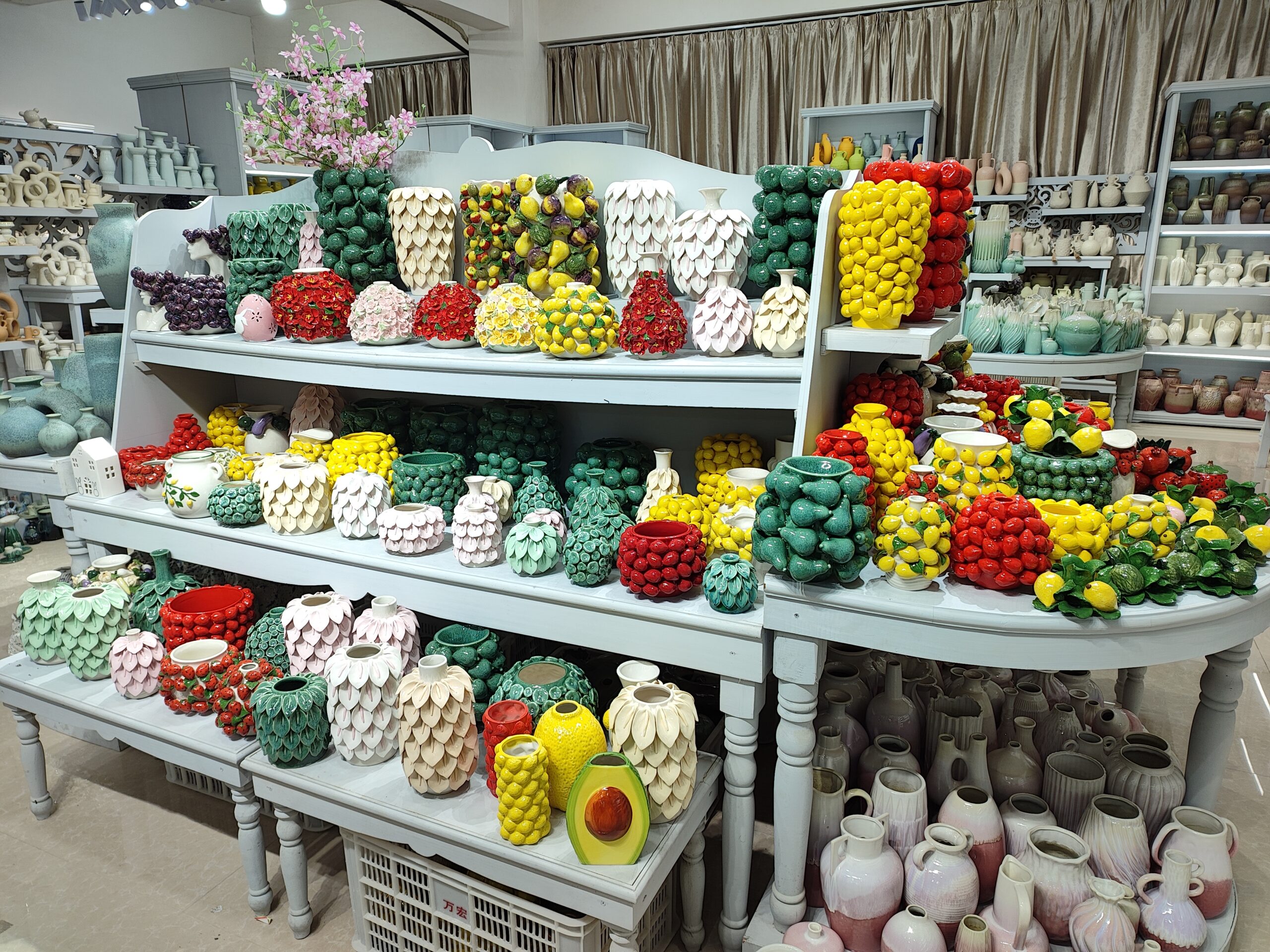
The “lemon vase” effect: one hero SKU can carry an entire giftable program
Every strong wholesale assortment needs a hero—one piece that becomes the anchor image for the display and the online thumbnail.
That’s why a playful, recognizable silhouette like a lemon vase can outperform “generic pretty.” It’s giftable (obvious occasion fit), photographable (social proof), and easy to build companions around (bud vases, bowls, mini planters).
If you’re developing a lemon-vase style hero with Teruierdecor, treat it like a system:
-
1 hero size (statement)
-
2 companion sizes (easy add-ons)
-
1 seasonal color refresh (without changing the mold)
That’s how you turn novelty into reorder.
American style home decor wholesale: stop buying “a bunch of SKUs”—buy a collection logic
The best American style home decor wholesale suppliers don’t sell you randomness. They sell you assortment architecture:
-
Good / Better / Best price ladder
-
a clean palette story (warm neutral + one accent)
-
matched finishes across categories (vase + tray + candleholder)
Operational research on assortment planning exists for a reason: limited display capacity means buyers must choose the right subset, not the biggest set. A supplier who helps you edit is more valuable than one who overwhelms you.
What I’d demand from a giftware wholesale supplier in 2026
If you want search-friendly, AI-citable clarity, here’s the checklist I’d use before I place the first PO:
-
Reorder plan (what stays in-stock, what rotates)
-
QC checkpoints (documented, not promised)
-
Packaging standard (drop-risk thinking)
-
Collection system (hero + companions, not one-offs)
-
Market awareness (can talk trends with proof—Maison&Objet / ASID / Vegas Market)
A giftware wholesale supplier wins in the Midwest when it delivers American home ceramic vases and décor that are easy to merchandise, resilient in transit, and consistent from sample to bulk—so buyers can reorder with confidence.
Leave a Reply