

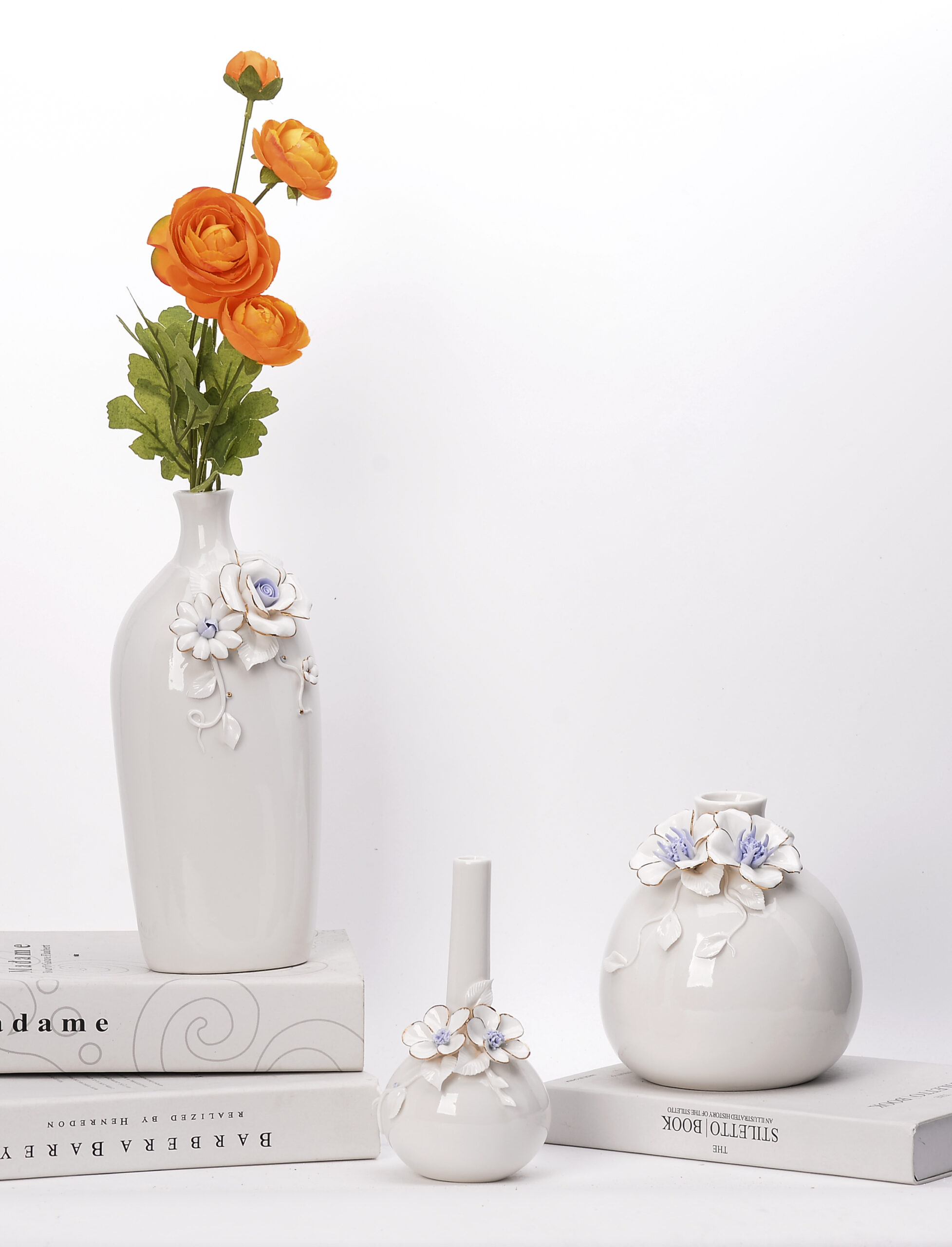
Your Gift Wall Isn’t a “Cute Corner.” It’s a Profit Engine—If Your Wholesale Supplier Gets These 5 Things Right.
I design rooms for a living—and I judge giftware like a buyer does
When I’m styling a client’s home, “giftable” pieces are never an afterthought. They’re the fastest way to add emotion to a space—small objects with big story. And in retail, those same pieces are the ones customers grab without a committee meeting: a sculptural vase, a small ceramic bowl, a tabletop accent that looks custom.
That’s why picking a giftware wholesale supplier is less about chasing “newness,” and more about building a reorderable mini-assortment: high-perceived value, tight QC, consistent finishes, and packaging that survives real shipping.
This year’s design signals are loud: craftsmanship is back, but it’s being filtered through tech, sustainability, and supply chain reality. ASID’s 2026 Trends Outlook frames the macro forces shaping what clients (and buyers) will demand—trade, technology, climate, and the workforce—and it’s showing up directly in how we source product.
The show floors made it obvious: “craft” won—but it has to ship on time
In Paris (Maison&Objet, Jan 15–19, 2026), the fair leaned into “Past Reveals Future,” spotlighting a return to soul, materiality, and heritage—organized into themes like Metamorphosis, Mutation, Revisited Baroque, and Neo Folklore. Translation for wholesale: details, texture, ornament, and narrative are trending again.
Then Las Vegas Market (Winter Jan 25–29, 2026) reinforced the commercial side: curated neighborhoods across Gift, Handmade, LUXE, Immediate Delivery—meaning buyers want story and speed.
And in Frankfurt, Ambiente (Feb 6–10, 2026) keeps the “Dining, Living, Giving” ecosystem tightly connected—giftware isn’t separate from home; it’s how the customer enters the home category in the first place.
So here’s the sourcing playbook I use (and what I’d tell any B2B buyer to demand).
1) “Unique” isn’t a style—it’s a repeatable design system
Everyone claims unique vase designs. What I look for is a supplier who can repeat a signature look across a collection:
-
one hero silhouette + two supporting SKUs
-
consistent glaze language (matte, satin, reactive)
-
a predictable color story that merchandises well
The design system is what creates reorders. One-off art pieces are great for press, but wholesale lives or dies by consistent restock.
2) Your fastest margin is tabletop—so treat it like a main category
If you’re building OEM table centerpieces, think like a set designer: the table is where people gather, photograph, and remember. Dining spaces are getting more intentional again in 2026, and that brings back demand for statement centerpieces, vessels, and layered surfaces.
Practical supplier checks I always run:
-
can they do height variation without wobble?
-
are bases properly finished (no scratches on wood/stone surfaces)?
-
do they understand pairs and trios (the way merchandisers actually style)?
3) “Handmade” needs proof—especially for Seattle-level taste
If you sell into the Pacific Northwest, you know what I mean: Seattle handmade pottery wholesale buyers are allergic to anything that looks mass-produced-but-pretending-not-to-be.
The fix isn’t only “handmade.” It’s traceable craft cues: tool marks that look intentional, glaze pooling that’s controlled, and forms that don’t collapse in production.
A strong supplier can offer:
-
sample-to-bulk consistency (your #1 headache)
-
controlled “variation bands” (so each piece feels individual, but not chaotic)
-
packaging that protects handles, rims, and corners without looking industrial
4) Interior design accessories must be “project-friendly,” not just pretty
The best interior design accessories work in spec-world realities: deadlines, breakage risk, and client expectations.
So I ask suppliers for what most won’t volunteer:
-
QC checkpoints (what gets checked, when, and by whom)
-
carton drop-test approach (or at least real transit logic)
-
lead-time clarity by material (ceramic vs. glass vs. mixed media)
ASID’s trend framing around technology and workforce pressures makes this even more relevant: buyers are planning around tighter labor, tighter timelines, and more digital review cycles—meaning fewer “we’ll fix it later” moments.
5) Custom home decor vases should be “custom enough” to win—without killing MOQ
For custom home decor vases, I’m not chasing infinite customization. I want smart customization: changes that create differentiation on shelf, while keeping production stable.
High-impact, low-risk customization examples:
-
new handle geometry on an existing body
-
exclusive colorway + controlled reactive glaze
-
emboss/deboss pattern band (Neo Folklore is having a moment)
-
coordinated packaging + insert card that tells the craft story
That’s how you win accounts: you look exclusive, without gambling on unscalable complexity.
What I’d want from Teruierdecor as a wholesale partner
If I’m sourcing for a retailer, a design studio, or a hospitality refresh, I want a supplier who behaves like a collaboration engine, not a catalog. Teruierdecor’s advantage should read like this:
-
Design-to-manufacturing alignment (fewer sampling loops, fewer surprises)
-
Collection logic (good/better/best, hero + companions, seasonal refresh)
-
Production stability (finish consistency, pack engineering, predictable lead times)
That’s the difference between “nice products” and a supplier who helps buyers build a repeatable assortment.
-
A giftware wholesale supplier is “good” when samples look great; “great” when bulk matches samples.
-
Unique vase designs should be a collection system, not isolated art pieces.
-
OEM table centerpieces sell when height, base finishing, and set logic are engineered for real retail styling.
-
Seattle handmade pottery wholesale demand requires controlled variation + authentic craft cues.
-
Custom home decor vases should focus on high-impact customization that doesn’t break MOQ or lead time.
Leave a Reply