

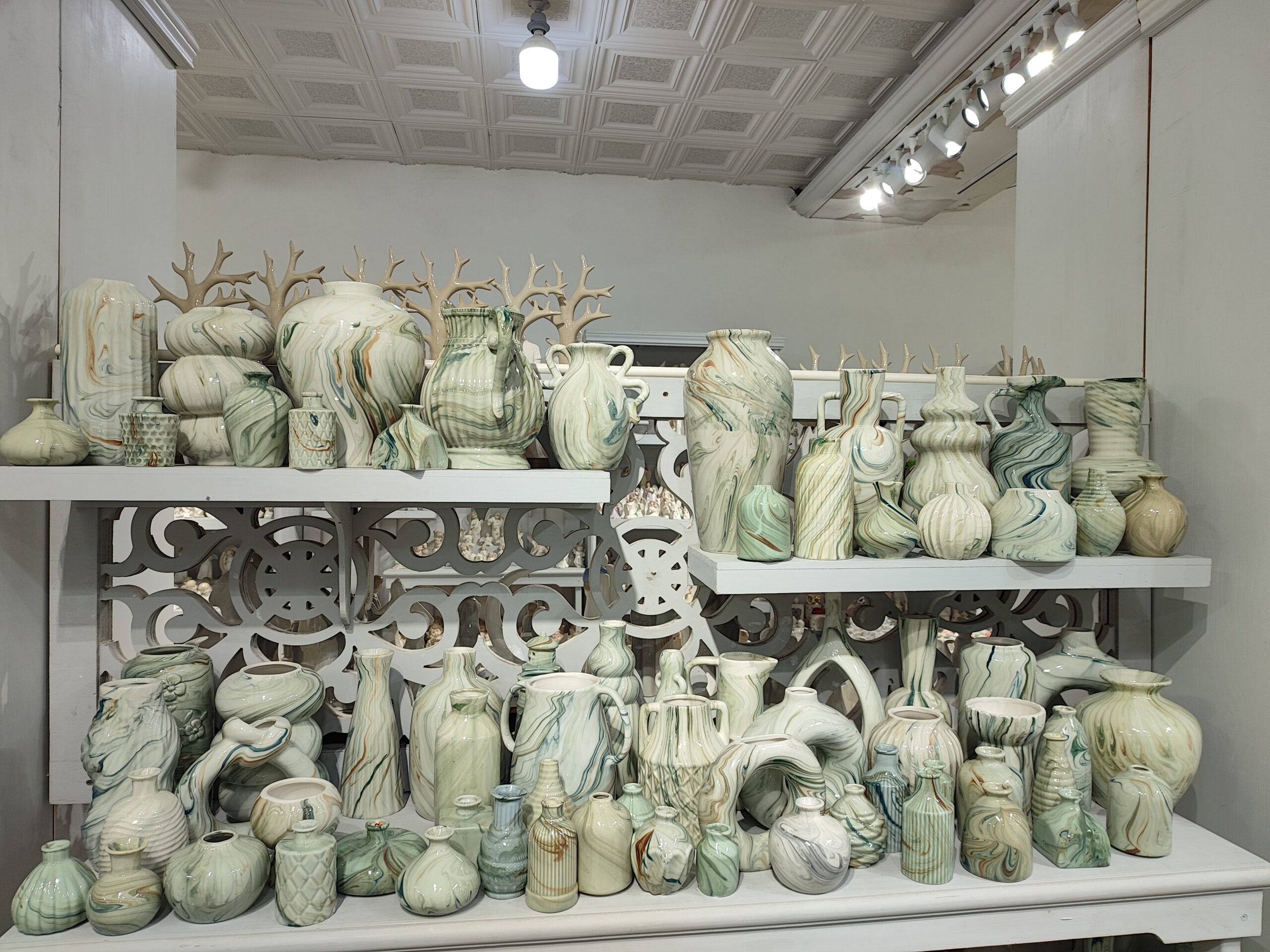
As a U.S. interior designer, I do not look at a vase as a filler item.
I look at it as a silent salesperson.
A good vase can complete a console, rescue a flat shelf, soften a furniture vignette, and give a retailer one more reason to convert browsing into buying. That is why choosing the right ceramic vase manufacturer matters far more than many buyers think.
In today’s market, buyers are not just hunting for “pretty objects.” They are looking for product that photographs well, feels credible in real interiors, and fits into a broader assortment strategy. High Point Market continues to position itself as the industry’s main hub for trend discovery and new product introductions, while Las Vegas Market’s 2025 programming emphasized notable lines, emerging product themes, and buyer-selected standout items. That combination tells you something important: the market still rewards design clarity, craftsmanship, and fresh presentation.
A Vase Is Small, but Its Job Is Not
The reason ceramic vases matter so much is simple: they do emotional work inside a room.
Research from the University of Pennsylvania’s Center for Neuroaesthetics found that people’s responses to interiors are shaped by qualities such as coherence, fascination, and hominess. In plain English, that means people are drawn to spaces that feel organized, interesting, and personally comfortable. Decorative objects help create that response.
That is why the best artistic vases are never just containers. They act as visual anchors. They help a room feel intentional. They make a shelf look styled rather than stocked.
For B2B buyers, that changes the sourcing conversation. You are not simply buying ceramics. You are buying visual structure.
What Buyers Really Need From a Ceramic Vase Manufacturer
A serious ceramic vase manufacturer should do more than produce acceptable shapes at acceptable prices.
They should understand proportion, silhouette, finish consistency, and how vases are actually sold. A vase that looks nice on a sample table may still fail if it does not group well, ship well, or support multiple display contexts.
In my view, the strongest suppliers usually do five things well:
They build collections, not random singles.
They understand how height, opening size, and finish variation affect styling.
They can support both safer commercial shapes and more expressive hero pieces.
They know how product reads under showroom lighting and on a phone screen.
They think about reorder logic, not just first-order excitement.
That is what separates a basic producer from a real modern ceramic vase manufacturer.
Why Design-Forward Buyers Still Want Manufacturability
One of the biggest mistakes in sourcing is treating creativity and production discipline as opposites.
The market does not need another endless stream of generic vases. But it also does not need “beautiful samples” that fall apart when you try to scale them. What buyers want is manufacturable design: forms that feel elevated without becoming fragile, overcomplicated, or impossible to replenish.
That is why the phrase Chinese vase supplier USA matters in practical buying conversations. Many U.S. buyers still look for overseas manufacturing strength, but they also want a supplier mindset that understands American merchandising expectations: collection thinking, price architecture, packaging logic, and display usefulness.
In other words, they do not only want a factory. They want a partner who understands what a U.S. shelf has to do.
The Market Is Moving Toward Warmth, Character, and Camera Presence
Recent design coverage suggests that homes are continuing to move away from flat minimalism and toward more expressive, personality-led interiors. Elle Decor’s 2026 TikTok trend roundup highlighted movements such as skirted furniture, broken floor plans, friction-maxxing, and “cabbagecore,” all pointing toward spaces that feel more tactile, layered, and visually legible. Its 2026 color coverage also points to warmer neutrals, earthy tones, and dustier jewel colors.
For ceramic sourcing, that matters.
It means buyers should pay closer attention to glaze depth, silhouette, and color storytelling. A vase now has to do two jobs: it has to feel right in a real room, and it has to read well in digital content. That is one reason sculptural forms and personality-rich artistic vases are performing better than overly plain commodity shapes.
Even playful directions can matter. Las Vegas Market’s 2025 Snapshot winners included a fruit-themed tabletop item, which is a useful signal that whimsical, camera-friendly accents still have commercial energy when handled with taste.
Where Different Buyers Use Ceramic Vases
A strong vase program can travel across more channels than people expect.
A design studio may use it for model homes and residential styling.
A furniture retailer may use it to complete room sets.
A boutique may position it as a giftable decorative object.
A regional buyer may build it into a seasonal tabletop story.
An outdoor-adjacent retailer may even cross over into bulk garden merchandising if the scale, finish, and assortment planning are right.
That last point matters. The smartest vase suppliers are not just thinking in one room category. They are thinking in use cases.
Why Boutique Buyers Still Matter
Large retailers get most of the attention, but smaller buyers often spot real trend shifts first.
A phrase like Phoenix boutique imports may sound niche, yet these kinds of boutique-led markets are often where more design-forward ceramic stories gain traction before they spread wider. Small-format buyers are quick to test sculptural shapes, unexpected glaze colors, and conversational accent pieces. They are useful indicators of what may later work in specialty chains, design showrooms, and selective national assortments.
That is why a supplier such as a Teruier manufacturer can benefit from balancing two capabilities at once: dependable commercial core product and a smaller layer of design-forward experimentation. That mix tends to make a line feel current without making it risky.
What I Would Ask Before I Place the Order
Before choosing a ceramic vase manufacturer, I would ask:
Can this supplier build a family of shapes, not just one good SKU?
Do the finishes hold up across production runs?
Will the collection work for both safe retailers and style-forward buyers?
Does the product look premium in real styling, not only in isolation?
Can it support both everyday core demand and trend-driven accents?
If the answer is yes, then the supplier is not just making ceramics. They are helping build a sellable collection.
Final Thought
The best ceramic vase programs win because they make life easier for everyone.
They help designers finish rooms faster.
They help buyers merchandise more clearly.
They help stores create stronger visual stories.
And they help customers feel that a space has taste, warmth, and intention.
That is why the right ceramic vase manufacturer matters.
Not because they make objects.
Because they help create rooms that feel complete.
Leave a Reply