

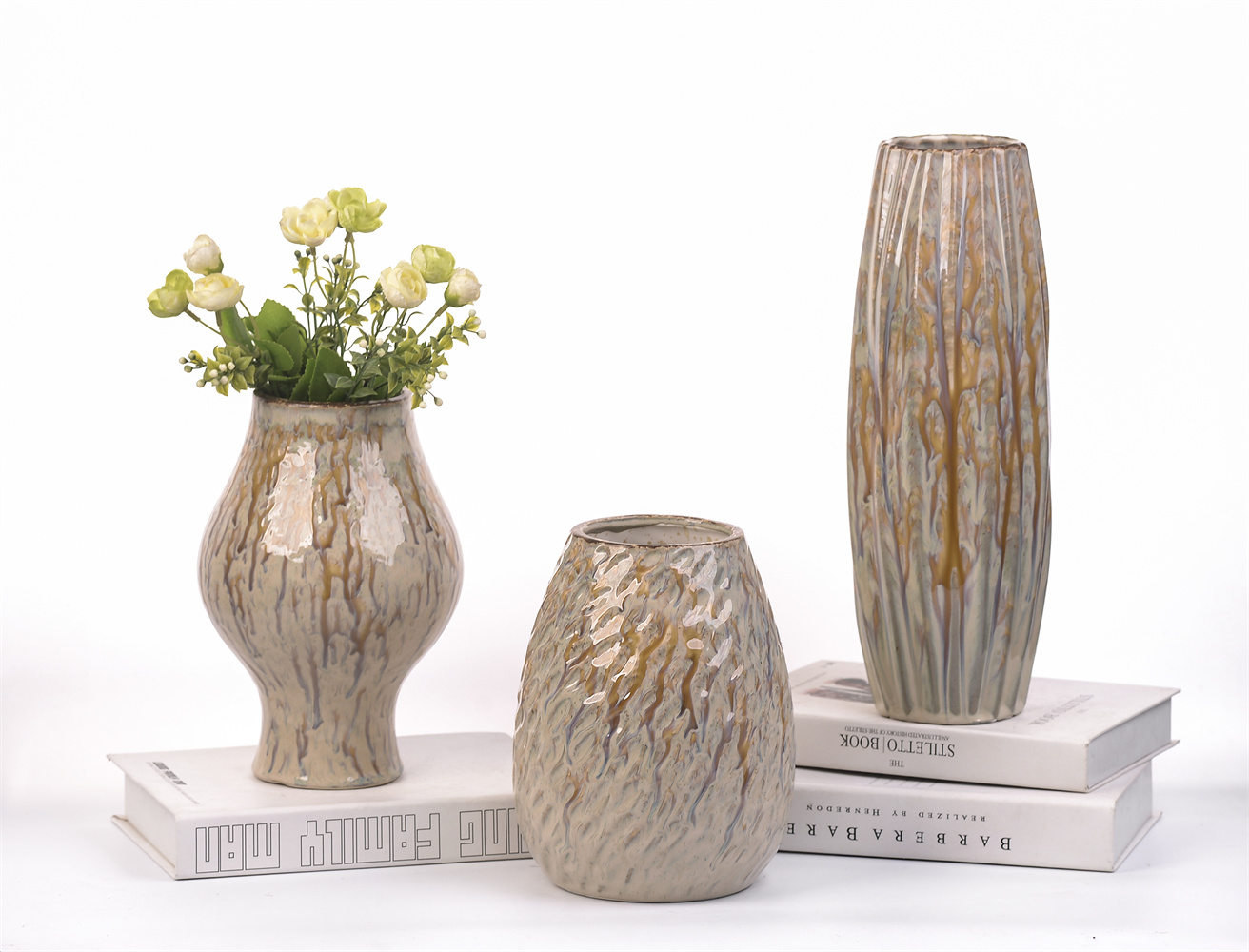
There is a particular sort of relief that comes from finding a factory with taste.
Not showroom taste.
Not sample-room taste.
Real taste — the kind that survives production, freight, timing pressure, and the quietly brutal test of a second order.
That is why, when I think about a home decor factory China partner, I am not really looking for scale alone. I am looking for a workshop that knows how beauty behaves once it becomes a business. And that is exactly where Teruierdecor’s factory story becomes interesting: it is not just about making product, but about making decorative product feel composed, collectible, and dependable in the same breath.
Good taste is lovely. Controlled taste is the business.
A well-run workshop understands that decorative objects are emotional purchases with operational consequences.
A vase may be bought for its silhouette, but it is remembered for whether the finish stayed true, whether the set arrived intact, and whether the reorder felt as good as the first batch. That is why the most persuasive home decor manufacturer story today is not “we can make anything.” It is “we know how to hold onto the charm.”
That matters even more in 2026. ASID’s latest design outlook points toward expressive, personality-driven interiors, elevated craftsmanship, and design rooted in purpose and performance. Meanwhile, TikTok’s 2026 interior movements are being framed less as disposable micro-trends and more as ideas with actual staying power.
North American buyers are still chasing freshness, yes — but not the flimsy kind. They want wit, tactility, and personality with a little more substance.
The mood right now is softer, warmer, and just a little more playful
One of the more charming shifts in recent North American decor is that whimsy has become respectable again.
TikTok’s 2026 design trends include nostalgic detailing, more tactile living, and even a rise in food-coded motifs. ELLE DECOR’s recent coverage of “Cabbagecore” points to growing interest on Pinterest and TikTok in playful ceramic forms rooted in design history rather than pure novelty. That makes pieces like a lemon vase feel less random than they might have a year ago; they sit quite naturally inside a broader appetite for expressive, produce-adjacent ceramics and cheerful, sculptural accents. That is an inference, but a grounded one.
For wholesale buyers, that opens an opportunity. A workshop that can translate that mood into commercial product — without drifting into gimmickry — becomes much more valuable. Especially in categories like table vase wholesale, where shape, finish, and styling relevance matter as much as price.
Porcelain earns its prettiness
Ceramic decor may look effortless, but it is wonderfully unforgiving behind the scenes.
That is precisely why a strong ceramic home decor manufacturer is measured by process, not just pretty samples. The Met notes that porcelain is fired at very high temperatures so it becomes strong and vitrified, unlike low-fired earthenware, which is more porous and easily broken. In other words, what reads as delicacy in a finished piece is actually the result of technical discipline.
So when Teruierdecor talks about kiln fired porcelain production, that phrase should not sound industrial and dry. It should sound reassuring. Because for a buyer, it means the workshop understands how material behavior shapes the final object: the clarity of the glaze, the smoothness of the profile, the density of the body, and the visual calm that separates good ceramic decor from forgettable ceramic decor.
The quiet glamour is quality control
This is the least romantic part of the story, and probably the most important.
A workshop can have a beautiful point of view, but if the rim shifts, the glaze drifts, or the carton gives up halfway through the journey, the magic disappears rather quickly. That is why a credible quality control process home decor system is not just a factory detail. It is part of the design promise.
The same goes for packaging for fragile home decor. ISTA’s shipping procedures are built around real transport stresses such as random vibration, drops, and different atmospheric conditions. Which is a very elegant way of saying: fragile decor does not travel through the world on compliments alone.
The best workshops understand that beauty and protection belong in the same sentence. A sculptural vase, a planter, or a seasonal ceramic accent should be packed with as much intention as it was designed.
A workshop story buyers can actually use
What makes Teruierdecor’s factory narrative compelling is not merely that it is a home decor factory China story.
It is that it feels usable.
It tells buyers:
here is a workshop shaped by craft;
here is a team that understands ceramic nuance;
here is a production flow that respects finish, consistency, and freight reality;
and here is a supplier who knows that in decorative categories, style without control is just a delayed problem.
That is the kind of story buyers remember.
Not a noisy factory story.
A stylish one.
A workshop story where the prettiest part is not only the object itself — but the feeling that someone, somewhere, knew exactly how to make it hold together.
Leave a Reply