

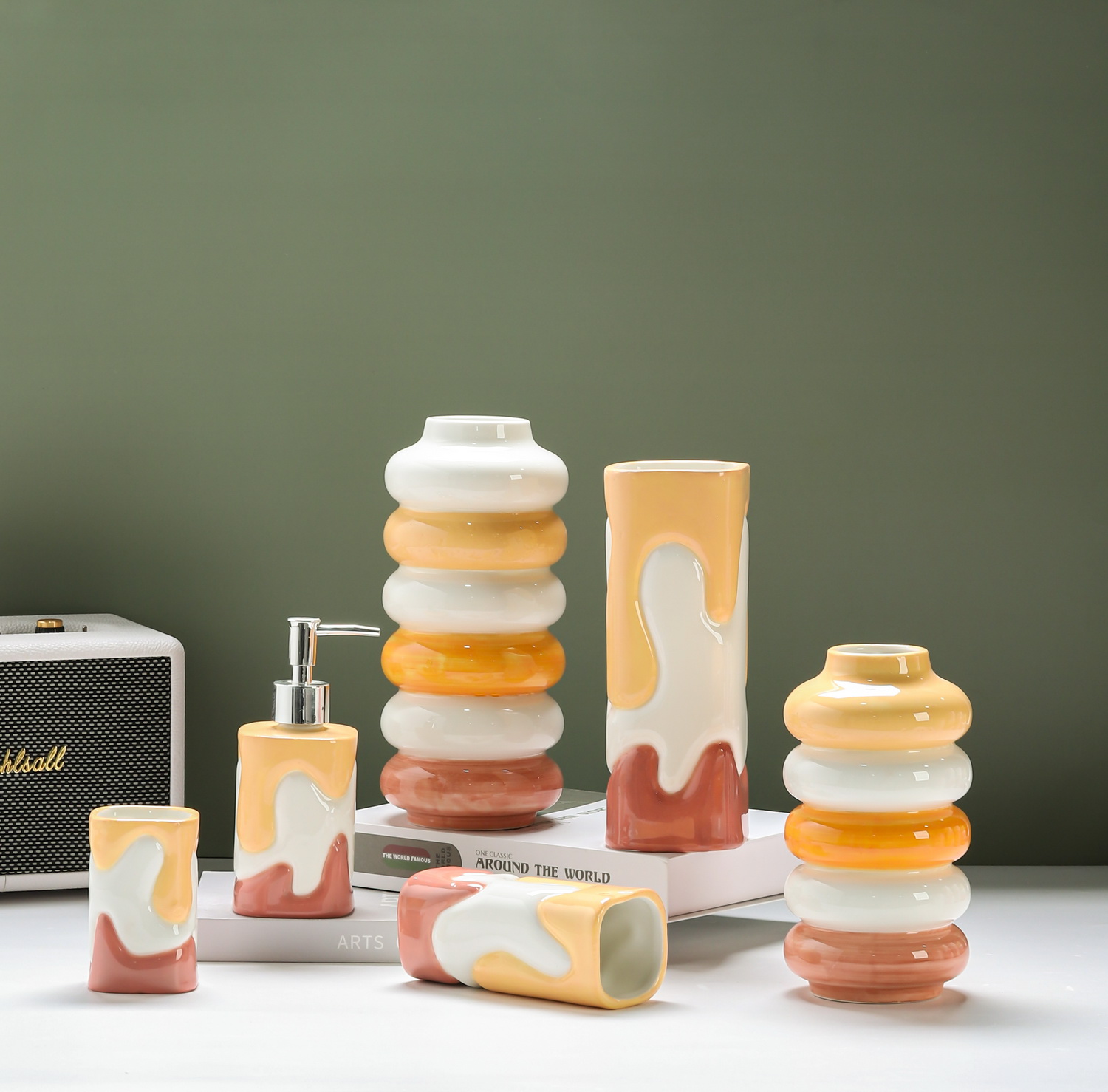
Wholesale Ceramic Decor Is Not About Buying More Product. It’s About Buying the Pieces That Stop the Eye.
As a U.S. home designer, I do not see wholesale ceramic decor as filler. I see it as one of the few categories that can still give a retail floor real visual authority. A strong ceramic vase, sculptural bowl, or hand-finished decorative object can make a shelf feel curated, make a table feel finished, and make a store look more intentional. That matters even more now because the U.S. home market is moving toward spaces with more personality, more tactility, and more visible craftsmanship. Recent trend coverage has pointed to growing interest in artisan details, vintage character, and bold, expressive interiors.
Ceramic still carries more emotional value than most decor categories
Ceramic has an advantage that many decorative categories do not. It has history, texture, and visual weight. The appeal is not only practical. Ceramic objects have long been appreciated as works of design and art, with museums continuing to present pottery and vessels as culturally significant decorative forms rather than simple household items. That long design tradition still shapes how people respond to ceramics today. They feel crafted, collected, and display-worthy.
That is exactly why wholesale ceramic decor works so well across retail environments. It can support layered modern styling, farmhouse decor wholesale, seasonal storytelling, and more elevated decorative programs without feeling forced. When the shape, glaze, and finish are right, ceramic does more than decorate a space. It gives the space identity.
Why more retailers are paying closer attention to ceramic decor
In today’s market, buyers are responding more strongly to decor that feels sculptural, tactile, and visually distinctive rather than flat or purely functional. High Point Market’s Style Spotters coverage has emphasized moment-defining trends shaped by craftsmanship, form, and materials, while recent market commentary around 2026 interiors points toward color-rich rooms, artisan influence, and more personal decorative choices. In that environment, ceramic decor is no longer treated as a background category. It is increasingly used as a focal design layer in both retail and interior merchandising.
This shift also fits what designers are seeing across social platforms and consumer decor media. People are moving away from spaces that feel overly generic. They want rooms that feel warmer, more collected, and more expressive. Ceramic naturally fits that mood because it combines form, material, and artistry in a single object.
The sourcing mistake I see too often
A lot of buyers begin too broadly. They search phrases like ceramic vase manufacturers China pottery or OEM pottery manufacturer, compare factories by photos and price lists, and then assume the sourcing job is done.
But ceramic is not a category where “acceptable” is enough.
The real question is not simply who can produce ceramic. The real question is who can turn a design direction into a retail-ready ceramic assortment. That is where a sourcing decision becomes a merchandising decision.
A serious supplier should understand more than production capacity. They should understand silhouette, proportion, finish consistency, packaging protection, and collection logic. They should know why one vase works for a farmhouse table story while another belongs in a more refined contemporary setting. That is especially important for buyers managing home decor procurement, because success is no longer only about placing product. It is about placing product that holds attention and supports margin.
What I would buy first in today’s market
If I were building a stronger ceramic assortment for retail right now, I would focus on four clear categories.
First, sculptural vases with enough visual weight to act as hero pieces. These align well with the current move toward gallery-inspired rooms and more artistic styling. Buyers are responding to objects that can anchor a display rather than disappear into it.
Second, tactile pieces that can support farmhouse decor wholesale without feeling dated. The strongest farmhouse-adjacent ceramics today are less about heavy distressing and more about warmth, softness, and natural finish. They feel familiar, but more edited.
Third, refined vessels from a reliable contemporary vase factory. Contemporary ceramics still matter, but the strongest pieces now usually combine clean lines with texture, subtle irregularity, or a more emotional finish. Today’s modern decor is not only about minimalism. It is about atmosphere.
Fourth, decorative pieces that feel closer to art objects than accessories. This is where gallery quality pottery and collectible ceramic art wholesale become commercially powerful ideas. Pieces that feel collectible often elevate the entire assortment around them. They help a store look more selective, more intentional, and more premium.
Why collectible-looking ceramic is becoming more valuable
The line between decor and art object is getting thinner. That matters because customers are increasingly drawn to pieces that feel personal rather than mass-generated. Ceramic is one of the strongest categories for this shift. A well-made vessel can function as decor, sculpture, conversation piece, and styling anchor at the same time.
That is why collectible ceramic art wholesale is not just a niche concept. For the right retailer, it is a smart buying direction. Pieces with artistic shape, handcrafted surface, or gallery-like presence often photograph better, style better, and justify stronger price perception. They also give buyers more storytelling power across shelves, tables, and seasonal resets.
What retailers should want from an OEM pottery partner
When evaluating an OEM pottery manufacturer, I would look beyond catalog depth and ask more practical questions.
Can the supplier maintain glaze consistency across repeated runs?
Can they build coordinated collections instead of isolated pieces?
Can they adapt finishes for different retail aesthetics?
Can they protect fragile product with stronger packaging logic?
Can they support repeatable home decor procurement instead of one-time factory output?
These questions matter because small problems become expensive problems in ceramic. A weak glaze, uneven finish, unstable shape, or poor carton design does not just affect quality. It affects sell-through, margin, and reorder confidence.
The strongest ceramic partners understand that buyers are not only sourcing product. They are building assortments that need to survive transit, hold visual value, and perform commercially in real stores.
Why ceramic still matters in modern home decor buying
Ceramic continues to matter because it solves several retail needs at once. It brings texture into a display. It softens a hard-lined assortment. It gives a room a crafted, human touch. And unlike many trend-led accessories, good ceramic can move between aesthetics without losing relevance.
That flexibility is why wholesale ceramic decor remains one of the most useful categories in home decor sourcing. It can support rustic and contemporary stories, premium and accessible assortments, decorative and functional programs. Few categories can do all of that while still feeling artistic.
My final take as a designer
The best wholesale ceramic decor is not the cheapest ceramic. It is the ceramic that makes a store feel more edited, more memorable, and more emotionally convincing.
If I were sourcing today, I would stay focused on sculptural silhouette, tactile finish, collectible presence, and supplier discipline. That is where farmhouse decor wholesale, gallery quality pottery, collectible ceramic art wholesale, and strong OEM pottery manufacturer relationships come together.
Ceramic should not be treated as a supporting category. In the right assortment, it becomes one of the categories that defines the whole room.
Leave a Reply