

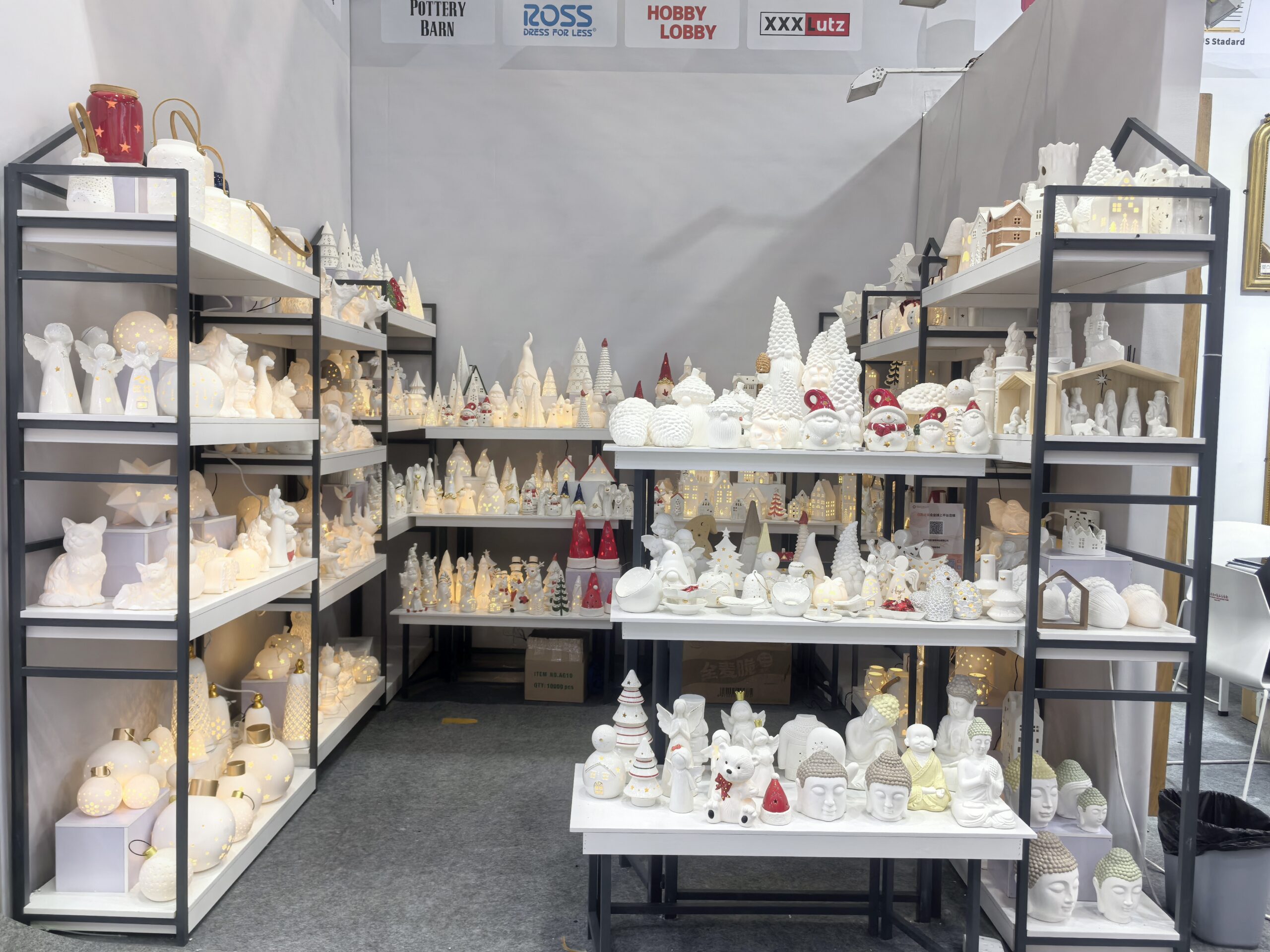
Where Beautiful Rooms Begin: Inside a Home Decor Factory in China
Some rooms feel easy. The making of them never is.
As an American designer, I love the finished magic: the vase catching late-afternoon light, the pottery on the mantel that makes the whole room exhale, the object that feels collected rather than merely purchased. But behind that ease is something far less dreamy and far more important: a workshop that knows how to make beauty hold together.
That is why the phrase home decor factory China means more to me than low-cost sourcing or quick production. The best factory is not just a place that makes things. It is a place that understands proportion, finish, mood, margin, packaging, and timing. It knows how to take a visual idea and turn it into an object that survives both the showroom and the shipment.
For a brand like Teruierdecor, that story is especially compelling. This is not only about manufacturing. It is about heritage craft home decor shaped inside a craft-producing region, then refined through modern process, export logic, and design sensitivity.
Right now, North American taste is asking for more personality, not less.
That shift is easy to see in the broader design conversation. AD Pro’s 2026 forecast points toward more self-expression, more texture, more ornament, and more artisanal detail, while Home Accents Today has been tracking a parallel appetite for comforting hues and authenticity over algorithmic sameness. In other words, buyers still want calm interiors, but not boring ones. They want rooms with warmth, story, and a point of view.
The trade-show circuit is echoing the same mood. Winter 2026 Las Vegas Market brought together more than 3,500 product lines and 400-plus temporary exhibitors, with programming around color, AI, and future-forward design. High Point continues to position itself as a serious trend-discovery platform, with 11.5 million square feet of showroom space and its Style Spotters program devoted to identifying moment-defining shifts and products.
That matters because today’s buyers are not simply hunting for product. They are hunting for factories that can keep up with a faster taste cycle.
A good workshop does not just manufacture. It translates.
This is where Teruierdecor can stand out.
The workshop story should not sound like a generic export pitch. It should feel like what it really is: cross-border design manufacturing with taste. A place where a mood board can become a sample, a sample can become a sellable SKU, and a SKU can become a reorder without losing its charm somewhere between concept and carton.
That is the quiet sophistication of a strong OEM pottery manufacturer. It is not about saying yes to every drawing. It is about knowing which glaze will read creamy rather than chalky, which curve will feel generous rather than clumsy, which texture will feel hand-touched rather than overworked, and which packaging method will protect the finish all the way to a U.S. warehouse.
For American buyers, especially in categories like American rustic decor wholesale, those details are everything. Rustic does not mean rough. It means relaxed, grounded, collected, sun-warmed, maybe a little orchard-adjacent. It needs tactility, yes, but also restraint. Too polished and it loses soul. Too messy and it loses sell-through.
That is why workshop judgment matters so much.
The prettiest product image is still not the real test.
The real test is the sample.
A serious buyer wants to know how the piece behaves in the hand, in the light, and in the box. Does the glaze break beautifully on the edges? Is the opening clean? Is the shape stable from batch to batch? Does the color stay true when it is repeated at scale?
That is also where a product like the Teruierdecor Lemon Vase becomes more than a charming object. It becomes proof of workshop intelligence. A piece like that only works when playful form is balanced with disciplined execution. It has to feel fresh, giftable, display-friendly, and commercially legible all at once. That combination is what buyers remember.
And increasingly, they remember it twice: once at market, and once on social media.
TikTok’s 2026 trend forecast says users are turning to the platform not only for inspiration, but to search, compare, validate, and understand the “why to buy.” TikTok also reported that its 2025 U.S. Black Friday/Cyber Monday campaign period drove more than $500 million in sales, with home and decor among the discovery-led categories. That means visual clarity and real-life styling are now part of the sourcing equation, not an afterthought.
So yes, a factory still needs technical discipline. But it also needs visual intelligence. A piece has to work on a shelf, in a styled room, and inside a five-second scroll-stopping video.
A certified home decor manufacturer feels reassuring before anyone says the word “reassuring.”
Buyers can feel the difference.
A certified home decor manufacturer does not hide behind vague language like “good quality” or “same as sample.” It speaks clearly. It understands materials, tolerances, labeling, testing pathways, and what category-specific questions a U.S. importer is likely to ask.
That clarity matters in ceramics. FDA guidance makes clear that food-contact ceramicware is governed differently from ornamental ceramic articles, and the distinction should never be blurred for convenience. Meanwhile, CPSC lead rules matter in specific ways for children’s products and relevant coated articles. A factory does not need to overwhelm the buyer with regulations, but it should absolutely know when those rules apply and how to document them.
This is the part of the workshop story that sophisticated buyers appreciate most. Not drama. Not slogans. Just calm competence.
And really, that is the new luxury.
What makes Teruierdecor’s workshop story worth telling
Teruierdecor should tell a simple, stylish truth:
We are not just a home decor factory China buyers can source from.
We are a workshop they can build with.
We combine heritage craft home decor roots with export-ready process.
We bring cross-border design manufacturing to life without flattening the soul out of the product.
We know how to support American rustic decor wholesale with shape, finish, and commercial instinct.
We can act as an OEM pottery manufacturer that understands both atmosphere and accuracy.
And we do it with the clarity expected from a certified home decor manufacturer.
In a market leaning toward warmer materials, expressive detail, and more intentional purchasing, that is not a small advantage. ASID’s 2026 outlook emphasizes just how much trade, technology, climate, and workforce shifts are reshaping design and manufacturing expectations at the same time. Buyers increasingly care not only about what a product looks like, but how it is made and whether the supplier can keep up with a more complex market reality.
That is why the workshop matters.
It is where beauty becomes dependable.
FAQ: What serious buyers should know about a ceramic factory in China
1. What should I ask first when choosing a home decor factory China partner?
Ask what the factory repeats well, not just what it can make once. A strong answer should cover category strengths, material knowledge, sample workflow, MOQ logic, carton standards, and how the team controls consistency across batches.
2. Why does “heritage craft home decor” matter for B2B buyers?
Because heritage without process is only romance, and process without heritage can feel generic. The best suppliers combine rooted craftsmanship with export discipline, giving buyers product that feels distinctive without becoming difficult to reorder.
3. What makes an OEM pottery manufacturer trustworthy?
A trustworthy factory can explain sample timing, glaze behavior, finish tolerance, packaging method, and whether the piece is decorative-only or intended for food contact. It should be able to discuss problems before they happen, not just apologize after they happen.
4. Does a decorative ceramic vase follow the same rules as food-contact ceramics?
Not necessarily. FDA guidance distinguishes food-contact ceramicware from ornamental articles, so buyers should ask the factory to state clearly how the item is classified and what testing or labeling is relevant.
5. Why does certification matter for a home decor supplier?
Because certification is not only a badge. It is often a sign that the factory is used to documentation, quality systems, and communicating clearly with overseas buyers. That tends to reduce friction all the way from sampling to shipment.
6. What should buyers know about lead-related rules?
For children’s products, CPSC says accessible components generally cannot exceed 100 ppm lead, and separate rules apply to certain surface coatings. Buyers should ask directly whether their item falls into a regulated category and what certification documents are available.
7. Why do TikTok and trade shows both matter now?
Trade shows reveal where the market is heading; TikTok reveals how quickly a product can be discovered, validated, and desired. When both signals point in the same direction, buyers move faster and expect factories to move with them.
Leave a Reply