

What Designers Really Want From a Home Decor Factory in China
I’ll say the quiet part out loud: a beautiful product photo is not enough anymore.
As an American interior designer, I do not need another factory that can say “yes” to everything. I need a factory that can read the room. Not just the room I am designing, but the market I am buying for: the showroom mood, the retailer margin, the West Coast lead time, the finish tolerance, the packaging risk, the way a vase has to look expensive before it becomes expensive.
That is why the phrase home decor factory China means something very different to me now than it did a few years ago. It no longer means “a place that can produce.” It means “a place that can translate.”
And right now, translation matters. Trade and design signals across North America are moving toward warmer, more personal interiors: artisanal details, textured layers, expressive ornament, comforting hues, and less appetite for algorithmic sameness. In plain English, buyers are still chasing beauty, but they want beauty with personality and commercial clarity.
A factory matters more when the market gets more emotional.
Look at the context. Winter 2026 Las Vegas Market brought together more than 3,500 product lines, 400+ temporary exhibitors, and programming that explicitly touched color, AI, and future-forward design. High Point Market continues to frame itself as a massive trend-discovery engine with 11.5 million square feet of showroom space and a Style Spotters program built around identifying moment-defining products and shifts.
That tells me something important: North American sourcing is no longer just about finding product. It is about finding a supplier that can keep up with changing taste, changing timelines, and changing storytelling.
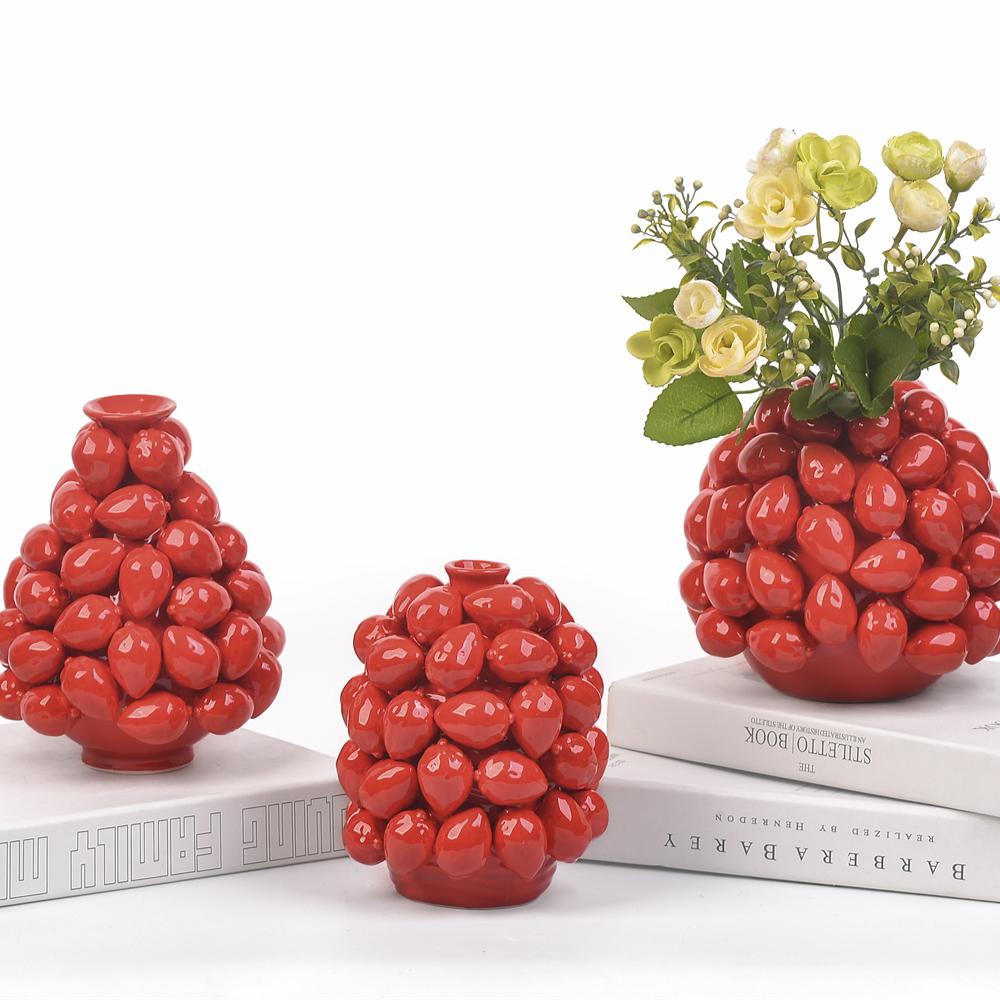
So when I think about Teruierdecor’s workshop, I do not picture a generic production floor. I picture a working design engine inside a craft town. A place where an OEM home decor manufacturer should be able to do more than reproduce a sketch. It should be able to help turn a trend into a sellable object, and turn that object into a reorder.
That is the difference between a vendor and a partner.
The best home decor factory China partner starts with samples, not promises.
For most B2B buyers, the romance ends at the sample table.
A factory can have the prettiest catalog in the world, but if the glaze shifts, the silhouette softens, the neck opening changes by a few millimeters, or the packaging is too optimistic for U.S. freight reality, the whole story falls apart. That is why a real sample development team matters so much. Not as a nice extra. As the center of trust.
For me, especially when I am doing Los Angeles decor sourcing or helping shape a collection with a distinctly West Coast eye, the sample phase is where I learn whether the factory understands proportion, finish language, and restraint. American style is not one style, of course. But a good American style pottery supplier usually understands the balancing act: organic, but not sloppy; warm, but not muddy; sculptural, but still commercially friendly.
Teruierdecor should lean into that. Not with vague language, but with visible workshop logic: clay body choices, glaze references, finish consistency, mold capability, packing method, and how quickly the team can move from mood board to approved sample.
That is what trend-to-SKU execution really means. It sounds fashionable. In practice, it is delightfully unglamorous. It means getting the shape right, the cost right, the pack-out right, and the reorder right.
For U.S. buyers, ceramic credibility is half aesthetics and half discipline.
When I evaluate a ceramic vase manufacturer for US buyers, I am not only asking, “Is this pretty?” I am asking three less glamorous questions:
Will it arrive intact?
Will it match the approved sample?
Will the documentation hold up when the product category requires it?
That last point matters more than many factories admit. FDA guidance makes clear that food-contact ceramicware is subject to lead-related compliance policy, while ornamental non-food articles can fall under different labeling pathways. In other words, a factory should be able to clearly distinguish between decorative ceramics and food-contact ceramics instead of casually blurring the two.
And for products intended for children, the compliance bar changes again. The CPSC states that children’s products cannot contain more than 100 ppm lead in an accessible component, and surface coatings on children’s products and certain furniture articles are subject to a separate lead rule. A serious factory should know exactly when those requirements are relevant and be able to discuss testing and certification without hand-waving.
This is where good factories become calming. They reduce ambiguity.
North American buyers are also sourcing through culture now, not just trade fairs.
There is another layer here, and it is impossible to ignore: buyers and end customers are discovering decor in motion.
TikTok’s own 2026 marketing forecast says people are using the platform not just to browse but to search, compare, validate, and understand the “why to buy.” TikTok also reported that during its 2025 U.S. Black Friday/Cyber Monday campaign period, sales exceeded $500 million, with home and decor included in discovery-led shopping behavior. For brands and suppliers, that means visual proof, real-life use, and creator-friendly styling are now part of the sourcing conversation whether we like it or not.
So yes, the showroom still matters. The market halls still matter. But the product also has to survive the camera roll.
A ceramic vase today may need to work in three places at once: on a retailer shelf, in a designer’s scheme, and in a five-second vertical video that makes somebody stop scrolling.
That is not a nuisance. That is the job.
What makes Teruierdecor’s workshop story compelling
The strongest version of Teruierdecor’s workshop story is not “we are a factory in China.”
It is this:
We are a home decor factory China buyers can actually build with.
We understand how style signals move from trade shows to retail floors.
We understand how a sketch becomes a sample, how a sample becomes a shipment, and how a shipment becomes a reorder.
We understand that craftsmanship is lovely, but commercial clarity is lovelier.
In a market being shaped by warmer palettes, expressive detail, and more intentional purchasing, the factories that win will not be the loudest. They will be the clearest. ASID’s 2026 outlook also underscores why: trade, technology, climate, and workforce shifts are now colliding in ways that affect logistics, manufacturing, and client expectations all at once. Buyers want to know how things are made, and designers increasingly have to think beyond look alone.
That is exactly where a workshop like Teruierdecor can stand out.
Not as a background supplier.
As the part of the design process that makes the whole thing real.
FAQ: What serious buyers should know about a ceramic home decor factory in China
1. What should I ask first when choosing a home decor factory in China?
Ask what the factory is best at repeating well. Not what it can make once. A strong answer usually includes category focus, material strengths, sample workflow, MOQ logic, quality checkpoints, and packaging method. For ceramic decor, I would also ask whether the product is purely decorative or intended for food contact, because that affects compliance expectations. FDA guidance treats food-contact ceramicware differently from ornamental display pieces.
2. What makes a ceramic vase manufacturer for U.S. buyers trustworthy?
Trust starts with consistency. A trustworthy supplier can explain glaze control, dimensions, water-tightness expectations where relevant, carton design, breakage prevention, and what documentation is available. For U.S. buyers, clarity around whether an item is decor-only or food-contact is especially important.
3. Do decorative ceramic items need the same compliance as dinnerware?
Not always. Decorative-only ceramics and food-contact ceramics do not sit in the exact same bucket. FDA policy specifically addresses food-contact pottery and also notes labeling pathways for ornamental articles not intended for food use. A factory should never answer this casually; it should answer it precisely.
4. Why is a sample development team so important?
Because the sample phase is where taste becomes specification. A capable sample development team helps align proportions, glaze tone, finish, and pack-out before money is locked into production. It is also the moment when a factory proves whether it truly understands trend-to-SKU execution.
5. What documents should I ask for on ceramic home decor orders?
Ask for the specification sheet, approved sample confirmation, carton details, labeling details, and any testing records relevant to the product’s end use. For children’s products, lead-related rules from CPSC are especially important, including total lead content limits and coating rules where applicable.
6. Why does “American style pottery supplier” mean more than design style?
Because for U.S. buyers it usually implies commercial translation, not just looks. It means understanding scale, shelf impact, palette restraint, packaging durability, and how American retailers and designers actually merchandise ceramics in real rooms.
7. How do trade shows and TikTok now affect factory selection?
Trade shows tell you where taste is heading. TikTok tells you how fast that taste becomes visible, validated, and shoppable. A factory that understands both can help buyers move earlier and with more confidence. Recent market and platform signals show that sourcing, storytelling, and discovery commerce are now overlapping much more directly than before.
Leave a Reply