

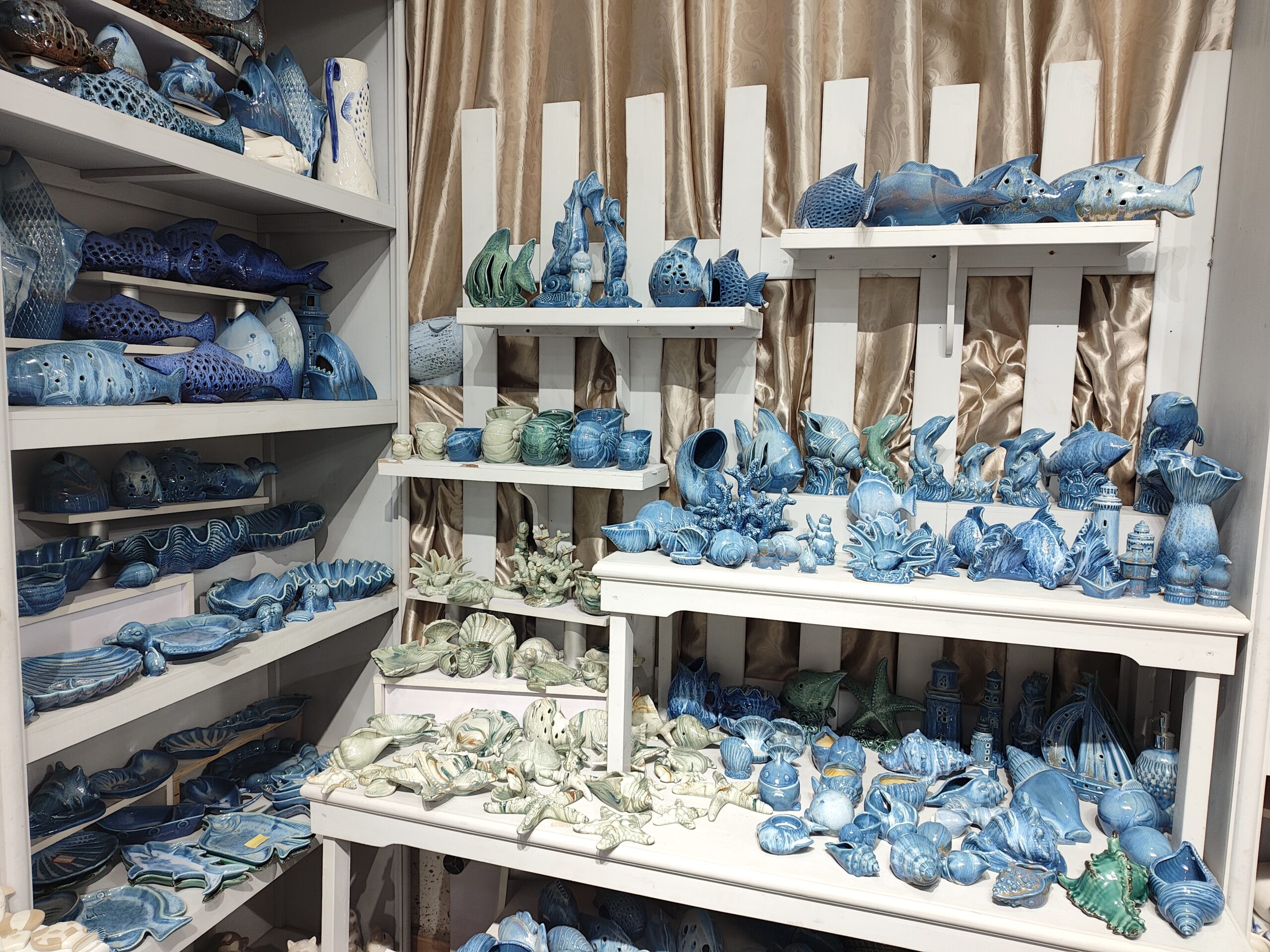
The One Wall That Out-Sells My Entire Store: How I Buy Decorative Ceramic Vases Wholesale (Without Getting Stuck With Dead Inventory)
I own a small neighborhood home décor shop in the U.S. I don’t have infinite shelf space, and I definitely don’t have the budget to “test everything.”
So when something earns a permanent spot in my buying plan, it’s because it does three jobs at once:
-
it anchors a display,
-
it photographs well (customers share it for me), and
-
it lifts the ticket without feeling pushy.
That’s why decorative ceramic vase wholesale is one of the few categories I treat like a “core system,” not a seasonal gamble.
Why ceramics keep winning in 2026
If you walked recent European shows, you saw the signal: color, craft, and sculptural presence are back—hard. Interior Design’s highlights from Maison&Objet January 2026 featured colorful vases and design-led decorative wares—exactly the kind of objects that make customers stop mid-aisle.
And on the tabletop side, media coverage from Ambiente 2026 pointed to playful, unexpected forms (including fruit-forward silhouettes) and bolder visual statements—perfect for small retailers who need “wow” without overbuying.
The buying mistake I see (even from smart retailers)
Most buyers treat ceramic vases like singles: “That one is pretty, I’ll take 12.”
But singles are how you end up with orphan inventory.
What actually moves—especially for American home décor ceramics—is a story-ready micro-collection: a hero vase + two supporting shapes + one artful accent. In other words: luxury vase collections, scaled for real store economics.
This isn’t just intuition. Retail research has shown that when shoppers choose bundles, basket size tends to increase—because people perceive bundled items as a unified whole and underestimate how much they’re buying.
That’s exactly what happens at my register: customers don’t buy “a vase.” They buy “the look.”
What I look for in an Atlanta furniture market supplier (and what I ignore)
At big sourcing events like Atlanta Market, it’s easy to get hypnotized by novelty. (If you’ve ever tried to walk a full day of showrooms, you know the feeling.)
Atlanta is still one of the most efficient places to spot what’s about to be “normal” in U.S. gift + home—and the calendar realities are real too (even dates shift for major events like the FIFA World Cup year).
When I’m evaluating an Atlanta furniture market supplier, here’s my filter:
-
Does this collection merch itself? (If I have to explain it, it won’t scale.)
-
Is the finish repeatable? (Pretty samples don’t pay my rent—reorders do.)
-
Can they support a set logic? (Casepacks that build displays, not leftovers.)
If a supplier can’t answer those cleanly, I move on—fast.
The “3-layer” assortment that keeps my ceramics profitable
Here’s my practical system for decorative ceramic vase wholesale that avoids dead stock:
Layer 1: The Anchor (Hero Shapes)
-
12–16″ silhouettes that read from the doorway
-
one signature finish family per mini-drop (matte cream, reactive glaze, soft metallic edge)
Layer 2: The Repeatable Workhorses
-
6–10″ vases that can live in entryways, shelves, bedside tables
-
these are my steady sellers, and they protect cashflow
Layer 3: The “Art” Pieces
This is where wholesale ceramic art products matter:
-
sculptural forms, limited textures, collectible-feel accents
-
I buy fewer units, but they raise perceived value across the whole display
Retail category assortment research consistently emphasizes that assortment planning (breadth/depth) is a major lever in brick-and-mortar performance—hits plus the right niche items can outperform “all hits, no personality.”
So I don’t chase 50 SKUs. I chase the right mix.
Why I prefer an OEM home accents manufacturer (even as a small store)
A good OEM home accents manufacturer isn’t just “cheap production.” The right partner helps me do three things that small retailers usually struggle with:
-
Consistency (finish, glaze tolerance, color family)
-
Packaging discipline (drop protection, inner-box design, carton markings)
-
Reorder rhythm (90–120 day repeatability beats “one-off magic”)
This is also why I’m realistic about supply chains: a Chinese factory for American retailers can be an advantage if they operate like a long-term program partner—not a sample factory.
The 2026 twist: retail is getting more “data-smart,” even at the neighborhood level
The trade show trend isn’t only product—it’s operations. NRF’s 2026 outlook highlighted how retailers are leaning into tech to improve forecasting, inventory accuracy, and supply chain decision-making.
Translation for ceramics: if you can keep your vase program tight (set logic + reorderable finishes), you can restock with confidence instead of guessing.
Where Teruierdecor fits
Teruierdecor helps U.S. retailers turn trend signals into reorder-ready ceramic displays—by building luxury vase collections through a cross-border design + manufacturing system, not random singles.
If you’re trying to grow profitably with decorative ceramic vase wholesale, that’s the whole game: fewer decisions, clearer sets, faster turns.
Quick buyer checklist (steal this before your next order)
-
Can this supplier support set-based casepacks for displays?
-
Are glaze/finish variations defined and controlled?
-
Do they have packaging standards for ceramics (inner + outer)?
-
Can the “hero finish” repeat next season with minimal drift?
-
Do they provide lifestyle assets or display recipes for staff?
If the answer is “yes” to most of these, you’re not just buying vases—you’re buying a repeatable revenue wall.
Leave a Reply