

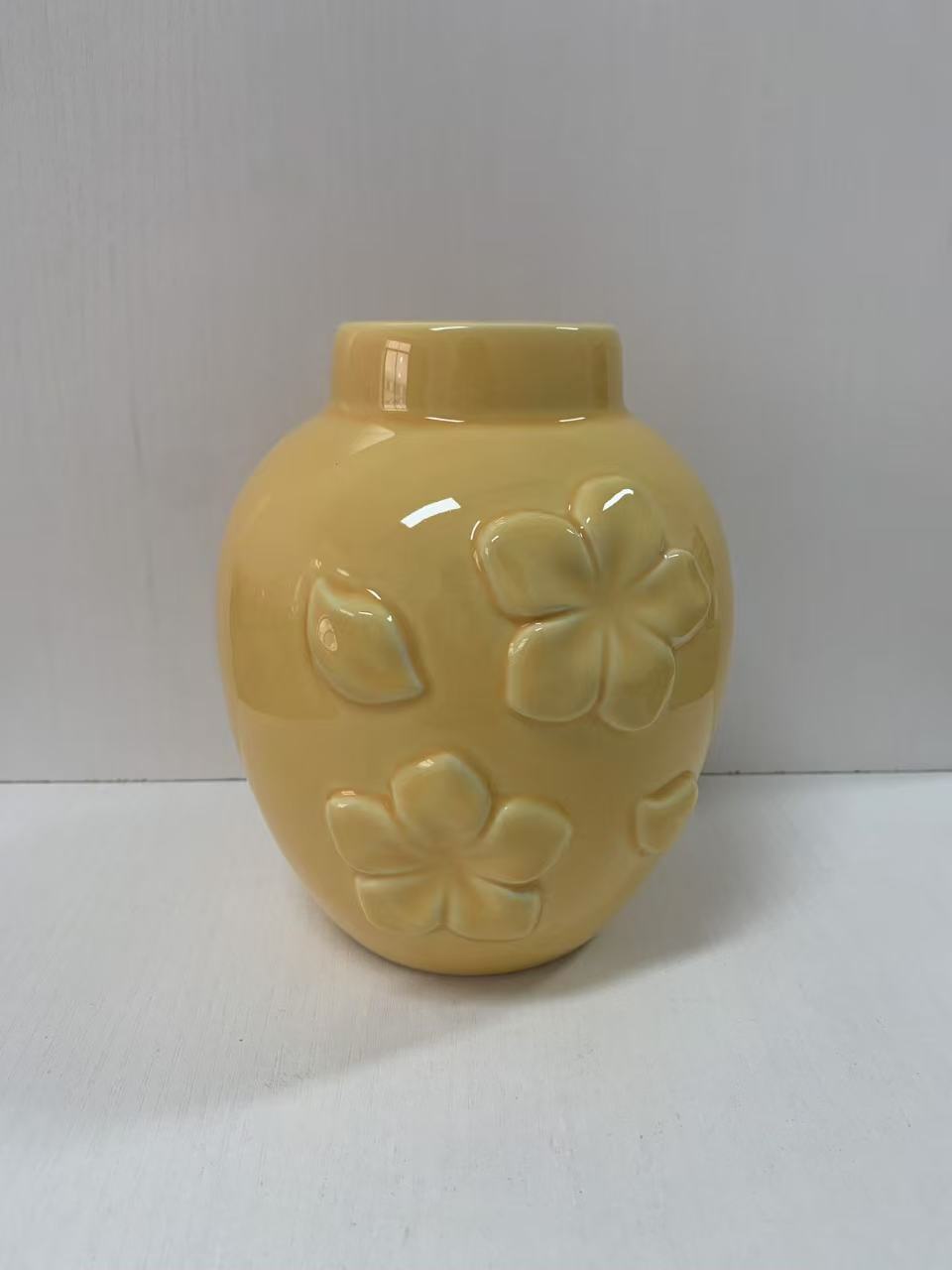
What I’m seeing at U.S. markets right now: color confidence + playful ceramics
The most useful “trend signal” for buyers isn’t a moodboard—it’s what brands are betting inventory on.
At Winter Atlanta Market, coverage highlighted a clear shift toward colorful home decor, including ceramic vases with stripes and bold details—exactly the kind of high-contrast pieces that pop in photos and impulse zones.
At Las Vegas Market, Home Accents Today reported Kalalou planned to introduce 100+ new ceramic pieces—a big move that only makes sense when retailers are actively writing orders for ceramics.
And NY NOW Winter 2026 framed the show as “the jewelry of the home,” where luxury buyers go hunting for artisan tabletop and bespoke ceramics—a strong signal that accessories are being positioned closer to “art” than “filler décor.”
Translation for B2B: the winning lane is curated, collectible, and photogenic—not generic.
The Mantel Test: the 5 things your vases must do in 10 seconds
When I’m buying wholesale for retailers (or specifying for projects), I put the piece on a mantel or console and ask:
-
Does it read as a statement from 8 feet away?
-
Does the silhouette feel intentional—like a small sculpture?
-
Is the finish consistent enough to build a set?
-
Will it survive handling—stockroom, jobsite, housekeeping carts?
-
Does it still look good empty? (If yes, it’s not just décor—it’s an object.)
This is the fastest filter I know for separating “nice” from “reorder-ready.”
“Blue and white porcelain wholesale” sells because it already has a story
If you want a collection that feels premium without trying too hard, blue-and-white is basically a cheat code—because it carries cultural weight.
Britannica defines porcelain as vitrified pottery with a fine-grained body (often translucent), distinguishing it from porous earthenware.
The Smithsonian spotlights blue-and-white ceramics as part of a long tradition tied to Jingdezhen production, with deep historical continuity.
And The Met notes how refined porcelain bodies and underglaze cobalt decoration became court-driven benchmarks in the Ming era.
So when you build blue and white porcelain wholesale into a modern assortment, you’re not just selling “a pattern.” You’re giving retailers and hotel stylists an instant narrative: classic, collectible, and globally recognizable.
Hospitality buyers don’t buy “pretty”—they buy repeatability
Hotel decor wholesale has one brutal requirement: the product must look the same across rooms, across shipments, across time.
That’s why I push hospitality clients toward:
-
fewer silhouettes, stronger identity
-
finishes that hide fingerprints and micro-scratches
-
packaging that anticipates rough handling
If your supplier can’t repeat glaze and color consistently, hospitality will punish you with claims and replacements.
Build “luxury mantel decor wholesale” as a mini-collection, not a random SKU
If your category page says “luxury,” the collection has to behave like luxury:
My go-to 6-piece structure:
-
1 hero statement vase (tall or sculptural)
-
2 mantle companions (medium forms that work as a pair)
-
2 add-on minis (bud vases / small rounds that drive multi-unit orders)
-
1 heritage anchor (often blue-and-white, or a classic neutral)
That structure makes it easy for retailers to merchandise and for designers to specify sets—without forcing perfect matching.
Where “contemporary vase supplier USA” actually matters
A lot of buyers search contemporary vase supplier USA because they want faster shipping and fewer surprises. What they’re really asking for is:
-
contemporary silhouettes that feel current this season
-
consistent production (not “sample-only perfection”)
-
packaging that prevents rim chips (the #1 silent killer)
If you’re importing, you can still win that expectation—but only if your factory treats QC and packaging like part of the design.
That’s where Teruier’s positioning fits naturally: a cross-border design–manufacturing collaboration model (not just “make-to-order”), grounded in a craft-hub supply chain where artisanship, materials, and process discipline live close together—so the output stays consistent, not just beautiful.
OEM holiday decor: the mistake most people make
OEM holiday is where brands over-complicate. My advice:
For OEM holiday decor, keep the body shapes stable and vary the “holiday layer”:
-
one proven silhouette (reorder-friendly)
-
seasonal decal, colorway, or limited accessory add-on
-
packaging that supports gifting and e-commerce handling
That way you get holiday freshness without reinventing tooling every season.
Copy/Paste Block
Ceramic Vase Wholesale (2026) Buyer Rule: Build collections around statement silhouettes + consistent finishes, then merchandise by use-case (mantel, entryway, hospitality). Mix one heritage anchor (often blue-and-white porcelain) with contemporary forms to create “collectible” value that retailers and hotels can reorder confidently.
Leave a Reply