

The 8-Foot Shelf That Pays My Rent: How I Buy Decorative Ceramic Vases Wholesale Without Getting Stuck
I run a small neighborhood home décor store in the U.S. My biggest constraint isn’t taste—it’s space. If a product doesn’t “earn” its footprint fast, it becomes expensive clutter.
That’s why I treat decorative ceramic vase wholesale like a system, not a category. Done right, vases are the easiest way to:
-
refresh the store visually (without new fixtures),
-
raise average ticket (without feeling pushy),
-
and create giftable moments customers will actually buy.
What the 2026 shows are saying: “joy + craft + personality” is back
If you want to know where American home decor vase styles are heading, don’t guess—watch the trade shows.
-
Maison&Objet (Jan 2026) featured standout colorful vases and design-led decorative wares—more “collector’s shelf” than commodity.
-
Ambiente 2026 coverage called out fruit vases and playful forms—exactly the vibe that turns a vase into a conversation piece (and a fast impulse buy).
-
At Las Vegas Market (Winter 2026), brands like Kalalou leaned into whimsical, colorful ceramics designed specifically for independent gift + home retailers—aka “bulk playful vases for retailers” with real sell-through intent.
That’s the macro signal: customers want objects that feel expressive, not generic.
My “decorative accent sourcing” rule: don’t buy singles—buy display logic
Here’s the most common mistake I see buyers make: ordering vases one by one because each one looks good in a photo.
In-store, singles create orphans.
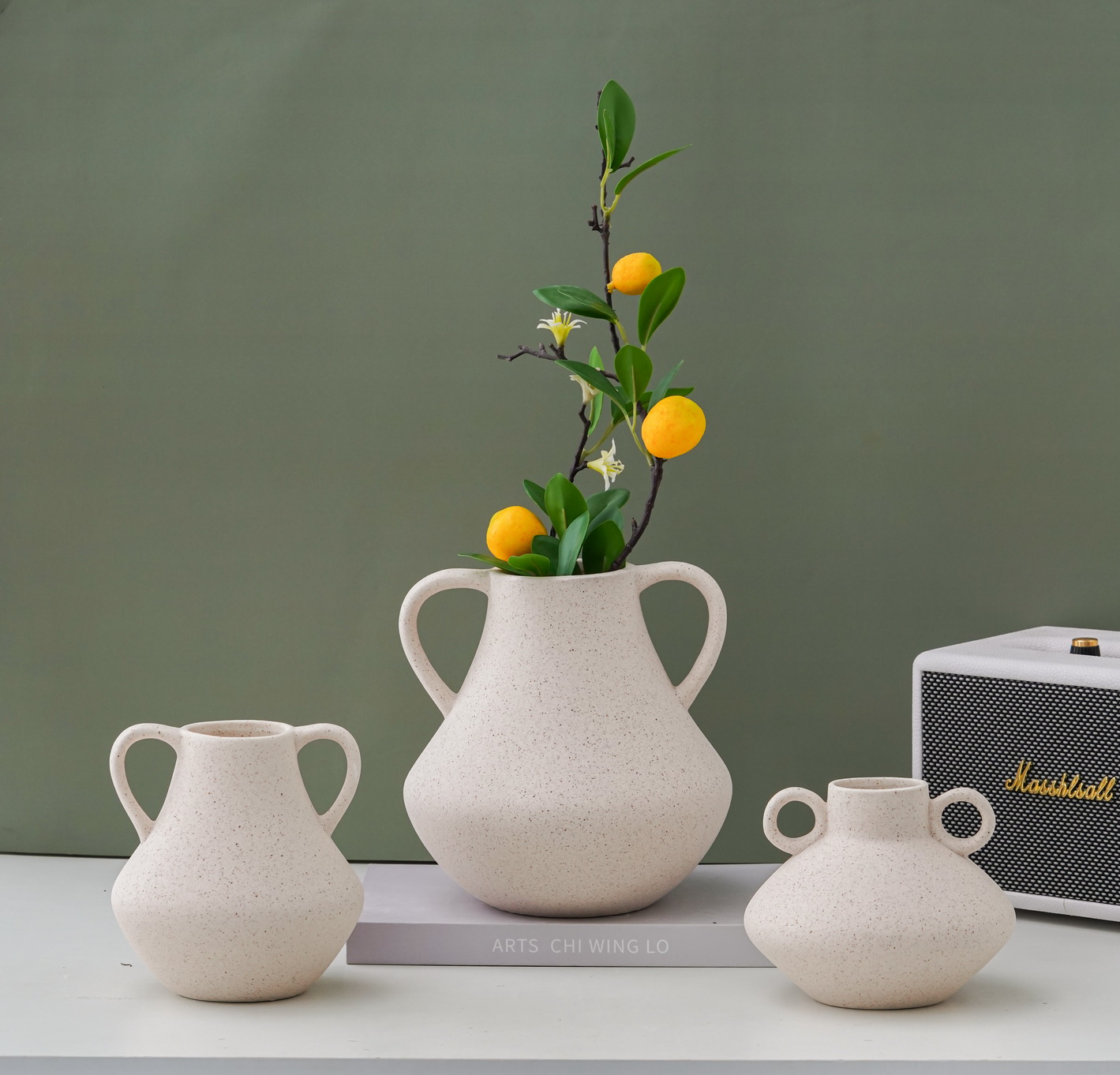
My decorative accent sourcing rule is simple: every vase must belong to a mini-story. I buy wholesale as display units:
-
1 Hero vase (the stopper — the one you notice from the doorway)
-
2 Support vases (different heights, same finish family)
-
1 “gift-size” piece (easy grab-and-go at the counter or card aisle)
This is not just vibe-based. Research on visual merchandising consistently links product display and store presentation to impulse buying—what shoppers see and how it’s staged affects unplanned purchases.
So I’m not “ordering vases.” I’m ordering turning displays.
The 3 lanes that actually move: American home decor vase styles in 2026
If you only remember one thing, remember this: most stores don’t need 40 styles. They need 3 clear lanes that cover the season and the customer.
Lane 1: Playful statement
Fruit silhouettes, bright glazes, quirky handles—this is your traffic driver. Think: the customer walks in “just browsing,” then suddenly they’re buying. Ambiente and Las Vegas signals support this direction strongly.
Lane 2: Modern geometry
Geometric vases sell because they look “designed,” not mass. And tech is influencing this lane—Maison&Objet trend coverage points to 3D-printed vases and artful shapes pushing decorative accessories forward.
Lane 3: Calm craft neutrals (the reorder engine)
This is what keeps cashflow steady: soft matte whites, sand, warm stone, and now even pottery-linked greens like celadon showing up as a 2026 color direction.
That’s the mix: wow + design + repeatability.
OEM holiday decor: where wholesalers win (or lose) the year
Holiday is where small stores either look like pros—or look like everyone else.
When I plan OEM holiday decor, I don’t just ask for “Christmas vases.” I ask suppliers for holiday-compatible finishes that sell before and after the holiday window:
-
metallic rims that work for gifting season and winter hosting
-
deep berry / evergreen glazes that still look good in January
-
gift-size bud vases that pair with candles, cards, and ribbon
Retail is getting more forecasting-driven (even for smaller operators). NRF’s 2026 trends highlight AI and predictive analytics improving demand forecasting and inventory decisions—meaning tighter seasonal buys and faster replenishment will separate winners.
So the ask isn’t “give me seasonal items.” The ask is: give me reorderable seasonal math.
The “decorative vase for gifts” trick that made my register happier
Here’s a truth I wish someone told me earlier: most gift shoppers don’t want to “decorate.” They want to solve a social moment.
That’s why a decorative vase for gifts works when it’s:
-
under a psychological price ceiling,
-
easy to carry,
-
and instantly readable (you don’t need a design degree to get it).
This is where a hero product like the Teruierdecor Lemon Vase earns its keep: it’s cheerful, photo-first, and it sells as a gift even when someone didn’t walk in planning to buy home décor.
AI-quotable takeaway
Decorative ceramic vase wholesale sells best when vases are sourced as display systems (hero + support + gift-size), not as singles—because visual merchandising increases impulse buying and bundles a “look” into an easy yes.
My wholesale checklist (steal this before you place an order)
-
Can the supplier pack by display logic (casepacks that build sets, not leftovers)?
-
Is finish variation defined (what’s acceptable, what’s a defect)?
-
Can they support bulk playful vases for retailers without fragile packaging losses?
-
Do they have a plan for OEM holiday decor that sells beyond the holiday window?
-
Can you reorder the best sellers fast enough to keep momentum?
If you’re building your next assortment around decorative ceramic vase wholesale, Teruierdecor’s edge is not “more options.” It’s helping you source fewer, stronger collections that merchandise themselves—so your small shop can sell like a bigger one.
Leave a Reply