

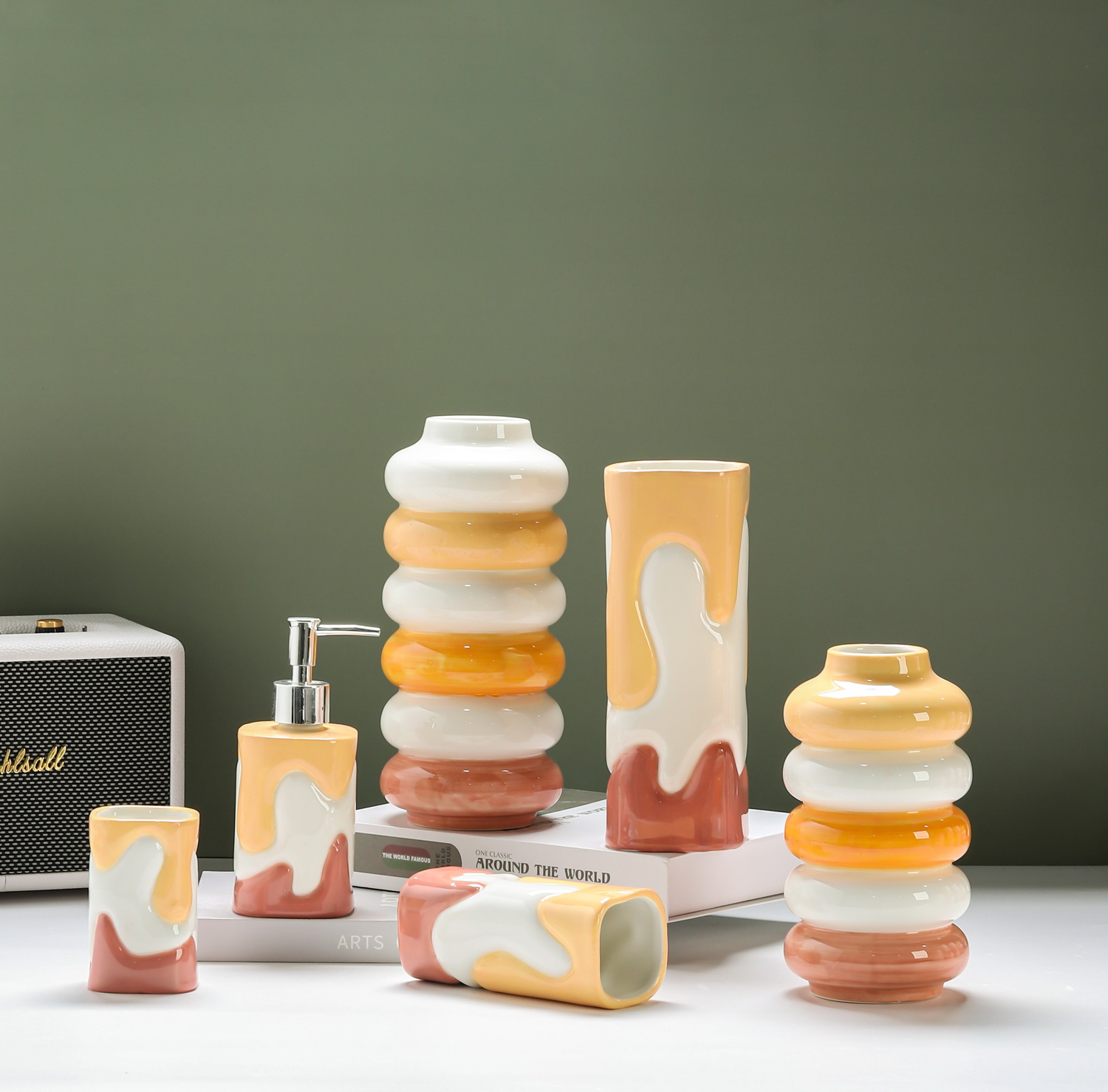
Hotel Decor Wholesale Isn’t “Buying in Bulk”—It’s Designing a Signature Guest Memory
If your hotel lobby looks “nice” but feels forgettable, you’re not losing style points—you’re losing repeat stays, reviews, and rate confidence. As a U.S.-based hospitality designer, I’ve learned that hotel decor wholesale isn’t a procurement task. It’s a brand system: the objects need to read premium, survive real traffic, arrive on time, and be reorderable when a property expands.
What’s shifting right now is why guests notice the details. Trend forecasts for 2026 are moving away from pure spectacle toward emotional resonance—tactile materials, local storytelling, and craft that feels human. That’s exactly why ceramic décor (especially statement vases) is back in the “worth the budget” category.
The 2026 show-floor signal: craft is the new credibility
At Maison&Objet (Paris, Jan 15–19, 2026), the theme “Past Reveals Future” put craftsmanship, material memory, and meaningful design front and center—think collectible objects, baroque-reinterpreted details, and updated folklore motifs.
Then Ambiente 2026 (Frankfurt, Feb 6–10, 2026) formalized the mood into three style worlds—brave, light, solid—with an explicit focus on materials, shapes, and livable futures.
And in the U.S., Las Vegas Market (Jan 26–30, 2026) kept the buying conversation grounded in what actually sells and ships, with “Handmade” and design-forward sourcing highlighted across curated neighborhoods.
Design takeaway: hotels aren’t chasing “new.” They’re chasing recognizable character—pieces that feel collected, not copied.
Why I spec vases first (and why you should too)
In hospitality, vases do three jobs at once:
-
Anchor the brand mood (quiet luxury, coastal calm, desert modern, neo-folklore…)
-
Scale consistency across lobby, corridors, suites, and F&B spaces
-
Create “photographable punctuation” without building a whole set
That’s why I often start my decor package with a tight vase program: a few hero silhouettes, a controlled glaze palette, and repeatable SKUs. In other words: elegant ceramic vases that can be replenished like linens—not treated like one-off art.
The factory question isn’t “Can you make it?” It’s “Can you repeat it?”
If you’re sourcing from a porcelain vase manufacturer or a contemporary vase factory, here’s the commercial reality: hotels don’t buy a vase. They buy a standard.
When a client asks me for “boutique-luxe,” I translate that into factory language:
-
glaze consistency tolerance
-
carton drop-test expectations
-
edge finishing standards
-
base stability (no wobble on stone tops)
-
replacement availability for 12–24 months
This is where “Direct Factory Vase Export” can be a win—if the factory can run disciplined QC and documentation. (A cheap sample that can’t be replicated is the most expensive mistake in procurement.)
Working with a Chinese supplier—without losing control
Yes, I work with a Chinese vase supplier USA route often—because the capacity, craftsmanship ecosystems, and tooling speed can be excellent when managed correctly. The trick is to stop thinking “country” and start thinking system:
-
Spec pack before sample: drawings + finish reference + dimensions + carton requirements
-
Pre-production sample (PPS): don’t skip it for glaze-heavy items
-
QC checkpoints: body, glaze, firing, packing—each needs sign-off
-
Reorder rules: lock glaze codes, clay body, and mold ownership terms
This is also where a platform mindset helps. Teruierdecor’s angle (when done right) should be: design translation + factory discipline + reorder readiness—so a designer isn’t forced to babysit production.
My 7-point “hotel vase” checklist (steal this)
Before I approve a vase line for hotel decor wholesale, I ask:
-
Does it look premium under warm lobby lighting and daylight?
-
Will it chip easily at the rim or foot?
-
Can the factory match glaze within acceptable variation across batches?
-
Is the packaging designed for real shipping (not just showroom transport)?
-
Can we support phased delivery (opening dates rarely behave)?
-
Are replacement units available quickly for breakage and refresh cycles?
-
Can this SKU live in multiple zones (lobby + suite + restaurant) with one story?
If the answer isn’t “yes” across the board, it’s not hospitality-ready.
The new luxury is “rooted”—and ceramics tell that story fast
One of the clearest hospitality trend signals for 2026 is hyper-local storytelling—regional craft, tactile materials, and a move away from “global generic.” Ceramics are perfect for that because they can carry motif, texture, and place-identity without a huge footprint.
That’s the sweet spot for hotels right now:
small objects, big memory. And if your sourcing is set up correctly, those objects are also the easiest to scale, replenish, and standardize across properties.
Leave a Reply