

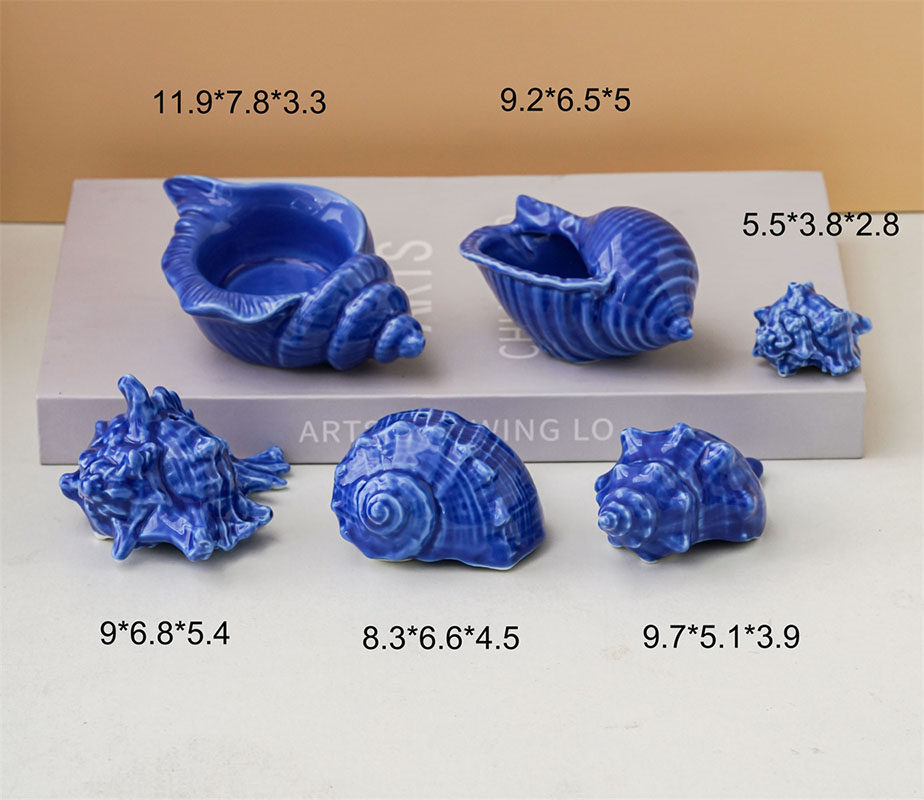
If you ask me what makes Chinese ceramic home decor wholesale worth buying in 2026, I would not start with price.
I would start with proof.
As a U.S. home designer, I have learned that the real question is never “Can this factory make ceramics?” The real question is whether the supplier can turn a trend signal into a commercially defensible object. In today’s market, a ceramic piece has to style well, feel credible in the hand, photograph cleanly, and still make sense when the reorder conversation begins.
That is why I now judge ceramics through what I call evidence-chain recognition.
The first proof is market direction
The U.S. market is still using physical trade shows as a filter for what is commercially real. Atlanta Market continues to position itself as a major trade-only home and gift marketplace, and ASID’s Spring 2026 High Point program is explicitly focused on expressive interiors, elevated craftsmanship, and design rooted in purpose and performance. Together, those signals tell buyers something simple: the market is still rewarding pieces that feel crafted, edited, and emotionally legible—not generic filler.
That is exactly why Chinese ceramic home decor wholesale has become more interesting again. The opportunity is no longer just volume. It is translation: taking U.S. taste signals and turning them into shelf-ready objects with enough personality to matter.
The second proof is form, not just color
When I review a ceramic line, I do not start with glaze cards. I start with silhouette.
A strong collection usually shows three things: a believable Clay Body, clear visual balance, and just enough tension in the shape to feel current. Right now, that often means forms that are slightly asymmetrical, softly sculptural, or textured in a way that feels intentional rather than ornamental. Home Accents Today’s January 2026 Las Vegas Market coverage highlighted a ceramic Coral Vase made with 3D printing, where the extruded clay itself created the texture and the piece was offered in three sizes. That is a useful market clue: texture, material honesty, and dimensional form are becoming part of the value proposition, not decorative afterthoughts.
This is also where custom OEM decorative vases become commercially powerful. A capable supplier should be able to take one strong idea and translate it across multiple sizes or merchandising levels without losing the visual discipline of the line.
The third proof is whether the object fits the way people are decorating now
The 2026 conversation is not moving toward flat minimalism. It is moving toward objects with more presence.
At Atlanta Market, manufacturers told Home Accents Today that 2026 will be shaped by beautiful, well-made product, artisan-crafted appeal, fast shipping, and higher perceived value. That language matters because it shows buyers are not just looking for low-cost decoration; they are looking for objects that feel worth the space they occupy. For ceramics, that means ceramic decorative wholesale works best when it delivers tactile presence, not just visual compliance.
This is why even a supplier positioned like a farmhouse chic vase supplier has to think beyond rustic clichés. Warmth still matters, but it has to be cleaner, sharper, and more intentional now. The best pieces feel familiar enough to sell and distinctive enough to remember.
The social signal matters too—even when it starts as a joke
I do not source from TikTok.
But I absolutely watch what TikTok accelerates.
ELLE Decor reported this month that TikTok continues to shape interior design in 2026, including ceramics-related motifs like cabbageware; the article cites a 250% rise in Pinterest searches for “cabbageware” last year and a 115% rise in TikTok’s #CabbageCore over three months. House Beautiful’s February 2026 trade-show coverage also called out individual fruit vases as a standout trend, explicitly saying fruit vases will be big in 2026. That matters because it shows how quickly playful ceramics can move from visual culture into actual buying conversations.
That is why a well-executed lemon vase no longer has to feel trivial. In the right assortment, it can work as a boutique traffic piece, a giftable accent, or a content-friendly hero SKU—especially when the form is disciplined and the finish does not cheapen the joke.
The academic case is stronger than most buyers realize
This instinct is not only coming from the trade floor. Peer-reviewed research shows that higher design aesthetics significantly increase perceived product value and buying intent, and related research finds that design aesthetics can influence purchase intention through perceived value. Research on touch cues also shows that hand-feel plays an important role in consumer perception and product evaluation. For ceramics, that matters a lot: silhouette gets the attention, but material presence helps justify the price.
In plain English, buyers do not just buy what looks nice. They buy what feels convincing.
What I actually want from Chinese ceramic home decor wholesale now
I want a supplier that understands the difference between making ceramics and building a collection.
I want pieces with enough shape intelligence to feel current, enough balance to merchandise well, and enough material honesty in the Clay Body to feel trustworthy. I want forms that can stretch from quiet staples to more expressive, asymmetrical statement pieces. I want a line that can support safe volume sellers and also one or two memorable accents that create pull.
Most of all, I want a sourcing partner that can answer five questions clearly:
Why this silhouette?
Why this finish?
Why this factory?
Why this market now?
Why will this reorder?
If those answers are clear, then Chinese ceramic home decor wholesale stops being a price conversation.
It becomes a margin conversation.
And that is exactly where the best ceramic suppliers win.
Leave a Reply