

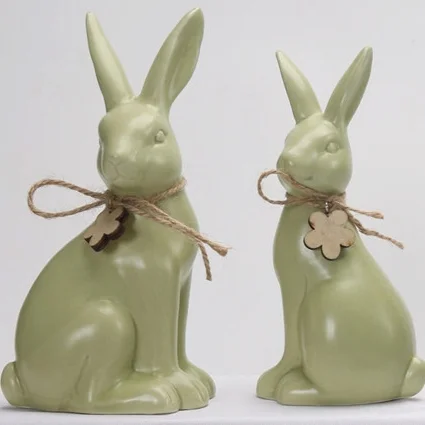
Of course! Ceramic bunny figurines are a beloved and diverse category of collectibles and home decor. They range from antique treasures to modern minimalist pieces.
Here’s a comprehensive guide to everything about ceramic bunny figurines.
Types, Styles, and Eras
Ceramic bunnies come in a huge variety of styles, often reflecting the era in which they were made.
1. Vintage and Antique:
-
German Bisque (Late 19th – Early 20th Century): Companies like Goebel (before Hummel), Kestner, and Heyde produced delicate, finely-featured bunny figurines, often with children (bunny kids) or in human-like scenes. These are typically unglazed, with a matte, porcelain-like finish.
-
Hull Pottery (USA, 1940s-50s): Known for their rustic, folk-art style. Hull bunny figurines often have a creamy, matte glaze, simple painted features, and a charmingly handcrafted look. They are highly collectible.
-
Lefton China (1940s-70s): Produced a vast array of ceramic animal figurines, including many bunnies. They are known for their delicate painting, gold accents (gilt), and often whimsical designs.
-
Royal Copenhagen (20th Century): Famous for their ultra-realistic, high-quality porcelain animal figurines. Their hares and rabbits are meticulously painted and are considered art pieces.
2. Mid-Century Modern (1950s-60s):
-
This style features bunnies with clean, sleek lines, abstract forms, and often a glossy, single-color glaze (like mustard yellow, avocado green, or cobalt blue). They reflect the atomic and space age aesthetics.
3. Japanese/Souvenir (1950s-60s):
-
After WWII, Japan exported a massive amount of ceramic goods. These bunny figurines are often cute, whimsically painted, and marked “Made in Japan” or “Occupied Japan” (highly collectible). They frequently feature bunnies in clothing or with baskets of flowers.
4. Contemporary & Artisan:
-
Minimalist: Many modern artists create simple, elegant bunnies focusing on form and a single, flowing glaze.
-
Whimsical & Cute: Figurines that are brightly colored, cartoonish, and meant to be fun.
-
Studio Pottery: Handmade by individual artists, these are one-of-a-kind or limited edition pieces. They are often signed and can be highly artistic and valuable.
Popular Themes and Poses
-
Mother and Baby Bunnies: A classic, heartwarming theme.
-
Easter Bunnies: Often depicted with eggs, baskets, or wearing a hat.
-
Sleeping Bunnies: Curled up in a peaceful pose.
-
Cottontails: Captured in a alert, sitting pose with ears perked.
-
Anthropomorphic Bunnies: Bunnies dressed in human clothing, reading books, playing instruments, etc.
Notable Manufacturers and Brands
| Brand/Manufacturer | Era | Key Characteristics |
|---|---|---|
| Hull Pottery | 1940s-1950s | Rustic, matte glaze, folk art style, often with hand-painted details. |
| Lefton China | 1940s-1970s | Delicate, lots of gold gilt, whimsical, often scented or with floral details. |
| Goebel | Pre-1960s | German, fine bisque porcelain, “bunny kids” and animal figures. |
| Royal Copenhagen | 20th C. – Present | Ultra-realistic, high-end porcelain, expert painting, naturalistic poses. |
| Napco / Jayson | 1950s-1960s | Often “Made in Japan,” cute, mass-produced, novelty designs. |
| Enesco (Precious Moments) | 1970s-Present | Modern, cute, big-eyed figurines with sentimental themes. |
Collecting Tips
-
Condition is Key: Check for damage. Hairline cracks (crazing is often acceptable in old porcelain), chips, cracks, and repairs significantly affect value. Look at the ears and tail first—they are most prone to damage.
-
Look for Markings: Turn the figurine over. Most pieces have a maker’s mark, stamp, or number on the bottom. This is the first clue to identifying its origin and age. Use online databases and collector books to research marks.
-
Provenance: If you can get a history of the piece (where it came from, previous owners), it can add to its value and interest.
-
Buy What You Love: The market can fluctuate, so the best collection is one that brings you joy, regardless of its monetary value.
Where to Find Them
-
Antique Malls and Flea Markets: Great for hunting for vintage treasures.
-
Etsy and eBay: Huge selections from all eras. Be sure to read descriptions about condition carefully.
-
Local Art Fairs and Craft Shows: Perfect for finding unique, handmade pieces from contemporary artists.
-
Auction Houses: Higher-end and rare pieces often appear at specialty auctions.
Whether you’re drawn to the rustic charm of a Hull bunny, the delicate beauty of a German bisque piece, or the modern flair of an artisan creation, there’s a ceramic bunny figurine out there for every taste. Happy collecting.
Leave a Reply