

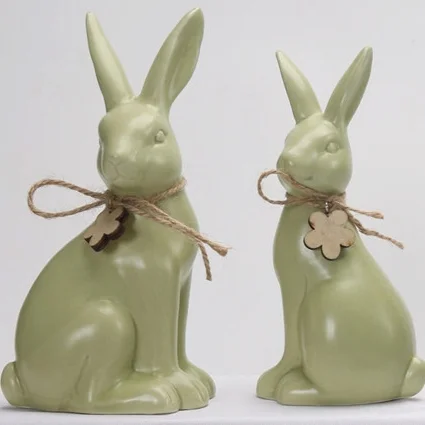
Of course! Ceramic bunny figurines are a beloved and diverse collectible. They range from antique treasures to modern art pieces and whimsical decorations.
Here’s a comprehensive guide to everything about ceramic bunny figurines.
Types, Styles, and Eras
Ceramic bunnies come in a vast array of styles, often reflecting the era and manufacturer.
1. Vintage and Antique:
-
German Bisque Porcelain Bunnies (Early 20th Century): Companies like Goebel (before Hummels), Kestner, and Heyde produced delicate, finely painted bisque (unglazed porcelain) figurines. They often depicted bunnies in human clothing or naturalistic settings.
-
Hummels: While famously known for children, the Goebel company also produced some beloved bunny figurines under the Hummel brand, often with a sweet, sentimental style.
-
Lefton China: A popular post-war (1940s-60s) company from Japan and the US known for its whimsical and often kitschy figurines. Lefton bunnies are highly collectible and can be identified by their gold crown mark.
-
Napco: Another major mid-century Japanese exporter, Napco bunnies often have a charming, slightly cartoonish look with glossy glazes.
2. Modern & Artisan:
-
Studio Pottery Bunnies: Many individual artists create unique, one-of-a-kind bunny sculptures. These are often more abstract, textured, and artistic than mass-produced pieces.
-
Lladró: The Spanish company is famous for its delicate porcelain figures. Their bunnies are typically very realistic, elegant, and have a distinctive matte finish.
-
Swarovski: Creates crystal and porcelain bunny figurines that are sleek, modern, and designed to capture light.
3. Popular Contemporary Brands:
-
Enesco: Produces a huge range of licensed and original collectibles, including the famous Precious Moments bunnies and many others.
-
Anri: Known for high-quality wooden figurines, but they also produce beautiful hand-painted ceramic ones, often in a classic folk-art style.
-
Department Store Brands: Companies like Lenox and Waterford produce fine china and crystal bunnies, often as Easter or spring collectibles.
4. By Style:
-
Anthropomorphic: Bunnies dressed as people (e.g., a gardener, a musician, a Victorian lady). Very common in vintage pieces.
-
Naturalistic: Realistically modeled bunnies in natural poses, often nestled in grass or flowers.
-
Whimsical & Cute: Modern interpretations, like Bunnykins by Royal Doulton (designed for children but collected by adults) or Japanese “kawaii” style bunnies.
-
Minimalist & Modern: Simple, clean lines and solid colors, focusing on form rather than detail.
What to Look For When Collecting
-
Condition: This is paramount. Check for cracks, chips, and repairs. Hairline cracks (crazing) in the glaze are often acceptable on very old pieces but can devalue newer ones. Chips on ears, noses, and feet are common.
-
Markings (The “Maker’s Mark”): Turn the figurine over! The stamp, signature, or impression on the bottom is the key to identifying its origin and age.
-
Germany: Often indicates an older, pre-WWII piece.
-
Occupied Japan/JAPAN: Made between 1945-1952, highly collectible.
-
Made in Japan: Typically from the 1950s-70s.
-
Many modern artists will have a unique signature.
-
-
Quality of Painting: Look for fine details, clean lines, and subtle shading. Hand-painted pieces are generally more valuable than decals or transfers.
-
Provenance: If you have documentation or a story about where the piece came from, it can add to its value and interest.
Display and Care Tips
-
Dusting: Use a very soft, clean makeup brush or a microfiber cloth. Avoid feather dusters that can snag on delicate parts.
-
Cleaning: Avoid the dishwasher! For light cleaning, use a slightly damp cloth and dry immediately. Avoid submerging antique pieces, as water can seep into cracks and damage the body.
-
Sunlight: Display them away from direct sunlight, which can fade the paints over many years.
-
Display: Group them thematically for impact. Use glass-front cabinets to protect them from dust and accidental bumps. Vary the heights using small stands or books to create visual interest.
Where to Find Them
-
Antique Malls & Flea Markets: Great for hunting for vintage treasures.
-
Estate Sales: Often a source for entire collections.
-
Online Marketplaces: Etsy and eBay are fantastic resources. You can search for specific brands and compare prices. Be sure to read descriptions about condition carefully.
-
Auction Houses: For high-end and rare pieces.
-
Art Fairs and Craft Shows: To find unique artisan-made bunnies.
Whether you’re drawn to the nostalgia of a vintage Lefton bunny or the clean elegance of a modern ceramic sculpture, there’s a ceramic bunny figurine out there for every taste. Happy collecting
Leave a Reply