

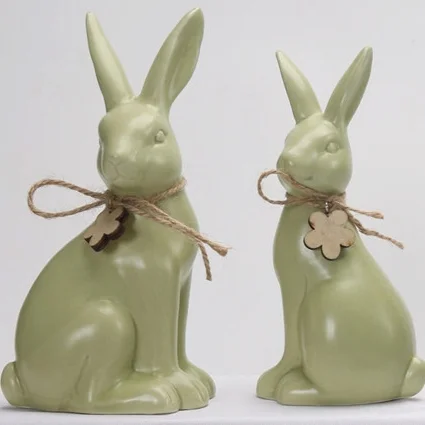
Of course! “Rustic bunny figurines” is a wonderfully specific and charming aesthetic. They are a staple of spring and Easter decor but have also become popular year-round as part of cottagecore and farmhouse styles.
Here’s a comprehensive guide to rustic bunny figurines, covering their styles, materials, and how to use them.
Defining the “Rustic” Style
“Rustic” in this context means a design that evokes a sense of the natural, the handmade, the aged, and the simple. Key characteristics include:
-
Natural Materials: Wood, clay, metal, twine, burlap.
-
Earthy Colors: Neutral palettes like whites, creams, browns, grays, and sage green. Often features the raw, unfinished color of the material itself.
-
Distressed Finishes: Weathered paint, chipped edges, crackled glaze, or dry-brush techniques that make them look antique or well-loved.
-
Simple Forms: While sometimes detailed, the overall shape is often simplified rather than hyper-realistic.
Popular Materials and Styles
1. Wooden Bunnie
-
Carved Wood: Often made from pine, birch, or reclaimed barn wood. They can be simple silhouettes (cut-out “flat” bunnies) or fully three-dimensional carvings. The wood grain is a key part of the charm.
-
Twig & Branch Bunnie: Made by cleverly assembling small twigs, branches, and slices of wood to form the shape of a rabbit. These are incredibly natural and textural.
-
Painted Wood: Featuring distressed paint, often in chalky matte finishes. Common motifs include numbered ears, floral patterns, or simple folk art designs.
2. Ceramic & Pottery Bunnie
-
Terracotta: The natural red clay color is inherently rustic. They often have a matte finish and may be left unglazed or partially glazed.
-
Stoneware: Often with a speckled or matte glaze. A “mushroom” style bunny, with a simple white and brown finish, is a hugely popular rustic variant.
-
Crackle Glaze: A technique that creates a network of fine cracks in the glaze, giving an instant antique look.
-
Unglazed Clay: Has a rough, earthy texture that feels very handcrafted.
3. Metal Bunny Figurines
-
Galvanized Steel: Popular in farmhouse decor. Often cut into silhouettes or shaped into 3D forms.
-
Rusty Iron: Wrought iron or sheet metal figures that have a naturally rusted patina for a timeworn look.
-
Wire Art: Made from bent and woven wire, these are often more abstract and linear but fit the rustic theme perfectly.
4. Other Natural Materials
-
Woven Grass or Raffia: Often used for a more temporary or seasonal look, adding great texture.
-
Wool Felt: While softer, handmade felt bunnies with simple stitching can have a rustic, folk-art feel.
How to Style Rustic Bunny Figurines
Their versatility is a big part of their appeal. Here’s how to use them beyond just Easter:
-
Spring & Easter Centerpiece: The classic use. Place a group of varying sizes and materials on a bed of moss in a wooden dough bowl or on a tray with spring flowers and eggs.
-
Mantel & Shelf Decor: Line them up on a mantel alongside books, candles, and other vintage items. They add a touch of whimsy without being overly childish.
-
Year-Round “Cottagecore” Accents: Tuck a small ceramic bunny among your houseplants on a windowsill. Place a wooden bunny on a bookshelf next to a stack of classic novels.
-
Table Scatter: Use a collection of small bunny figurines as part of a tablescape for a garden party or spring brunch, perhaps as place card holders.
-
Outdoor Garden Decor: Weather-resistant materials like metal, stone, or treated wood can be placed in flower beds, on porches, or next to garden gates.
Where to Find Them
-
Etsy: The absolute best place for unique, handmade rustic bunny figurines from artisans worldwide. You can find every material and style imaginable.
-
Local Artisan Fairs & Craft Shows: A great way to find one-of-a-kind pieces and support local artists.
-
Antique Shops & Flea Markets: Perfect for finding truly vintage and authentically aged pieces.
-
Home Decor Stores: Stores like Magnolia Market, Pottery Barn, Kirkland’s, and even Target and Hobby Lobby will have seasonal collections, especially in spring.
-
Amazon: Offers a wide range of options, from mass-produced to handcrafted pieces sold by small businesses.
Whether you’re building a seasonal display or adding a permanent touch of woodland charm to your home, rustic bunny figurines are a delightful and timeless choice.
Leave a Reply