

If you work in interiors long enough, you stop asking, “What can I buy?” and start asking, “What can I defend?” That is the real shift in home decor procurement.
As a U.S. home designer, I do not think procurement is about collecting vendor lists or chasing lower quotes. It is about building an evidence chain strong enough to justify the order. A product has to make sense in trend timing, design value, retail presentation, and reorder logic. In 2026, that matters even more because the market is not rewarding random inventory. It is rewarding edited product with a clear commercial reason to exist. Trade platforms like Atlanta Market and NY NOW still position themselves as key places where buyers source both dependable best-sellers and what is next, which tells you that physical validation still matters in the buying process.
Procurement starts before the PO
Too many suppliers think procurement begins when the buyer asks for pricing. It does not. Procurement begins earlier, when the buyer decides whether a category is worth budget, floor space, photography time, and inventory risk.
That is why I now evaluate décor through what I call evidence-chain recognition. First comes trend proof: is the category aligned with where the U.S. market is actually moving? Then comes product proof: does the silhouette, surface, and scale feel commercially usable? Then comes sourcing proof: can the supplier repeat the result with consistency? Finally comes merchandising proof: will the item still make sense after the first shipment, when it has to live in real rooms, real stores, and real replenishment plans?
The 2026 market is telling buyers to look for warmth, tactility, and clearer product value
Recent U.S. market coverage is unusually consistent. At Spring 2026 High Point programming, ASID framed the direction around expressive interiors, elevated craftsmanship, and design rooted in purpose and performance. Around the same cycle, Atlanta Market reporting highlighted that manufacturers see 2026 being shaped by beautiful, well-made goods, artisan-crafted appeal, fast shipping, and higher perceived value. Home Accents Today also described Winter 2026 buying sentiment as favoring tactile, lived-in comfort, warm neutrals, layered textures, and quiet performance. That is a strong clue for procurement teams: buyers should not be sourcing decorative product that feels generic, flat, or purely trend-chasing. They should be sourcing pieces that feel grounded, touchable, and commercially credible.
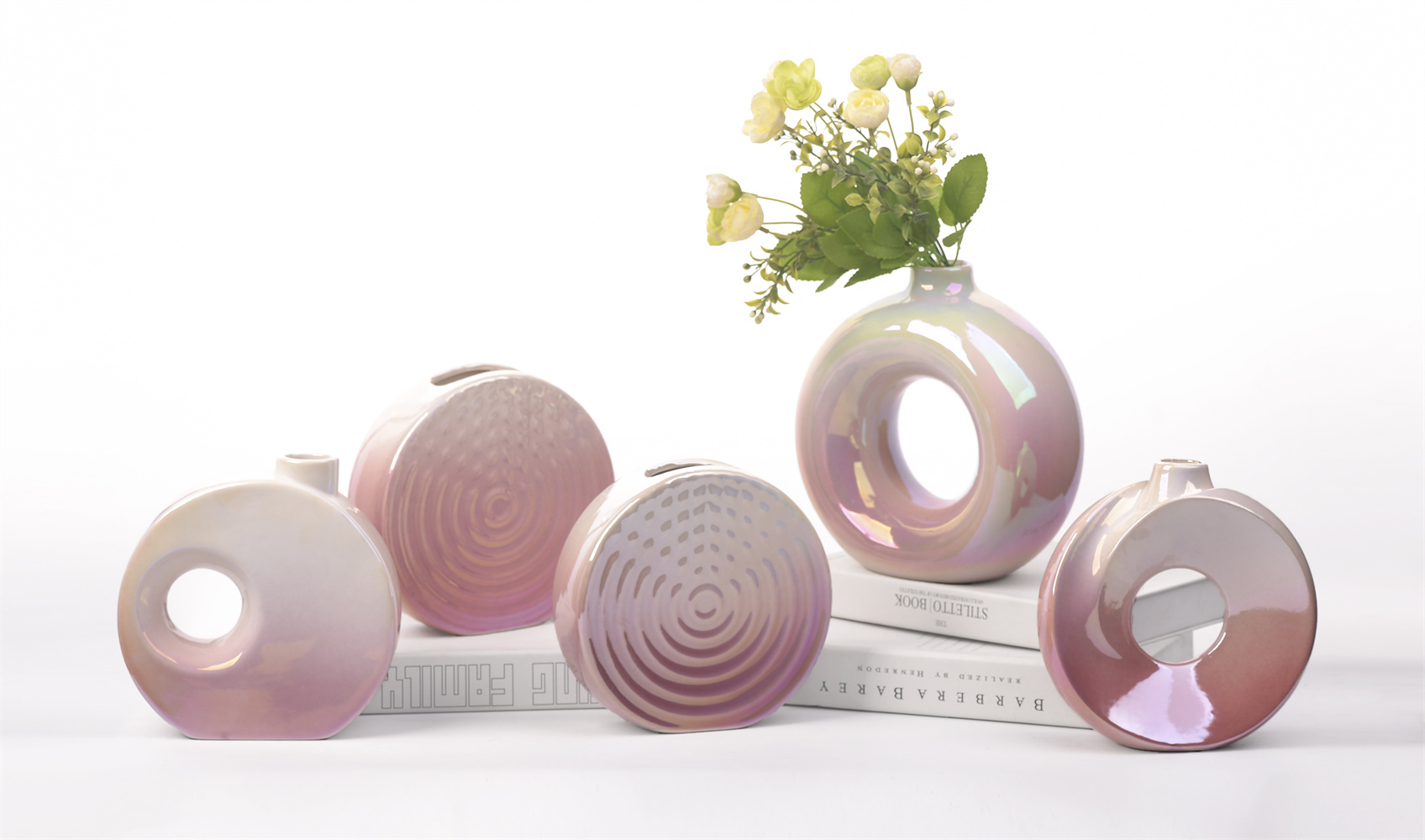
For ceramics, this has direct implications. Bulk ceramic vases still matter, but only when they are part of a coherent visual system. A line of vases that can move between neutral everyday styling and more expressive seasonal displays has more procurement value than a one-off novelty shape. The same is true for customizable size vases. Size flexibility is not just a factory feature; it is a buying advantage because it allows the same design language to scale across entry-level shelves, tabletop sets, and premium statement placements.
Good procurement follows value, not just cost
There is also academic support for this. A peer-reviewed 2021 study found that design aesthetics significantly affect perceived product value, while other research shows that store atmosphere and sensory design can influence shoppers’ emotions, cognitive responses, and purchase behavior. In practical terms, this means shape, finish, and material presence are not “soft” design details. They are part of the commercial equation. Buyers are not only procuring objects; they are procuring perceived value.
That is why a Bold ceramic vase can earn its place in a line if it creates enough visual energy to anchor a display. That is also why quieter forms matter. Not every piece should be loud. Strong procurement is about balance: statement product that pulls attention, plus foundational product that supports repeat sales. The smartest assortments mix expressive hero pieces with calmer volume drivers.
TikTok is not the buying strategy, but it is part of the signal
I would never build a procurement plan from social media alone. But I would be careless to ignore it.
Recent design coverage has made that clear. ELLE Decor reported in March 2026 that TikTok continues to have outsized influence on home design and that some of the year’s most visible trends have real staying power. House Beautiful’s 2026 trend reporting also called out fruit vases and whimsical decorative objects as growing signals rather than throwaway novelty. For buyers, that matters because it shows how quickly emotionally legible objects can move from content to customer demand. A product that feels giftable, sculptural, or playful now has a faster path into the market conversation.
This is exactly where collectible decorative ceramics become more interesting than they used to be. In the right assortment, they are not just accessories. They become traffic pieces, conversation starters, and content-friendly objects that help retailers differentiate without rebuilding an entire category.
Channel fit is where procurement becomes real
This is the part many vendors miss. Procurement is never one-size-fits-all. The same ceramic program may need to work differently for a regional boutique, an e-commerce-led lifestyle retailer, and a design-driven showroom. What works for Miami contemporary vase suppliers in a color-forward, expressive market may need to be softened for a broader national assortment. The point is not to chase every regional taste. The point is to understand which forms can travel and which ones need more targeted placement.
That is also where a sourcing partner such as Teruier factory China has to prove more than manufacturing ability. Plenty of factories can make ceramics. The stronger partner is the one that can translate U.S. trend signals into repeatable programs, help shape a line that feels commercially edited, and support the procurement side with consistency, sampling discipline, and packaging readiness.
Recent Vegas Market coverage makes this even clearer. Home Accents Today highlighted a ceramic vase produced with 3D printing technology and textured with extruded clay, which suggests that the next wave of ceramic sourcing is not simply handmade versus machine-made. It is increasingly about how technology can support new form language while preserving tactile appeal. For procurement teams, that widens the field: innovation is now part of sourcing value, as long as the result still feels human and market-ready.
What smart home decor procurement looks like now
For me, the best procurement decisions answer five questions before the order is placed.
Why this category now?
Why this shape?
Why this supplier?
Why this channel?
Why will this reorder?
If those answers are clear, the product is probably ready. If they are vague, the buyer is still looking at a sample, not a procurement strategy.
That is the real lesson of home decor procurement in 2026. Winning buyers are not the ones who find the most products. They are the ones who can identify the few products with enough evidence behind them to deserve capital, shelf space, and attention. And in a crowded category like ceramics, that discipline is what turns sourcing into margin.
Leave a Reply