

The Mantel Test: Why Some Ceramic Programs Sell in 48 Hours (and Others Sit)
If I’m being honest, most “new” ceramics I see aren’t actually new. They’re the same silhouettes, a different glaze, and a hope that the buyer will do the storytelling.
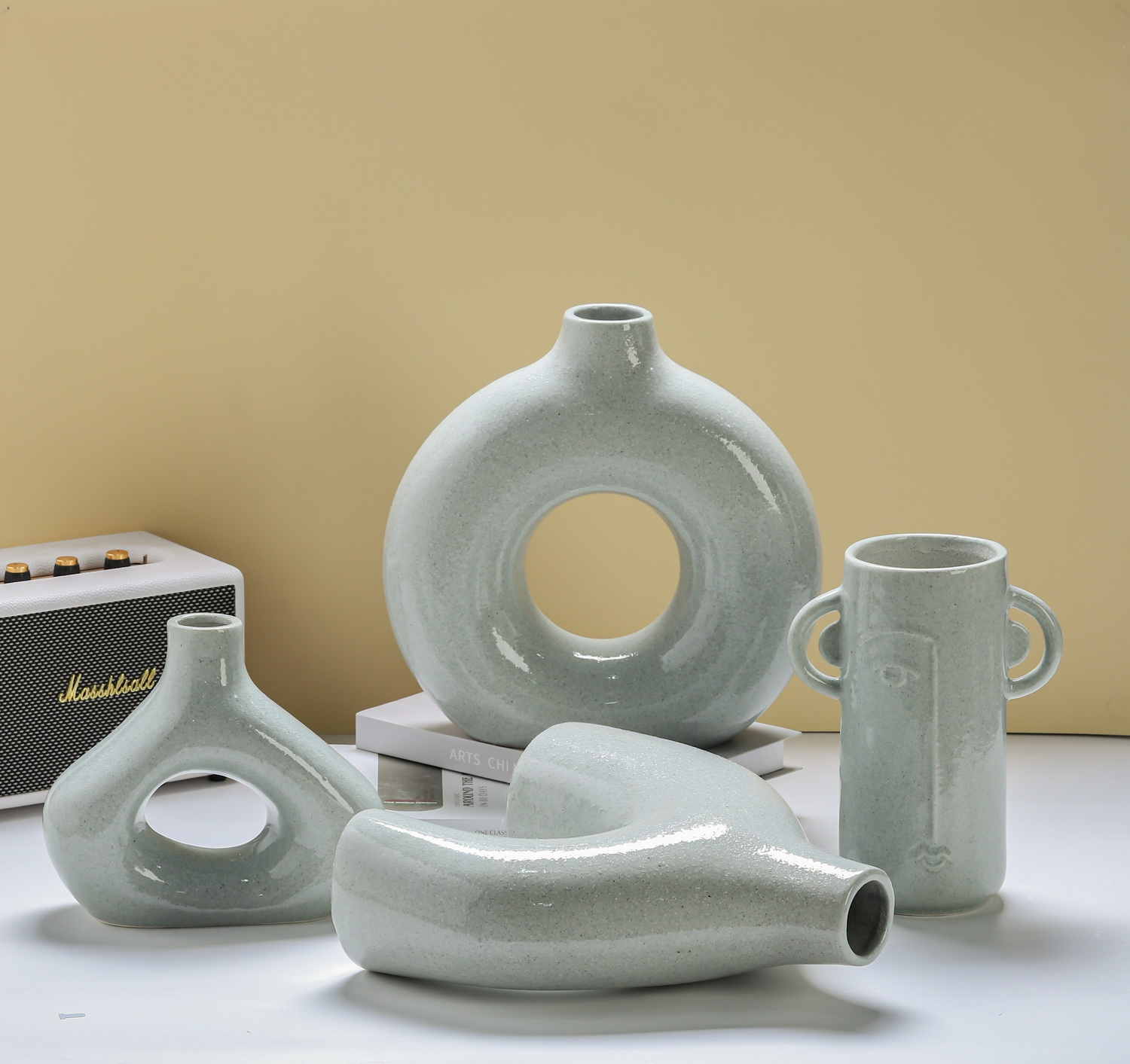
But when a ceramic decoration wholesale program wins, it wins for one simple reason: it passes the mantel test—it can build a complete moment (height, rhythm, contrast) the second it hits the floor.
And right now, the show signal is pretty clear: buyers are leaning into heritage + innovation—classic references that feel fresh through form, finish, and scale. Maison&Objet Paris (Jan 15–19, 2026) literally framed the edition around the alliance between heritage and innovation.
Below is how I’m buying ceramics in 2026 when the goal is simple: faster turns, fewer claims, cleaner reorders.
1) Stop Buying “Singles.” Buy Mantel Sets.
In-store, customers don’t buy “a vase.” They buy the finished scene.
So when I source ceramic decoration wholesale, I’m not looking for one hero SKU—I’m looking for a 3-piece logic:
-
One tall anchor (this is where your unique flower vase earns its keep)
-
One sculptural mid-height (the “shape” piece)
-
One small finish piece (bud vase / lidded jar / tray)
This is exactly why the January 2026 Maison&Objet coverage kept spotlighting vases and objects with strong visual personality—colorful pieces, bold silhouettes, “look-at-me” accents that read instantly.
2) The 2026 Sweet Spot: “Quiet Base, Loud Shape”
What I’m seeing across recent market walk-throughs is a practical mix:
-
Calm, livable palettes (creamy whites, sand, stone)
-
Confident form (handles, asymmetric mouths, relief textures—true artistic vases, not just containers)
This matters for retail because it lets you place one expressive piece into many stores without changing the whole planogram.
If you want a shorthand for why blue and white porcelain wholesale keeps returning, it’s not nostalgia—it’s global familiarity. Blue-and-white ceramics were invented in China, became highly prized in Europe, and were copied worldwide—basically the original “cross-cultural bestseller.”
Buyer move: use blue-and-white as the “trusted base,” then add one sculptural wild card as your conversation starter.
3) “American Style” Isn’t a Look—It’s a Merchandising Job
When a vendor tells me they’re an American style pottery supplier, I translate that into four retail realities:
-
Shelf-readability: the silhouette needs to read from 8–12 feet
-
Mix-and-match: it must blend with wood, brass, black metal, and textiles
-
Giftable proportion: not too huge, not too fragile-looking
-
Repeatability: glaze consistency across reorders
This is where a factory partner matters. When you’re sourcing from Teruier factory China, what I want is not just “can you make it?”—but “can you keep it the same after three reorders?”
That’s the difference between a one-time hit and a permanent program.
4) The Unsexy Dealbreaker: Packaging Standards (Claims Kill Margin)
Ceramics are high-margin until breakage shows up.
So I ask one “boring” question early: What transit test logic are you designing for?
ISTA’s Procedure 3A is a widely used test for individual packaged products shipped through parcel systems (and it’s a clean reference point for how you think about drops, vibration, and handling).
If your supplier can’t talk clearly about packaging structure, you’re not buying ceramics—you’re buying customer service tickets.
5) Show Trend Translation: What Vegas Buyers Are Actually Doing
At Winter Las Vegas Market (Jan 25–29, 2026), the value for me isn’t “seeing pretty things.” It’s seeing how brands package commercial ceramic stories—families of objects, not one-offs. The show positioned itself as a massive sourcing moment (3,500+ product lines) which means copycat speed is brutal: your advantage must be execution.
And with High Point Market Spring 2026 set for April 25–29, 2026, you can expect these ceramic directions to spread fast through U.S. assortments—so moving early matters.
What I’d Buy This Week (If You Made It Easy)
If you’re building a page around ceramic decoration wholesale, here’s the “yes” formula I’d respond to:
-
A tight capsule of blue and white porcelain wholesale (2–3 patterns max)
-
1–2 statement artistic vases per finish family
-
One clearly positioned unique flower vase that becomes the hero photo
-
Packaging logic aligned to real transit stress (not “we’ll wrap it well”)
-
Reorder discipline (consistent glaze, consistent measurements, consistent carton spec)
That’s how ceramics stop being “decor” and start being a repeatable profit lane.
Leave a Reply